
A day in the life of a coffee farmer in Chiapas
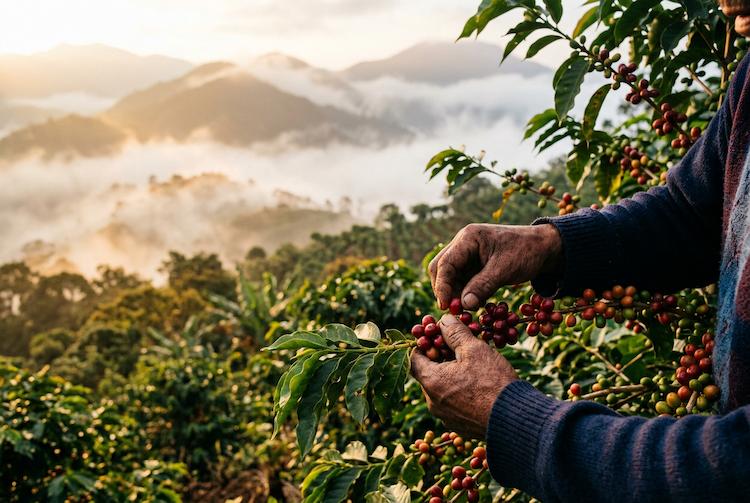
You cannot understand specialty coffee until you have seen what a normal day on the farm actually looks like.
The day starts early. Before the sun comes over the Sierra Madre, the pickers are already working. On a coffee plantation in Chiapas at 1400 metres altitude it is cool in the morning, sometimes colder than you expect for Mexico. The mist hangs low between the trees.
A coffee farmer in Chiapas harvests by hand. That is not a romantic detail but a necessity. Coffee cherries do not all ripen at the same time on a tree. Red is ripe, green needs more time. A machine cannot make that distinction. A person can. Each picker works their own rows, basket by basket, and knows exactly what they are picking.

Coffee harvesting is precision work
By midday the basket is full. An average picker harvests around 50 to 100 kilos of fresh cherries in a day, depending on the terrain and the density of the harvest. Those cherries are weighed, registered and processed immediately.
That processing happens the same day. Cherries left too long start fermenting in a way that ruins the flavour. With the washed method that many farmers in Chiapas use, the cherries are washed, pulped and the beans then laid out to dry on raised beds. That drying takes days to weeks depending on the weather. Every hour counts. You turn them regularly, cover them if it rains, check the moisture. How that processing influences the flavour is a story in itself.
What makes Chiapas coffee production special
Many farms in Chiapas are small-scale. Not large plantations with hundreds of workers but families who have worked the same land for generations. They know every plot, know which corner of the field ripens earlier, which trees perform better in a dry year.

That knowledge is not in a manual. It is in the hands of the farmer. And that knowledge is exactly what makes single origin coffee unique. You are not just buying a bean, you are buying a decision someone made on a specific morning on a specific mountain.
The farmer knows his best harvest ends up somewhere it will be appreciated. That changes how he sorts, how he dries, which cherries he offers. We buy through an importer we trust, with a lot number per batch.

Taste our coffee from Mexico
Freshly roasted, delivered to your door.


