High altitude coffee — why elevation shapes the flavour
The altitude where coffee grows decides how it will taste long before it reaches your cup.
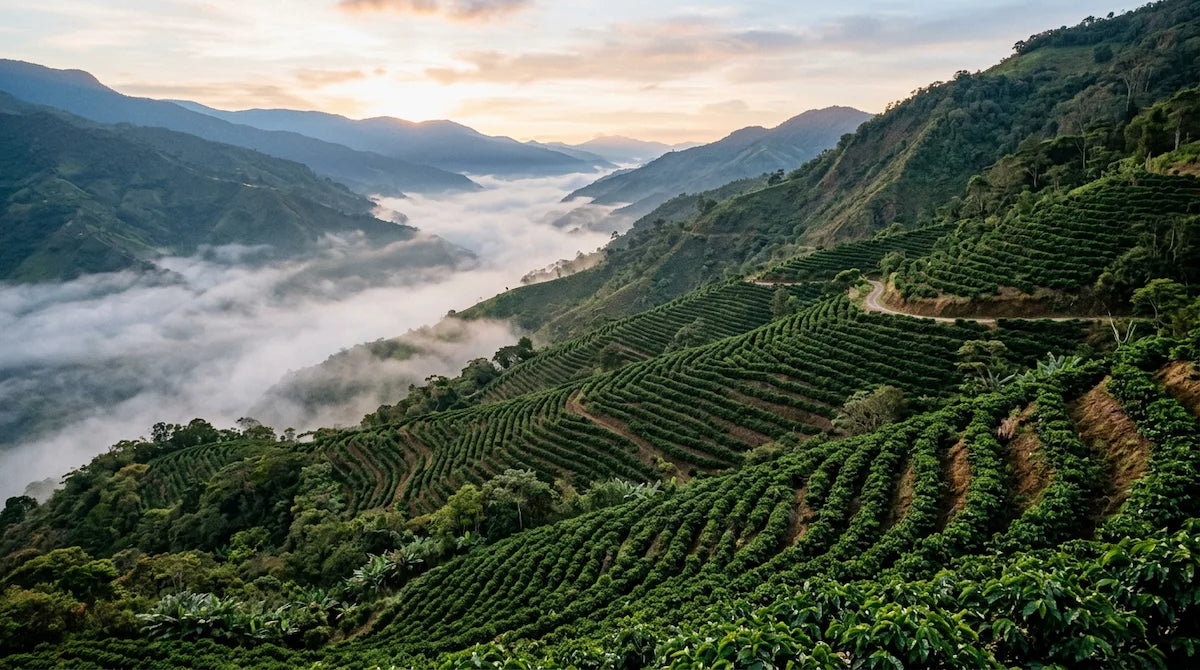
On the slopes of mountain ranges, where the air is thinner and the nights cold, grows the coffee that coffee lovers across the world seek out. High altitude coffee tastes different. Not slightly different. Fundamentally different. And it has everything to do with what the plant goes through while growing.
Slower ripening, more flavour
At high elevation, temperatures are lower than in the lowlands. That sounds simple, but the consequences for the coffee bean are considerable. The coffee cherry ripens more slowly. Sometimes weeks longer than coffee grown at lower altitudes. That extra time is not a delay but an advantage. The plant has more time to build up sugars in the cherry. The longer the ripening takes, the more complex the sugar structure, and the more nuanced the final flavour profile.

The result in the cup is noticeable. High altitude coffee typically has a brighter acidity, fruitier notes and a flavour profile that unfolds as the coffee cools. Those are exactly the characteristics that specialty tasters look for and that make the difference between an ordinary and an exceptional cup.
What the soil and terrain contribute
Mountain slopes drain naturally better than flat land. Rainwater runs off rather than stagnating around the roots. That means the coffee cherry absorbs less water and the sugars and aroma compounds remain more concentrated. The bean that results is denser and harder, and that has consequences for how it responds during roasting: it needs more heat and releases more flavour dimensions.
Volcanic soils, which occur in many high-altitude coffee regions, add something further. They are richer in minerals than ordinary agricultural land and give the plant access to a broader spectrum of nutrients. That does not translate directly into a specific flavour, but contributes to the overall complexity of the specialty coffee taste that connoisseurs recognise.
How coffee from lower areas differs
Coffee grown at lower altitudes has it easier. Temperatures are higher, the cherry ripens faster and the plant produces more volume per hectare. But that ease comes at a price. Sugar development in the cherry is less extensive, the flavour profile flatter and the acidity milder. That does not make it bad coffee by definition, but the type of complexity found in altitude coffee flavor is absent.

Robusta, the second major coffee species after Arabica, grows well at lower elevations. The flavour is more robust, earthier and more bitter. It is widely used in blends and instant coffee, but for single origin coffee it is rarely the choice of specialty roasters.
Mexico as a highland producer
Mexico is regularly underestimated in the coffee world. The country has vast mountainous areas at high elevation, suited for growing Arabica coffee with a clear and balanced flavour profile. Research by Perfect Daily Grind shows that highland coffee above 1,400 metres typically has a pronounced acidity, fruity notes and a longer finish than coffee from lower elevations. Those characteristics are found in Mexican coffee from the mountain regions of the country.
High altitude coffee is not a marketing term. It is a direct description of conditions that demonstrably influence what ends up in your cup.
Curious how highland coffee tastes?
Santo Café sources its coffee from the mountain regions of Mexico, where high-altitude growing conditions provide the complexity and clarity you expect from good specialty coffee. We buy it through an importer we trust.

The flavour profile speaks for itself. Try it yourself.

Taste our coffee from Mexico
Freshly roasted, delivered to your door.