Coffee roast levels explained: light, medium or dark roast
Dark roast does not have more caffeine. Light roast does not taste sour. Time to clear up the biggest coffee roasting myths.
On a bag of specialty coffee you often find more information than you might expect: origin, altitude, processing method, and roast level. Light roast, medium roast, dark roast. But what does that actually mean for what ends up in your cup?
Coffee roast levels are one of the most decisive factors for flavour, and at the same time one of the most misunderstood.
What happens chemically during coffee roasting
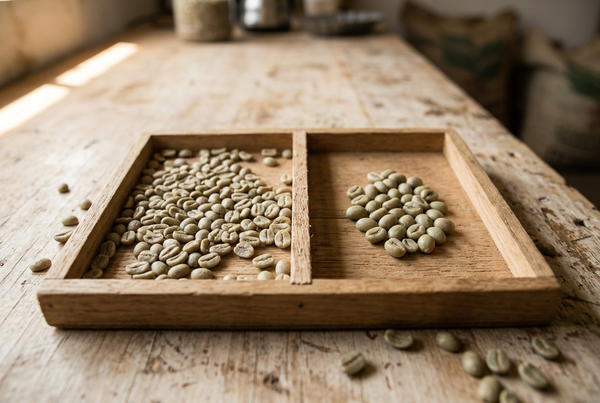
Coffee roasting is the heating of green coffee beans to a temperature at which chemical processes develop the flavour. The most important process is the Maillard reaction: amino acids and sugars react under heat and form hundreds of new flavour compounds. The longer and hotter the bean roasts, the further that transformation goes.

At low temperatures, around 200 degrees, the beans lose moisture. At around 205 degrees the first crack sounds, an audible pop where the bean expands and turns light brown. After the second crack, around 225 degrees, the bean begins to carbonise and oil appears on the surface. Coffee roasting is therefore the steering of this chemical process toward the desired flavour profile.
Light roast coffee: origin in focus
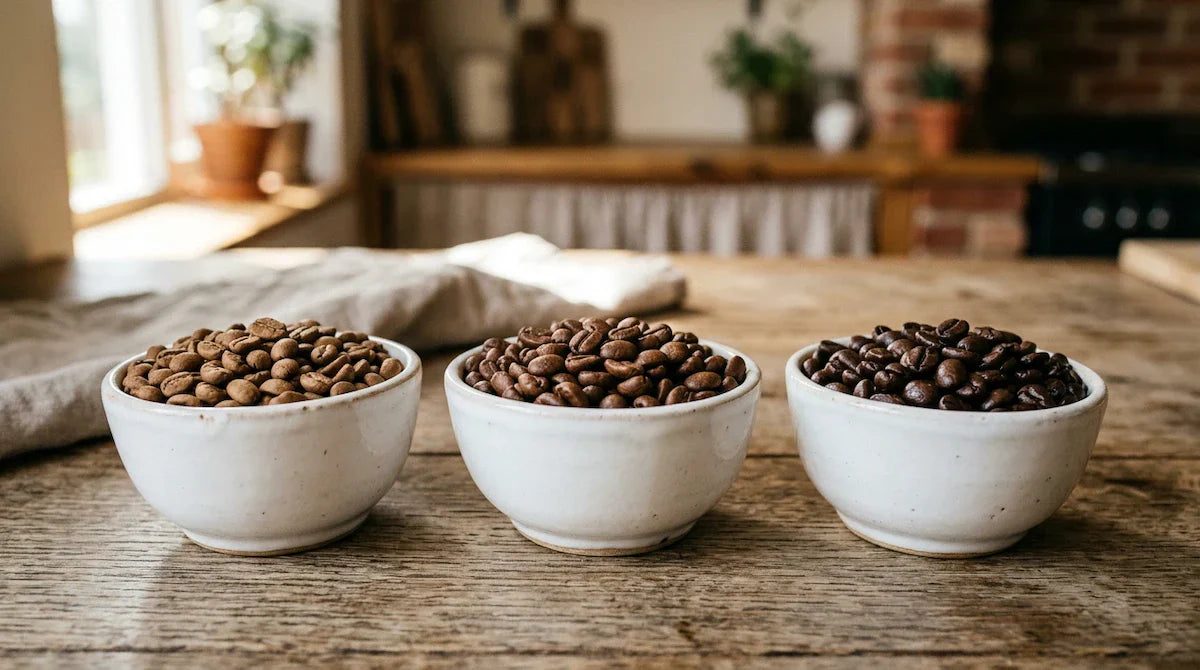
Light roast coffee is stopped just after the first crack. The bean is light brown, dry on the surface and compact. The coffee roast levels at the light end of the spectrum preserve the most of the original flavour notes of the bean: citrus, red fruit, floral, tea. Acidity is high, body light.
That is precisely why the specialty coffee world favours light roasting. Specialty coffee is about expressing origin and terroir. Light roast coffee lets the bean speak. A Mexican arabica grown at high altitude has notes that are completely lost at darker roast levels.
Medium roast coffee: the balance point
Medium roast coffee is roasted to just before or just after the first crack, depending on the roaster. The bean is medium brown and still dry. The coffee roast levels in the middle segment preserve some of the origin notes but also add caramel and nut aromas from the roasting process itself. Acidity drops, body increases.
Medium roast coffee is the most popular segment worldwide. It is more accessible than light roast, less pronounced than dark roast, and versatile across filter coffee, AeroPress and french press.

Dark roast coffee and caffeine: the misconception
Dark roast coffee is roasted past the second crack. The bean is dark brown to almost black, with oil on the surface. The flavour is heavy, bitter and smoky. Origin notes are largely replaced by roast flavours. Acidity is low, body heavy. Dark roast coffee suits espresso and milk drinks where the coffee flavour needs to form a strong base.
The most persistent misconception about coffee roast levels is that dark roasting contains more caffeine. The opposite is true: the longer the bean roasts, the more caffeine breaks down. The difference is small but consistent. Those who want more caffeine should choose light roast. Perfect Daily Grind explains in detail how coffee roasting changes the chemical composition of the bean step by step.

Taste our coffee from Mexico
Freshly roasted, delivered to your door.