Storing coffee: everything you need to know about keeping it fresh
You pay for good specialty coffee. Store it properly too.
You buy a nice bag of specialty coffee, put it after opening on the counter next to the kettle and think nothing more of it. Two weeks later the coffee tastes flat, a little stale and nothing like what you tasted in the shop.
Storing coffee is not a complicated art but most people still do not get it right. Here is what goes wrong and how to fix it.
The four enemies of fresh coffee
Keeping coffee fresh starts with understanding what destroys flavour. There are four factors: oxygen, moisture, light and heat. They all work the same way: they break down the volatile aroma compounds and natural oils in the bean. Those are precisely the compounds responsible for the fruity acidity, the chocolate notes and the floral tones that make a good single origin bean so special.

Oxygen is the biggest culprit. Oxidation starts the moment the packaging is opened. Moisture draws into the bean and dilutes the flavour compounds, and in a humid environment mould grows. Light, both sunlight and artificial light, breaks down organic compounds. Heat accelerates all those processes at once. Coffee storage next to the stove or kettle is one of the most common mistakes.
How storing coffee should work: the basics
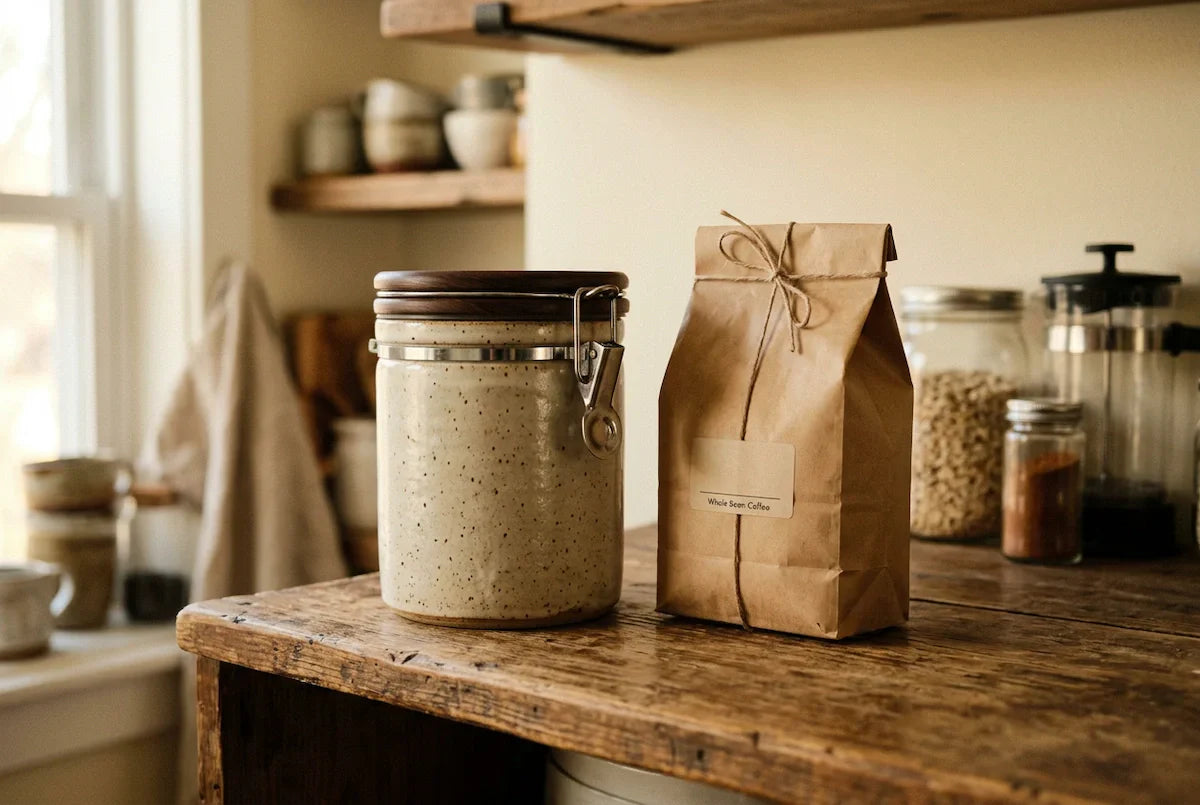
The ideal storage environment is dark, dry, cool and airtight. A dark kitchen cupboard, away from heat sources, is perfect. An airtight container made of ceramic, stainless steel or opaque glass works well. Clear glass lets in light and is therefore less suitable.
Keeping coffee fresh in the fridge is a bad idea. The fridge is humid, and specialty coffee absorbs odours from other foods. The bean is hygroscopic: it draws in moisture and odour from its environment. After a week next to leftover fish or cheese you taste it in your cup.

The freezer is more nuanced. Storing an unopened, vacuum-sealed bag of coffee in the freezer can work, for up to two months. But taking an opened bag in and out of the freezer causes condensation on the beans. Those moisture shocks make it worse, not better.
How long coffee actually stays fresh
The coffee best before date on the packaging is misleading. That date indicates when the coffee is technically still safe to drink, not when it tastes its best. Specialty coffee fresh is at its best within two to four weeks of the roast date. After opening the quality declines quickly if the coffee is not stored properly.
Ground coffee loses its aroma much faster than whole beans. The surface area is much larger, so oxygen can reach it faster. Anyone who really wants to get the most out of their specialty coffee fresh grinds just before brewing. Perfect Daily Grind confirms that the right coffee storage method is just as important as the quality of the bean itself.
Practical advice for single origin coffee
Buy small quantities that you finish within two weeks. Transfer coffee after opening immediately into an airtight, dark container. Keep that container in a cupboard away from the oven and kettle. Grind just before brewing. And always read the roast date rather than the best before date: that tells you much more about what you get in your cup.
The coffee production process from cherry to cup takes months. Storing it well is the least it deserves.

Taste our coffee from Mexico
Freshly roasted, delivered to your door.