The coffee production process explained: from cherry to cup
Coffee starts as a fruit. What happens next determines everything you taste.
Coffee starts as a fruit. Not as a bean, not as a powder, but as a small red cherry that grows on a tree. What happens next, from the moment of picking to the moment the coffee lands in your cup, is a process of months. And every step leaves traces in the taste.
Here is how the coffee production process works, step by step.
Step 1: picking at the right moment
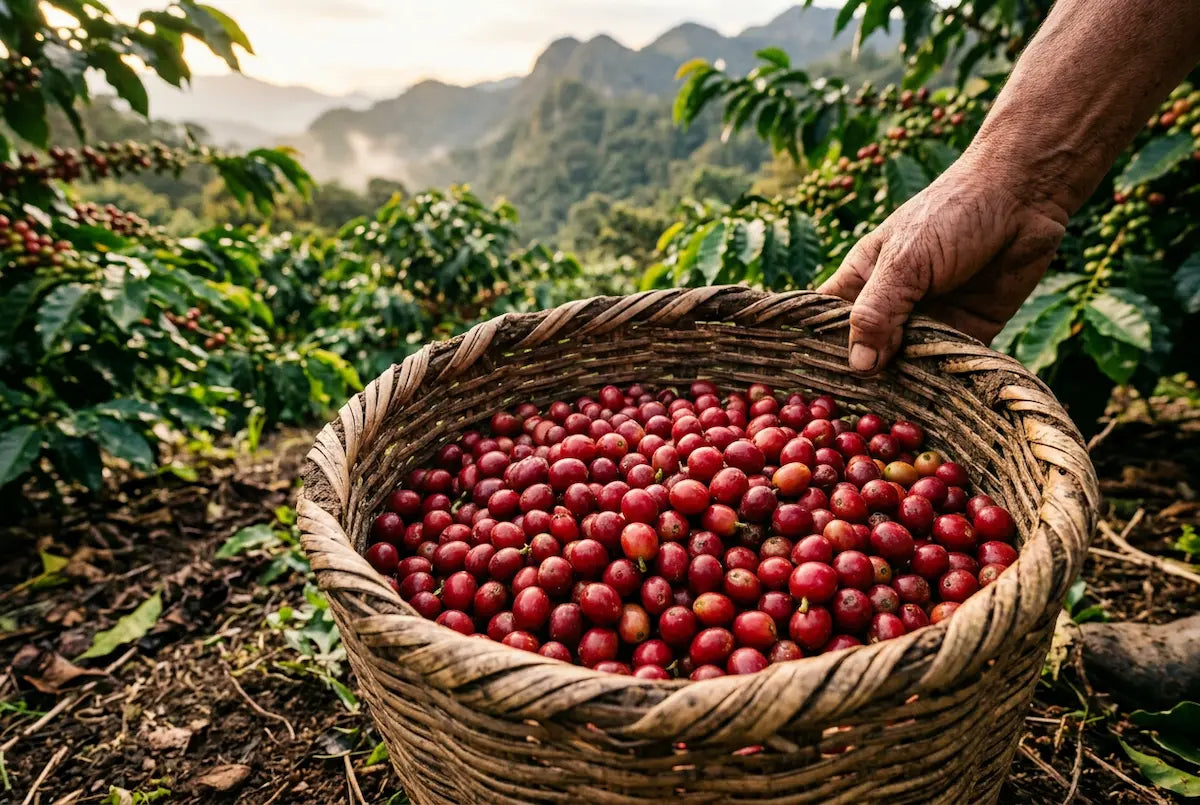
Coffee cherries do not all ripen at the same time. On one plant green, yellow and red cherries grow alongside each other. Red means ripe. Green means wait. With specialty coffee only the red cherries are picked by hand, selectively, one by one. That is time-consuming but necessary. Unripe cherries give a sharp, flat flavour that you taste in the end product.
In regions like Chiapas in Mexico, where many plots lie on steep hillsides, machine harvesting is not an option. Everything is done by hand. That makes the harvest more expensive but the quality higher. The cherries are processed the same day because delay costs flavour.

Step 2: coffee processing determines the flavour profile
After the harvest the coffee processing begins. This is the step that has the most influence on the final flavour profile, more than any other step. There are three main methods.
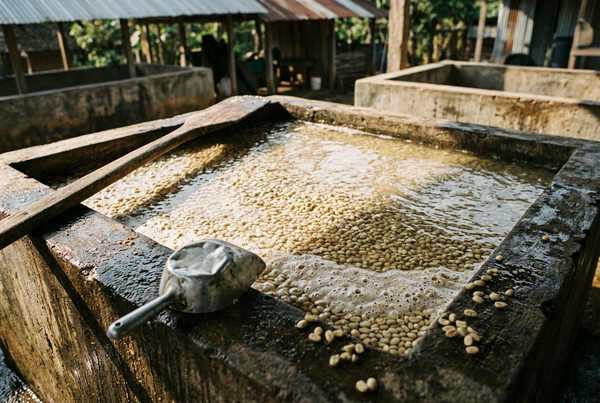
With the washed method the cherries are washed, pulped and the beans fermented in water before drying. The result is a clear, clean coffee with pronounced acidity. With the natural method the whole cherry dries intact on raised beds, with the sugars from the fruit flesh drawing into the bean.
This gives a heavier, fruitier profile. The honey method sits in between: the skin is removed but a layer of mucilage stays on the bean during drying, adding sweetness. How those choices are made on the farm depends on climate, facilities and the desired end profile.
Step 3: drying, milling and roasting
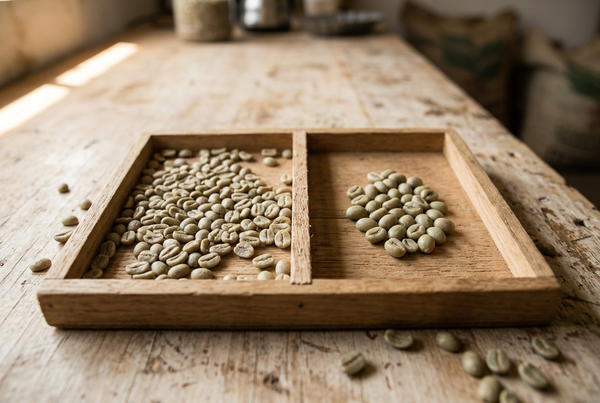
After processing the beans are dried to a moisture content of around 11 percent. Too wet and the bean mould during transport. Too dry and the bean becomes brittle. Drying takes weeks and requires constant attention. Beans are regularly turned, covered in rain, checked for even drying.

Then comes roasting. Green beans are neutral in flavour. Only during roasting, at temperatures of around 200 degrees, do the chemical reactions take place that develop aroma and flavour. How long and how hot determines whether you get a light or dark roast. Specialty coffee is almost always roasted lighter to preserve the original flavour notes of the origin.
Step 4: grinding and brewing
The last two steps are grinding and brewing, and here too flavour is won or lost. Too fine a grind with too long a brew method gives bitterness. Too coarse a grind in an espresso machine gives a watery, sour shot. The combination of grind and method is not coincidence but a choice that connects to what the bean has to offer.
For single origin koffie like that from Chiapas a pour-over or filter method is often the best choice. Those methods give the complexity of the bean room to express itself. How coffee from Chiapas gets its specific flavour profile starts with all these steps. The National Coffee Association also explains the full how is coffee made process clearly.

Taste our coffee from Mexico
Freshly roasted, delivered to your door.