Water temperature coffee — how it shapes your cup
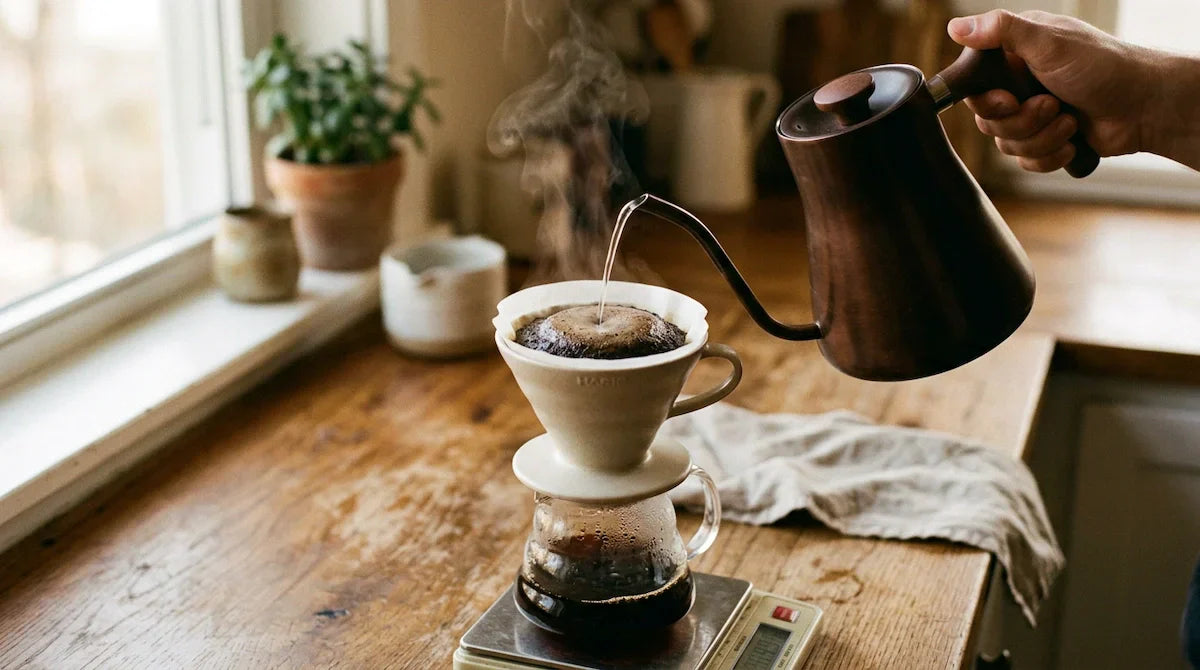
Boiling water is the most common brewing mistake — and the easiest one to fix.
Most people brew coffee with boiling water. The kettle whistles, they pour. That is understandable, but it is almost always too hot. Water temperature coffee brewing is one of the most underrated variables in making a good cup.
What happens at the wrong temperature
Coffee extraction is about dissolving flavour compounds from the coffee beans into the water. Those compounds do not dissolve all at once. Acids come first, then sweetness, then bitterness. The water temperature determines how quickly that process unfolds and which compounds end up in your cup.
Water that is too hot pulls out too many bitter compounds too quickly. The result is a sharp, unpleasant cup where the subtle notes disappear entirely. Water that is too cold does the opposite: extraction stalls at the acids, leaving the coffee tasting flat, watery or harsh. Both extremes ruin the coffee flavour, and both are simple to avoid.

The ideal coffee brewing temperature
The Specialty Coffee Association sets a standard of 90 to 96 degrees Celsius for filter brewing. That is deliberately just below the boiling point of 100 degrees. Within that range, water dissolves the right balance of acids, sweetness and aromas without over-activating the bitter compounds.
For most home brewers the rule is: bring the water to a full boil, take the kettle off the heat and wait 30 to 45 seconds. That typically brings the temperature to 94 to 96 degrees. Those who want more precision use a digital thermometer or a gooseneck kettle with a temperature setting. The National Coffee Association describes water that is too cool as the most common cause of flat, under-extracted coffee at home.
How roast level affects temperature
Not every coffee needs the same temperature. Lightly roasted beans are denser and dissolve less easily. They benefit from slightly higher temperatures within the range, towards 95 to 96 degrees. Darkly roasted beans have already broken down further during roasting and extract more quickly. Brew them too hot and you get bitterness on top of bitterness. For dark roast, 90 to 92 degrees is a better starting point.

This is also precisely why single origin coffee benefits from attention to temperature. A coffee with a nuanced flavour profile, delicate acidity and floral or fruity notes will only show those notes when extraction is right. Brew it too hot and exactly those characteristics that make it special disappear.
What this means in practice
A thermometer does not need to be expensive. A simple digital kitchen thermometer is enough for most home brewers. Those who regularly brew pourover or AeroPress notice after a few weeks of experimenting that temperature has just as much influence as grind size. They are the two variables that together steer extraction.
Coffee from specialty coffee Netherlands roasters is made to be tasted. The flavour profile is already in the bean. The right water temperature coffee simply ensures it comes out.
Curious what specialty coffee actually tastes like?
If you take the trouble to control your water temperature, the coffee in your cup deserves the same attention. Santo Café comes from Mexico, bought through an importer we trust. High-altitude growing conditions there create a clear, balanced flavour profile.

Brew it at 93 to 95 degrees. Not boiling. Wait a moment. Then taste what is actually in there.

Taste our coffee from Mexico
Freshly roasted, delivered to your door.