Chemex or Hario V60 — which pourover method suits your taste
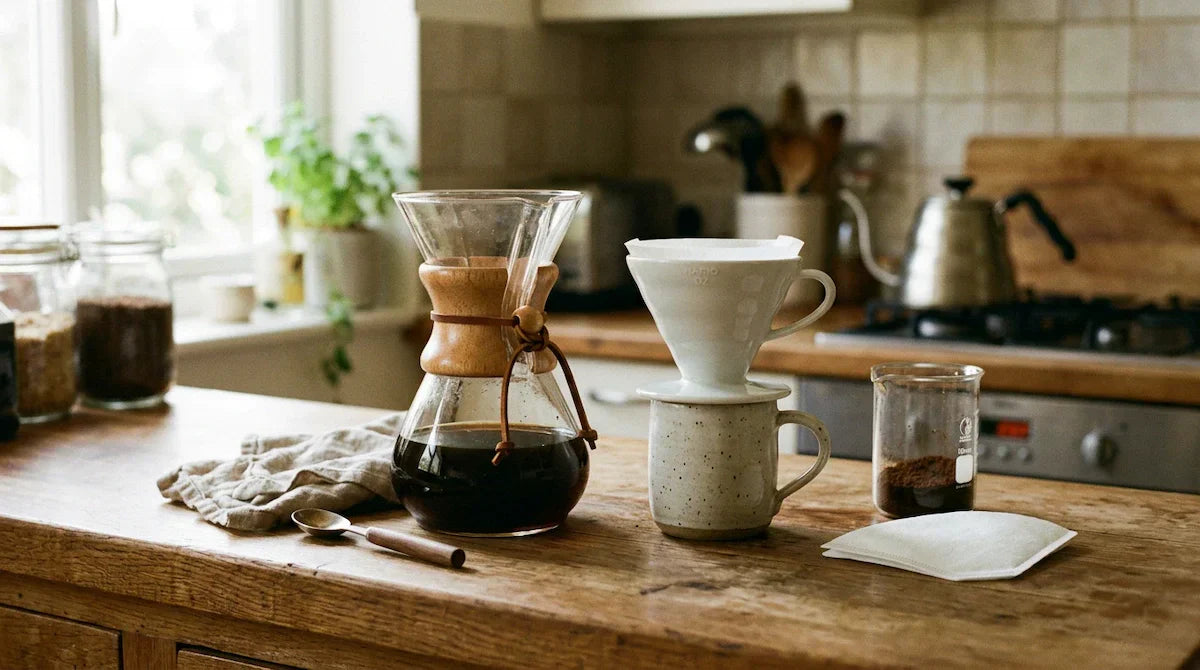
Same method, same beans — the Chemex and V60 still give you a completely different cup.
Anyone entering the world of pourover coffee quickly encounters two names. The Chemex coffee brewer and the Hario V60 are the two most iconic filter methods in the specialty segment. Both brew coffee via the same principle, but the result in the cup is strikingly different. Which suits you depends on what you seek in a cup and how much control you want over the process.
The Chemex: clarity and simplicity
The Chemex has existed since 1941 and has barely changed since. The design, an hourglass-shaped glass carafe with a wooden collar, is simultaneously functional and aesthetic. What sets the Chemex apart is its filter: a thick, bonded paper filter two to three times as thick as a standard coffee filter. That filter holds back virtually all coffee oils and fine particles.
The result is an extremely clear, clean cup of Chemex coffee. The liquid is transparent, light in colour and tastes soft and delicate, with clearly distinguishable flavour notes but without the oily texture you get from a French press. For anyone wanting to start brewing specialty coffee at home with a minimal technical threshold, the Chemex is a logical choice. The method forgives small variations in pour speed and grind size more easily than the V60.

The Chemex is also suited for larger volumes. Six and ten cup models exist, making it popular with people who brew for multiple people. The downside is the price: a glass Chemex costs between forty and sixty euros, and the patented filters are more expensive than standard filters.
The Hario V60: control and complexity
The Hario V60 was introduced in 2004 by the Japanese brand Hario and has since become the reference device for baristas and coffee enthusiasts who want maximum control over the brewing process. The name refers to the sixty-degree angle of the conical dripper. That geometry, combined with the spiral ribs on the inside, directs the water flow in a specific way and ensures an even brew time.
The Hario V60 filter is thinner than the Chemex filter, allowing a small amount of coffee oils into the liquid. That gives the coffee slightly more body and mouthfeel than the Chemex, without the heaviness of a French press. The coffee flavour profile is pronounced and complex: bright acidity, fruity and floral notes, and a long finish that changes as the coffee cools.
The downside is that the V60 demands more from the brewer. The bloom, where you pour a small amount of water over the coffee and wait thirty seconds so CO2 can escape, is a required step. The speed and pattern with which you pour water directly influences the result. A good V60 takes practice. For those willing to invest that time, it delivers more information about the flavour profile of the bean than almost any other filter method.

The entry price of a plastic Hario V60 is low: around ten to fifteen euros. Ceramic and glass variants cost more but perform better thermally. The method is therefore more accessible for those wanting to start with pourover coffee without a major investment.
Flavour compared
The difference lies in filter thickness and geometry. The Chemex filters more aggressively and delivers a quieter, more restrained cup. The V60 lets slightly more of the bean through and delivers a more lively, more pronounced cup. For single origin coffee with a nuanced coffee flavour profile: those wanting to preserve subtlety choose the Chemex, those wanting to maximise intensity choose the V60.
Both methods show what brewing specialty coffee at home can deliver when you combine the right bean with the right technique. They just do it differently. Perfect Daily Grind describes the Chemex as the method for those who like softness and the V60 as the method for those who like precision.
Which suits you
Choose Chemex coffee if you like a soft, clear cup, do not want to control every pour movement, and regularly brew multiple cups at once. The method is forgiving and consistently delivers a clean, pleasant result.
Choose Hario V60 if you want to express the complexity of single origin coffee to the maximum, are willing to practise pour patterns and blooming, and prefer a lively rather than a quiet cup. For the home brewer who wants to go deeper into pourover coffee, the V60 is the better learning device.
Both are worth having. But if you must choose one: start with what fits how you already experience coffee.

Drink the coffee behind the writing
Freshly roasted, delivered to your door, with a fair deal behind every bag.