French press vs espresso: which brewing method suits you
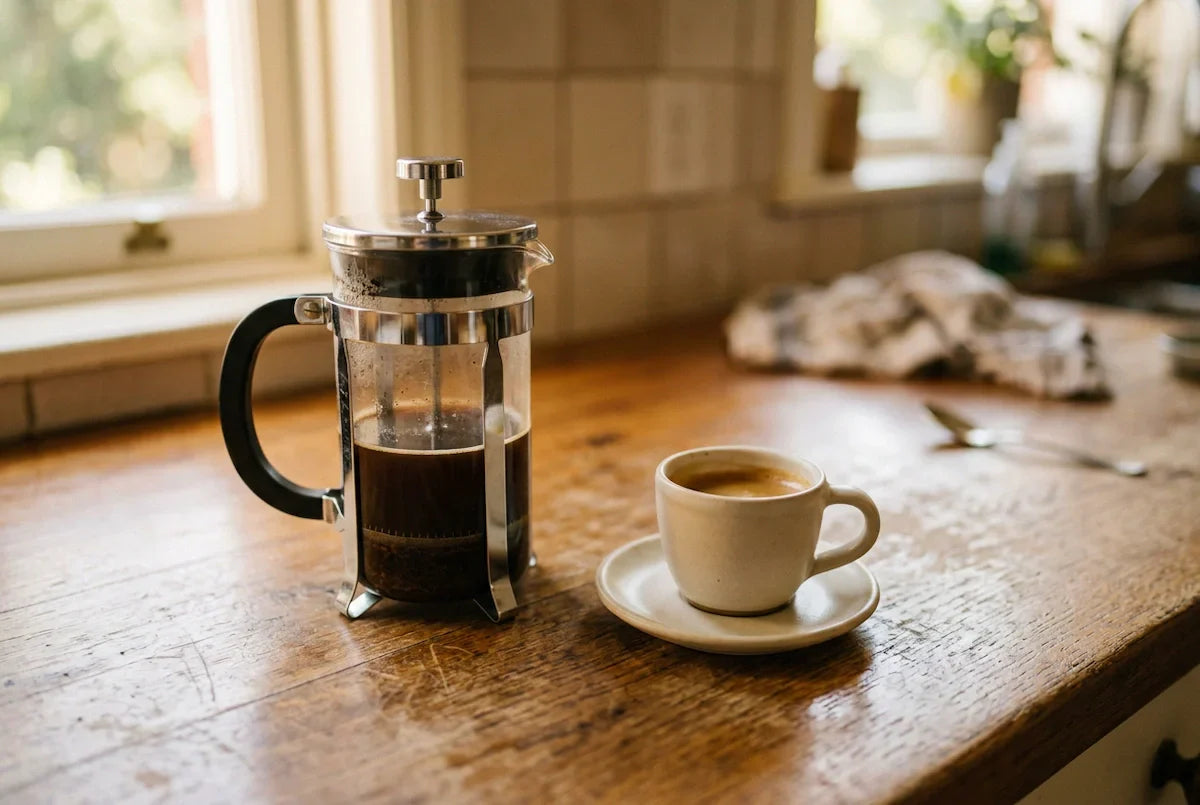
The same beans, two completely different tastes. The difference is in the method.
You buy a bag of good single origin coffee. Now you have to brew it. And then the question comes: do you grab the french press or go for espresso? The answer depends on what you are looking for, because the two methods produce a completely different result from the same bean.
Here is an honest comparison of the two most used coffee brewing methods at home.
How french press coffee works and what it does to the taste
The french press is an immersion method. The ground coffee sits fully submerged in hot water for four minutes. During that time the flavour compounds, oils and aromas are slowly drawn out of the bean. The metal filter holds back the coarse grind but lets the natural coffee oils through. Those oils give the coffee body, depth and a full mouthfeel.

French press coffee tastes richer and fuller than filtered coffee. The acidity is lower, the texture heavier. For coffee from high altitude with pronounced fruity acidity, the french press can round those notes slightly and add more body. The equipment itself costs between 20 and 60 euros. The grind is coarse and easy. All you need is hot water and a timer.
Making espresso at home: what you need
Espresso works fundamentally differently. A machine pumps hot water under high pressure, around 9 bars, through finely ground coffee in 25 to 30 seconds. The result is a small, concentrated shot with a layer of crema. The taste is more intense, the texture thicker and the extraction deeper than with immersion.
Making espresso at home is more demanding. A decent espresso machine starts at 300 euros and quickly runs to 700 euros or more. On top of that you need a good coffee grinder, because the grind is critical: too coarse and the water shoots straight through, too fine and it blocks. The quality of the bean determines everything with espresso, because there is no fat or oil to compensate for a mediocre bean. That means good espresso at home requires both investment and practice.

When making espresso at home disappoints
Honestly, espresso at home is often a disappointment for those who expect a machine to match the quality of a good coffee bar. The reason is technical: commercial machines work at more stable pressure and higher temperature precision than home machines in the affordable range. A barista spends years learning to dial in grind, dose and extraction time.
With single origin coffee like that from Chiapas, with subtle notes of citrus and chocolate, a poor espresso extraction can mask those nuances. The french press is more forgiving in that case. You set a coarse grind, pour hot water over it and wait. The coffee brewing method determines the margin for error.
Which method suits single origin coffee best
For anyone who wants to brew coffee at home and understand the taste of the bean, the french press vs espresso comparison is actually an easy one: start with the french press. Your investment is low, the learning curve is minimal and the flavour of the bean comes through well.
Espresso is the better choice if you like concentrated coffee, want to make cappuccinos or lattes, or are willing to invest in equipment and technique. Both methods have their place. But for brewing coffee at home with a good single origin bean, french press coffee is the most accessible way to actually taste the quality of the bean.

Drink the coffee behind the writing
Freshly roasted, delivered to your door, with a fair deal behind every bag.