Moka pot coffee explained — the Italian classic for home brewing
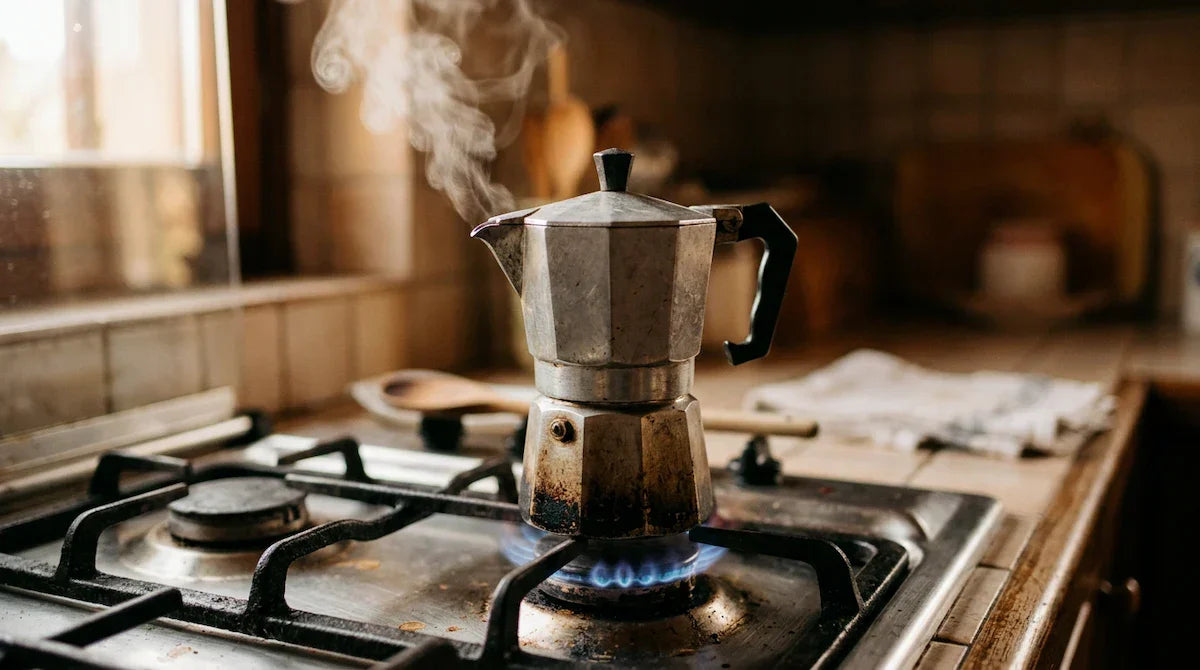
No pods, no electricity, no subscription. Just a pot on the fire and coffee that has been made the same way since 1933.
The moka pot has existed since 1933 and is still the best-selling home coffee maker in Italy. No pods, no electricity, no subscription. Just an aluminium or stainless steel pot on the heat. Moka pot coffee is simple, robust and delivers a concentrated cup that sits somewhere between filter coffee and espresso.
How the moka pot works
A moka pot consists of three parts: a lower chamber for water, a filter basket for the coffee grounds and an upper chamber where the coffee flows. When you put the pot on the heat, the water heats up and steam pressure builds in the lower chamber. That pressure pushes the hot water upward through the filter basket and the ground coffee into the upper chamber. That is the coffee you then pour.
The pressure in a moka pot is around 1 to 2 bars, well below the 9 bars of a real espresso machine. That means moka pot coffee is not real espresso. There is no crema, the extraction works differently and the texture is different. But the taste is concentrated and intense, richer than filter coffee and with more body.

The right technique
Most mistakes when brewing moka pot have the same cause: too much heat. A high flame heats the water too quickly, the pressure rises too abruptly and the coffee becomes bitter and scorched. The right approach is a low to medium flame and patience.
Start with pre-warmed water in the lower chamber, just below the safety valve. Use medium-fine ground coffee, slightly coarser than for espresso, slightly finer than for pourover. Fill the filter basket loosely, without tamping. Tamping coffee in a moka pot blocks the water flow and gives an over-extracted, bitter cup. Screw the pot closed firmly, place it on a low flame and wait.
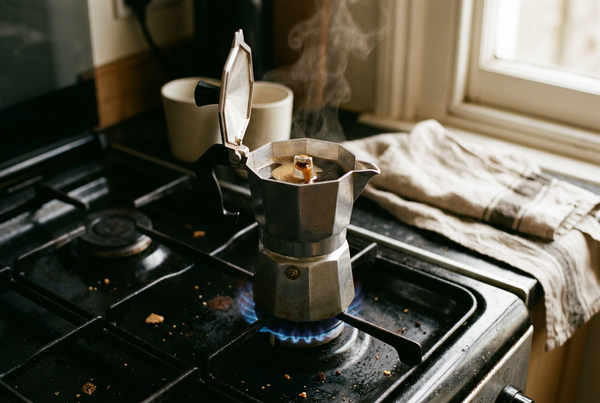
You know the moka pot is ready from the sound: a soft gurgling and sputtering as the coffee fills the upper chamber. At that moment you take the pot off the heat. Do not let it keep boiling because the last drops that come out are bitter and watery.
Common mistakes summarised
Using hot water from the tap is a misconception that stubbornly persists. Some people fill the lower chamber with boiling water to save time. That does not work well: extraction starts too quickly and the outside of the pot becomes dangerously hot. Cold or lukewarm tap water is the standard starting position.
Another mistake is leaving the pot on the heat too long. As soon as you hear the characteristic sputtering sound, it is done. Waiting longer risks the remaining steam and water residue scorching the coffee in the upper chamber. When brewing moka pot, the rule is: stay present, do not walk away.
What you get in the cup
Moka pot coffee is richer and stronger than filter coffee but less concentrated and different in character from espresso. The coffee oils partially come through because there is no paper filter, which creates a full body and a slightly oily texture. The flavour is intense, sometimes slightly bitter if the technique is off, and earthy in character.

For anyone wanting to brew specialty coffee at home without a major investment in equipment, the moka pot is a serious option. A Bialetti Moka Express costs between 25 and 40 euros and lasts for decades. The moka pot is also ideal as coffee without a machine on the go: no electricity, no pods, no parts that can break.
When the moka pot is the best choice
The moka pot suits people who like a full, robust cup and do not want to invest in an espresso machine. It is also excellent as a second method alongside a pourover or AeroPress, for moments when you want a stronger cup without extra equipment. Travelling, camping or in a holiday home, it is practically unbeatable.
For Italian coffee at home without a plug or subscription, the moka pot is still the most direct answer. Affordable to buy, simple to use and honest in flavour.

Drink the coffee behind the writing
Freshly roasted, delivered to your door, with a fair deal behind every bag.