
Coffee before exercise: what caffeine does to your performance
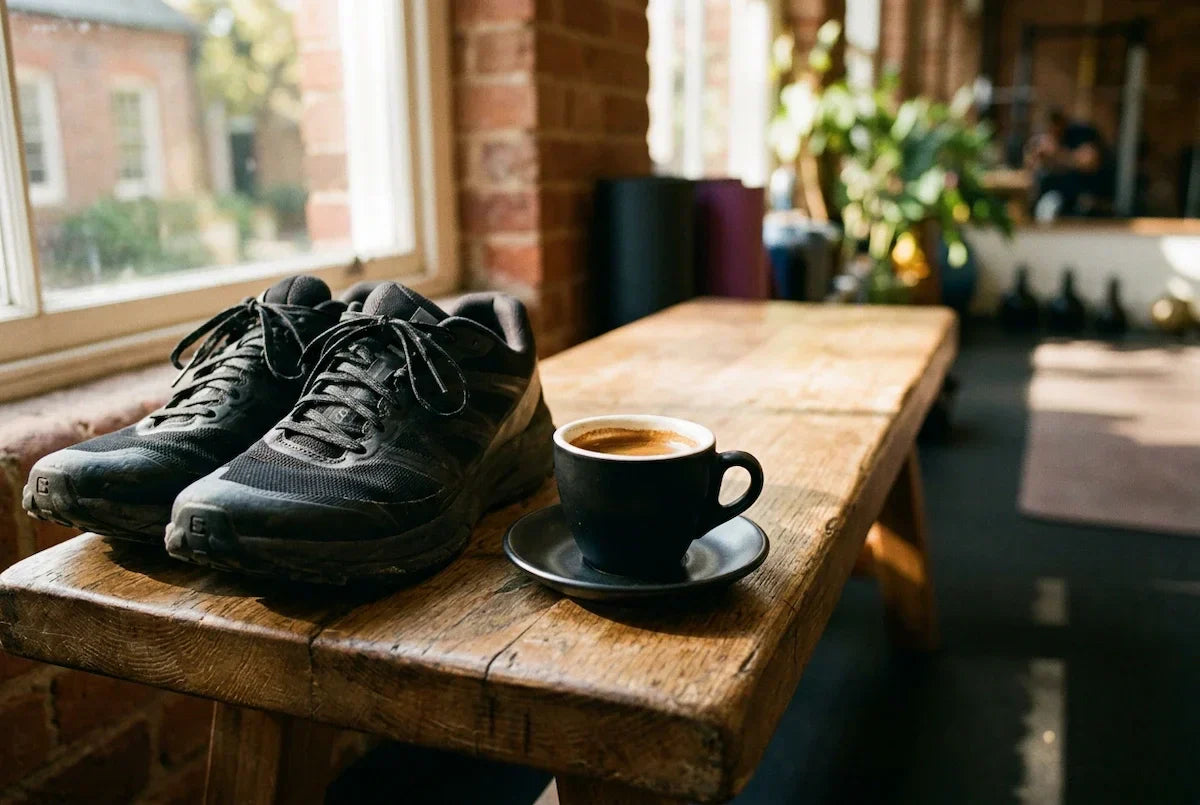
Pre workout coffee is not hype. The science has been clear about it for years.
The gym is full of pre workout drinks, protein supplements and capsules making promises. But there is a substance that has consistently improved performance for decades and that most people already drink every day. Caffeine. And the easiest way to get it in is coffee before exercise.
The question is not really whether it works. We know it does. The question is when it works, how much you need and when it backfires.
What caffeine does to your body during exercise
Caffeine blocks adenosine receptors in the brain. Adenosine is the substance that signals fatigue. Less adenosine effect means less perceived fatigue, higher intensity and longer endurance. That is the core of how caffeine sports performance works.

The International Society of Sports Nutrition has published a position stand on caffeine and exercise. The optimal dose is 3 to 6 milligrams of caffeine per kilogram of body weight, taken 30 to 60 minutes before training. A strong espresso contains 60 to 80 milligrams of caffeine. Two cups of filter specialty coffee puts most people well within the effective range.
When pre workout coffee does not work
Caffeine does not work the same for everyone. Part of the population metabolises caffeine slowly due to genetic variation in the CYP1A2 gene. For them higher dosing leads to palpitations and anxiety rather than performance improvement. And those accustomed to high daily caffeine intake notice less effect because the body builds tolerance.
Pre workout coffee also works less well for late evening training. The half-life of caffeine is 5 to 6 hours. Someone training at 8pm who drinks coffee beforehand can expect disrupted sleep. And poor sleep costs more performance than caffeine gains. Coffee trends 2026 show the sports world is increasingly aware of this, with low-caffeine varieties specifically developed for evening use.
Coffee or pre-workout: what's inside?
Most synthetic pre workout products contain caffeine supplemented with a list of ingredients of varying effectiveness. Beta-alanine, creatine, citrulline, artificial flavours. You do not need any of that for the caffeine effect. Black coffee contains caffeine, without added sugar or colourings.
Healthline analyses the science behind coffee and exercise in depth.


