De'Longhi raised its professional coffee machines stake to 88%
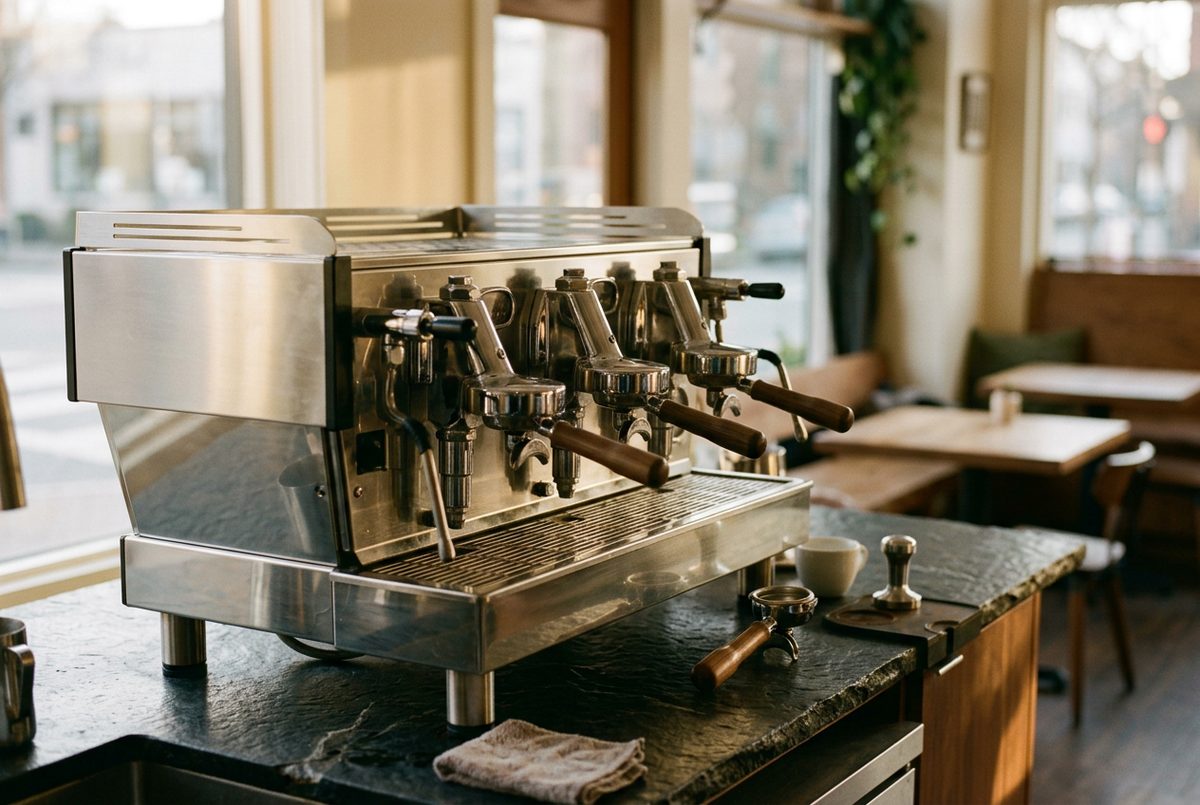
One group now holds 88.02% of the division behind La Marzocco and Eversys, and the price it paid says where the money in coffee sits.
A café espresso machine can cost more than a small car, and the firms that build them rarely change hands quietly. On 16 October 2026 De'Longhi closed a €662.5 million purchase that lifted its holding in the division behind La Marzocco and Eversys from 61.56% to 88.02%. The espresso machine market has one fewer independent owner at its top end.
What changed on 16 October
The agreement was signed on 15 October 2026 and the money moved the next day. DLI Limited, the company that controls De'Longhi itself, sold its entire stake to a Luxembourg subsidiary of the group, already home to several of the better known coffee machine brands. The remaining 11.98% stayed with minority shareholders. Buyer and seller sit on the same ownership chain, so the group logged it as a related-party transaction of greater importance, cleared first by its independent directors, as its announcement to the market sets out.
The numbers behind the professional coffee machines valuation
In the twelve months to 30 June 2026 the division turned over €569 million, up 38%, with adjusted EBITDA of €172 million and a margin of 30.2%. On those figures it was valued at an enterprise value of €2.36 billion and an equity value of €2.5 billion. At the end of 2023 the same equity stood at €1.28 billion. That is the espresso machine market repricing itself in under three years, with no revolution in the hardware: the physics in the group head still puts a ceiling on pressure and flow in every shot.

Why commercial espresso machines got expensive
Since the La Marzocco and Eversys combination was announced in late December 2023, the segment's revenue has grown by more than 50% and its adjusted EBITDA has doubled. Fabio de' Longhi, the group's chief executive, expects the division to pass €600 million of revenue by the end of 2026, against group revenue of €3.8 billion in 2025. The professional arm now throws off about 25% of total profits.
Commercial espresso machines sit in a different business from the home espresso machine on a kitchen counter. A café buys once, services for a decade and replaces late, so coffee shop equipment behaves like plant, not like an appliance. That is why the way a steam wand handles plant-based milk matters more to an espresso machine manufacturer than any feature list, and why barista equipment holds its price where domestic appliances discount every spring.

The exit still on the calendar
The word De'Longhi used was simplification, and it is only half right. The holders of that last 11.98% kept the rights written into the agreements of 21 December 2023. They can ask for an initial public offering of the division's shares from March 2028, or for a demerger that hands those shares out from March 2029. A structure with two scheduled exits inside it is not simple. It is scheduled.
So the date worth keeping is March 2028. If no request comes, the professional business stays inside the group and the valuation rests on its own results. If one does come, the machine behind the counter at the local café acquires a share price, and what an espresso costs to produce turns into a quarterly disclosure.

Taste our coffee from Mexico
Freshly roasted, delivered to your door.