
Arabica coffee explained — what makes it truly different
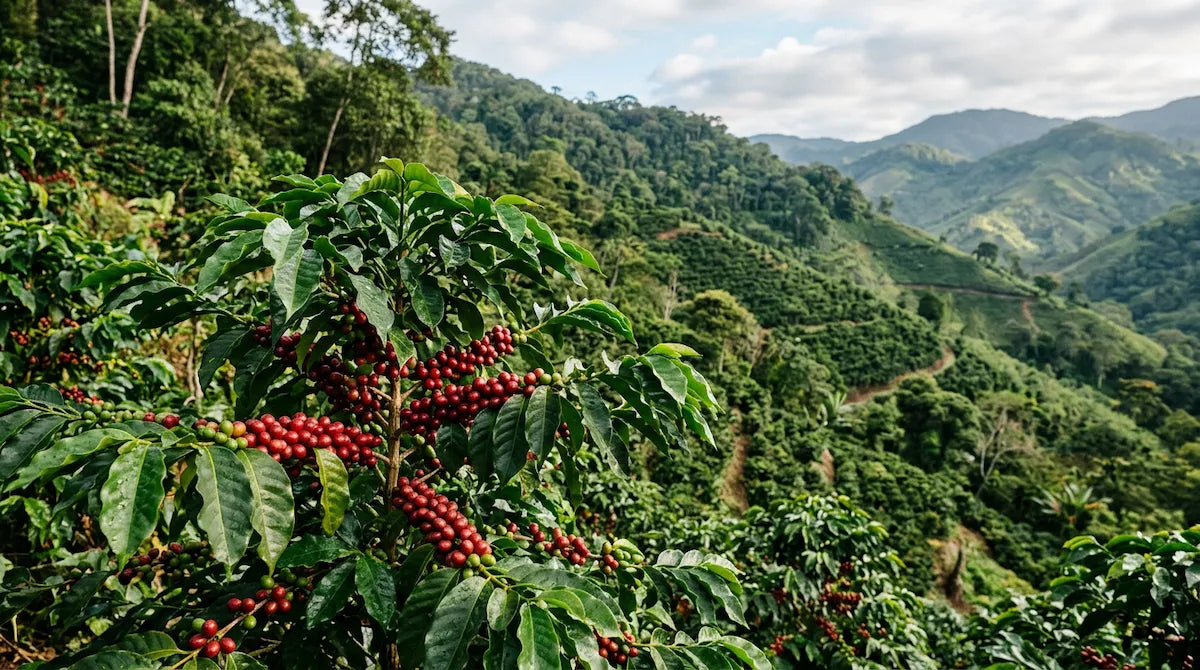
The reason specialty coffee tastes the way it does starts with one decision: Arabica.
Almost all specialty coffee that serious coffee lovers drink is Arabica coffee. That is not a coincidence and not a marketing trick either. Arabica has properties that make it uniquely suited to the complex flavour profiles that specialty roasters and coffee enthusiasts seek. But what exactly makes it different from the rest?
Two species, fundamentally different
There are more than a hundred coffee species, but the world market runs on two: Arabica and Robusta. Arabica accounts for around 60 to 70 percent of global production and dominates the specialty segment entirely. Robusta makes up the rest and is the backbone of instant coffee and cheap blends.
The difference starts with the plant itself. Arabica grows at altitude, between 600 and 2,000 metres, in cool temperatures with sufficient rainfall and fertile soil. The cherry ripens slowly and unevenly, requiring manual harvesting. Robusta grows lower, tolerates heat and drought, produces more per hectare and can be harvested mechanically. That hardiness is exactly what the name suggests.

Flavour: the central difference
Arabica coffee contains almost twice as many sugars and around 60 percent more lipids than Robusta. That chemical composition translates directly into the cup. Arabica tastes softer, sweeter and more complex, with notes of fruit, flowers and nuts that vary by origin and processing. Robusta tastes stronger, earthier and more bitter, with less nuance in the flavour profile.
Robusta also has almost twice as much caffeine as Arabica. Caffeine has a naturally bitter taste and also acts as a chemical defence for the plant against insects. The higher caffeine concentration in Robusta directly contributes to the bitterness many consumers find unpleasant.

For specialty coffee taste, that complexity of Arabica is essential. A single origin Arabica from a high-altitude region shows something Robusta structurally cannot: a clear, layered flavour profile that changes as the coffee cools.
Why Arabica is harder and more expensive
Arabica makes high demands on its environment. The plant is more susceptible to disease and pests, produces less per hectare and requires more manual labour due to the uneven ripening of the cherries. An Arabica plant also takes three to five years before the first harvest. Robusta manages that in two to three years.
All those factors make Arabica coffee significantly more expensive to grow. On the commodity market, Arabica consistently trades at around double the Robusta price. For the consumer this means quality coffee has a fair price: behind every bag lies more effort, more selection and more craftsmanship.
Arabica vs Robusta in practice
Robusta has its place. In espresso blends it adds body and crema, and in countries like Vietnam Robusta is the foundation of a rich coffee culture. But for anyone wanting to taste single origin coffee, wanting to understand where the flavour notes come from and wanting to experience the nuances of a specific region, Arabica is the only logical choice.
Mexico is one of the Arabica-producing countries where high-altitude growing conditions create a clear and balanced flavour profile. Mexican coffee has a growing reputation in the specialty segment, precisely because the combination of altitude, climate and craftsmanship allows the properties of Arabica coffee to fully come through.
Want to taste what it is all about?
Santo Café works exclusively with Arabica coffee from the mountain regions of Mexico. Grown at altitude, where slow ripening provides the complexity and sweetness that characterises specialty coffee. We buy it through an importer we trust.

This is where the difference begins. In the bean, on the mountain, long before brewing.

Taste our coffee from Mexico
Freshly roasted, delivered to your door.


