
Coffee and climate change: what it means for your daily cup
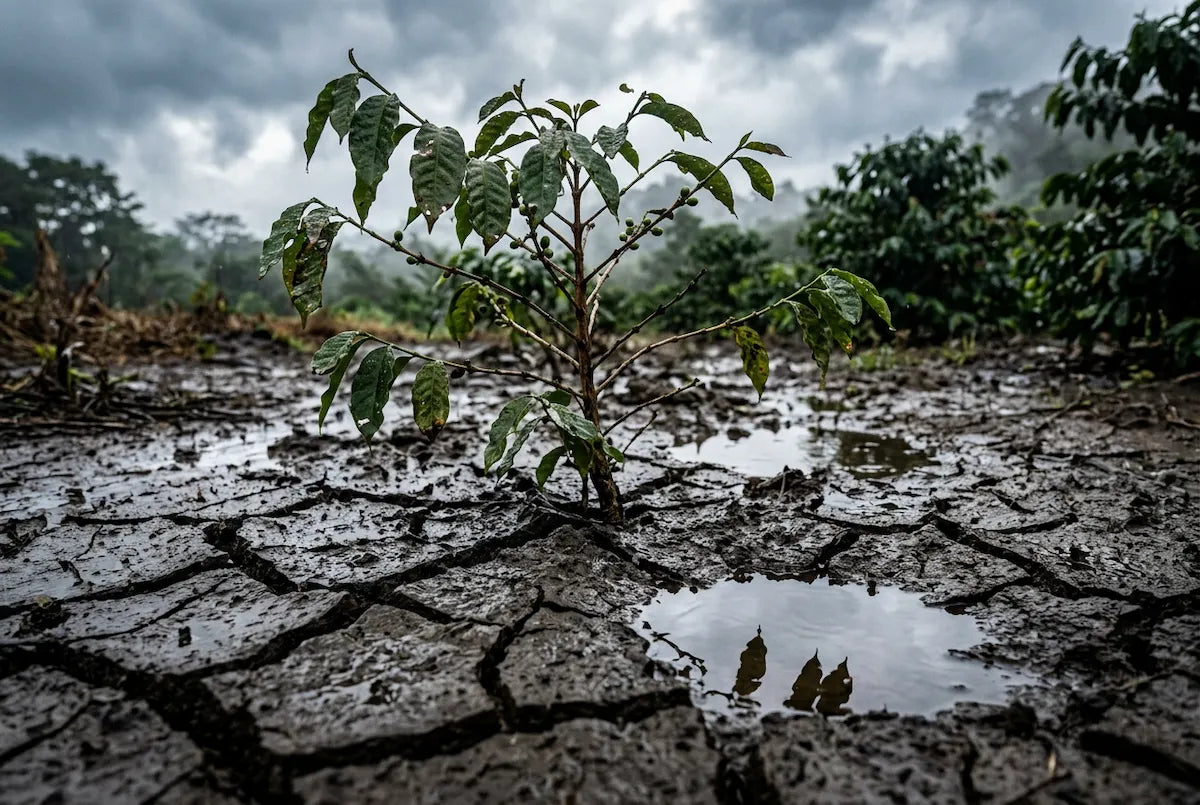
Arabica grows optimally between 18 and 23 degrees. Temperatures in growing regions are rising. That has consequences for what you drink.
Coffee climate change is not an abstract future scenario. It is a process already visible in harvest figures, prices and the places where arabica can still grow well. Between 2021 and 2025 the five largest coffee-producing countries experienced an average of 57 extra days per year with temperatures above 30 degrees Celsius, solely due to human influence on the climate.
What does that mean for the future of coffee, and for what ends up in your cup?
Why arabica coffee is so vulnerable
Arabica grows optimally at an average temperature of 18 to 23 degrees Celsius. Outside that range quality deteriorates, ripening proceeds too quickly and the bean develops less flavour. Above 30 degrees the damage is measurable: fewer cherries per plant, smaller beans, more vulnerability to diseases like coffee leaf rust.
Robusta is less sensitive. That variety grows at lower altitude and tolerates more heat. But arabica is responsible for 60 to 80 percent of world coffee production and is the bean that specialty coffee runs on. Coffee climate change leaves arabica coffee threatened in precisely the regions that produce the best quality: higher growing areas in Brazil, Colombia, Ethiopia and Central America.

Which coffee growing regions are most vulnerable
Brazil produces around 37 percent of all coffee in the world. Rabobank calculated that 8 percent of current arabica coffee growing regions are already climatically unsuitable, and that this share could rise to 20 percent by 2050. Honduras faces the sharpest projected drop: suitable growing zones could fall from 53 to just 12 percent of current production area.
Ethiopia is the exception. Suitable land there is expected to grow, partly because higher temperatures open new altitude zones. But even there the specific flavour profiles of Ethiopian arabica depend on very specific climate conditions that cannot simply be relocated. How coffee is getting more expensive is directly related to coffee climate change and the pressure on available production land.
What the industry is doing and what the consumer can contribute
The coffee industry is responding to coffee climate change on multiple fronts. Researchers are working on heat-resistant arabica varieties and on cross-breeding with more climate-robust species. Agroforestry, growing coffee under shade trees, proves effective as a buffer against heat and extreme rainfall. And work is underway on sustainable coffee production through regenerative farming methods that strengthen soil and water management.

The consumer also plays a role. Choosing transparent coffee with traceable origin makes it possible for buyers to invest in farmers who apply climate adaptation. Paying for quality is also indirectly paying for the farming practices that secure the future of coffee. How the broader market handles coffee prices and scarcity is described by Perfect Daily Grind in their sector analyses.
Curious about coffee with a known origin?
Santo Café comes from Mexico, bought through an importer we trust. Single origin Arabica with a traceable origin, at a time when transparency about growing regions matters more than ever.

If you want to know where your coffee comes from, this is a good place to start.

Taste our coffee from Mexico
Freshly roasted, delivered to your door.


