
Natural coffee processing explained — what it does to the flavour
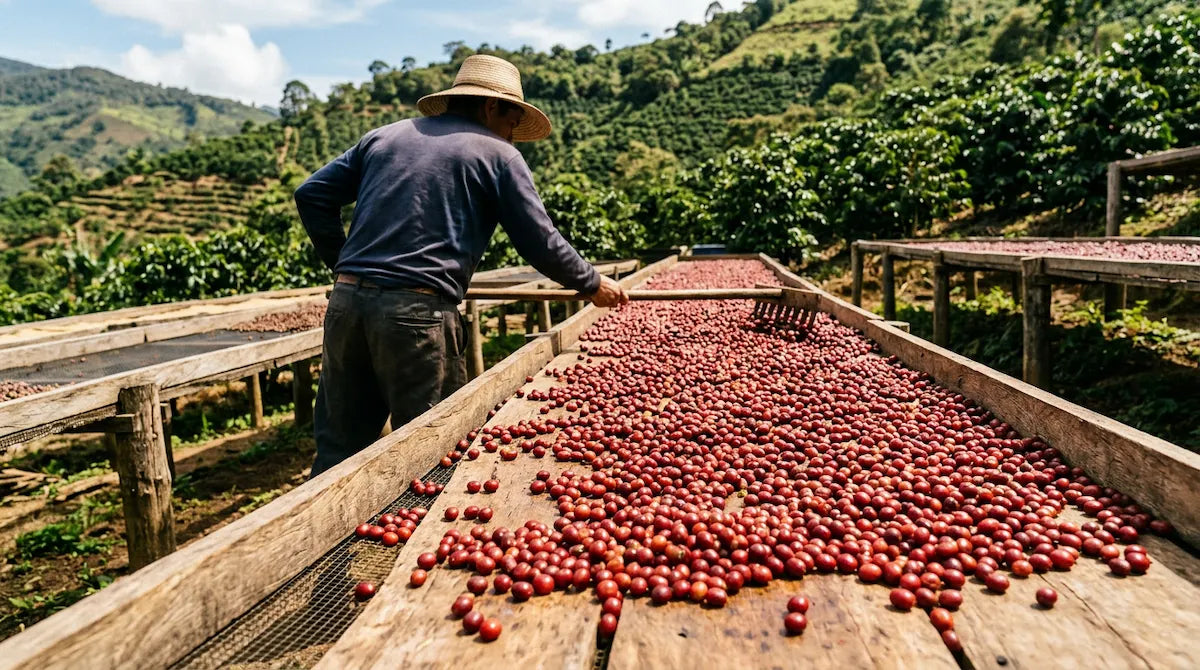
Same farm, same harvest, same tree. Natural or washed processing makes them taste completely different.
Take two bags of coffee from the same farm, the same harvest year, the same tree. One is washed processed, the other natural. In the cup they taste fundamentally different. Not slightly different. Fundamentally. That is the power of natural coffee processing, and it is one of the most decisive choices a producer makes after harvest.
What natural processing means
With natural coffee processing, the picked coffee cherries are left whole. The bean stays inside the cherry while everything dries together on raised beds or concrete drying surfaces, depending on the region. That drying process takes three to six weeks. During that time the fruit pulp around the bean slowly ferments under the influence of yeast and bacteria. The bean absorbs sugars, fruit acids and aroma compounds from the cherry.
Washed coffee works the other way around. With that method the fruit pulp is removed from the bean directly after harvest, after which the bean is washed and dried. The fermentation is shorter and more controlled. The result is a cleaner, brighter, more acidic flavour profile that emphasises the intrinsic properties of the bean.

What natural processing does to the flavour
The extended contact between bean and fruit pulp during natural coffee processing leaves a clear trace in the flavour profile. Natural processed coffee typically has a richer body, more sweetness and pronounced fruity notes: strawberry, blueberry, mango, sometimes even tropical fruit or wine-like fermentative tones. The acidity is milder than in washed coffee but the flavour intensity is higher.
Those flavour profiles are simply not achievable with washed processing. Perfect Daily Grind describes how the coffee flavour processing method, alongside origin and grind size, is one of the three biggest determining factors for what ends up in your cup. Two identical beans, two completely different flavour profiles.
The risks of natural processing
Natural processing is the oldest processing method in the world, but also one of the most demanding. The drying process must be carefully monitored. If the cherries lie too close together, the temperature rises too high or there is too little air circulation, over-fermentation can occur. That gives an unpleasant, vinegary or musty flavour that can ruin the entire lot.
Good natural coffee processing requires experience, time and the right climatic conditions. Regions with dry seasons and good airflow, such as parts of Mexico, Brazil and Ethiopia, are naturally suited. In humid climates natural processing is risky without additional infrastructure.

Why natural processing is popular in the specialty segment
In the specialty coffee process, natural processing has risen strongly in popularity over the past ten years. The reason is simple: the flavour profiles it produces are unique and impossible to replicate with other methods. Coffee lovers who enjoy fruity, complex, sweet coffees actively seek out natural lots.
That also has consequences for producers. A well-executed natural lot can achieve a higher price on the specialty market than a washed lot of the same quality. That gives producers an economic incentive to invest in the knowledge and infrastructure that good natural coffee processing requires.
For anyone who understands how coffee flavour processing shapes the profile, a label like natural or washed on a bag is not a minor detail. It is a direct indication of what is in the cup.
Natural or washed: which suits you
Those who like bright, fresh acidity and want to taste the bean itself choose washed coffee. Those who like rich body, intense sweetness and fruity complexity choose natural processed coffee. Both are specialty coffee. Both are worth tasting.
The difference is not in quality. It is in what the producer decides to do with the cherry after harvest.
Curious about coffee that deserves attention?
Santo Café sources its coffee from Mexico, where producers make deliberate choices in the processing. The flavour profile is clear and balanced, grown at altitude. We buy it through an importer we trust.

The processing method is a choice. The result is a flavour that is not accidental.

Taste our coffee from Mexico
Freshly roasted, delivered to your door.


