Shade grown coffee explained — better for flavour and nature
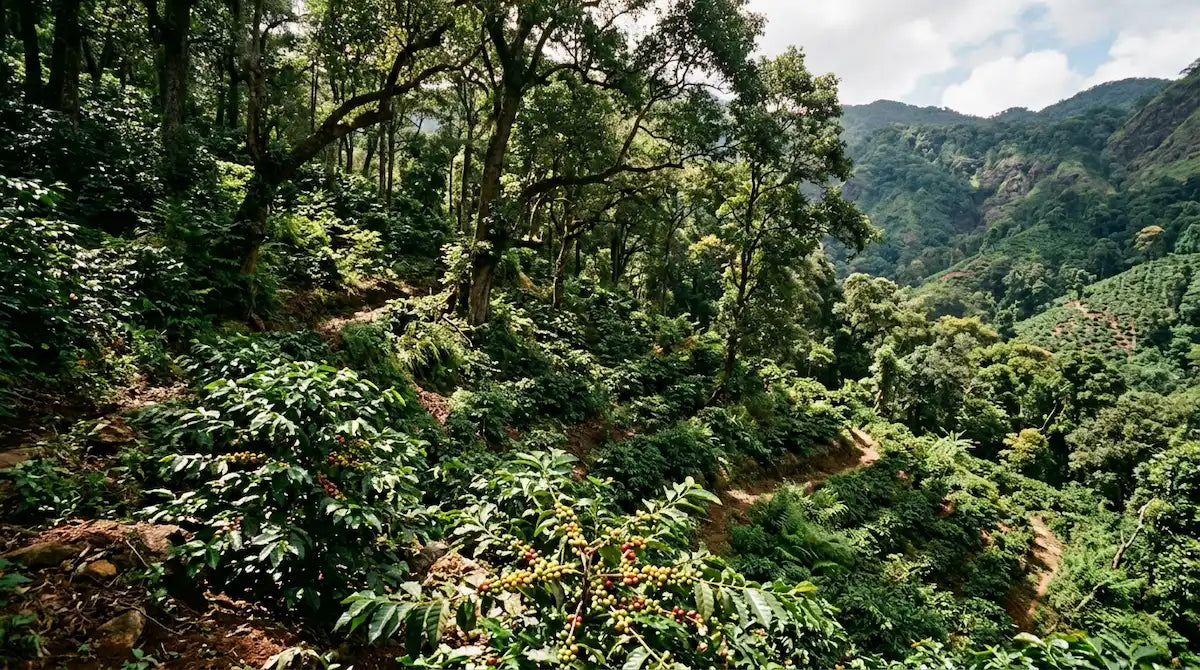
Coffee is a forest plant. The best way to grow it is to remember that.
Most coffee on the world market grows in monoculture. Cleared land, rows upon rows of coffee plants in full sun, the highest possible yield per hectare. But coffee is not naturally a plantation crop. It is a forest plant. And shade grown coffee is the cultivation method that comes closest to that.
What shade growing means
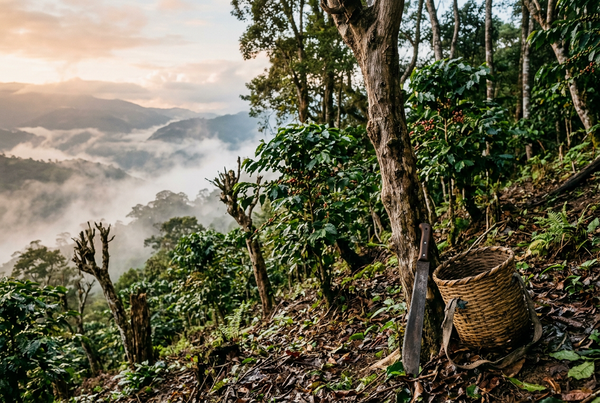
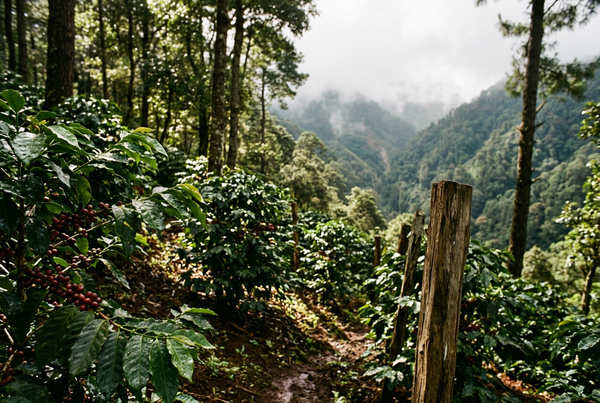
In shade growing, coffee plants grow under a canopy of taller trees. These can be fruit trees, native forest species or specially planted shade trees. The canopy partially blocks sunlight, regulates temperature and protects the soil. The coffee cherry ripens more slowly than in full sun, sometimes two to four weeks longer per harvest cycle.
That extra ripening time is not a loss. It is precisely the opposite. Slower ripening gives the cherry more time to build up sugars, develop acids and form aroma compounds. Perfect Daily Grind describes how shade grown coffee scores an average of two to five points higher on SCA cuppings than comparable sun-grown coffee from the same region. The cultivation method leaves a direct trace in the flavour profile.

What it does to the flavour
The bean that ripens under shade is denser and harder than a bean that grows quickly in full sun. Denser beans respond differently to the roasting process: they need more heat, release more flavour dimensions and deliver a clearer, more complex result. Shade grown coffee typically has a pronounced acidity, richer sweetness and fruity or floral notes that are more often absent in sun-grown coffee.
For those who take specialty coffee origin seriously, the cultivation method is therefore just as relevant as the region or the processing method. Two lots from the same farm, the same year, but one in shade and one in sun, taste demonstrably different in the cup.
The ecological side
Shade grown coffee is not only good for the bean. It is structurally better for the landscape. Coffee forests under tree cover protect the soil from erosion, retain moisture and reduce the need for artificial fertiliser. The trees act as natural carbon storage and provide habitat for migratory birds, insects and other animal species that simply cannot survive in monoculture plantations.
Coffee and biodiversity are not a contradiction in shade-growing systems. Research shows that well-managed shade coffee forests can support up to 60 percent of the biodiversity of natural forests. For regions in Latin America where deforestation is an ongoing problem, these sustainable coffee farming methods are more than a certification. They are a conservation strategy for the landscape.
The disadvantage that needs to be named honestly
Shade growing yields less per hectare than sun growing. The trees require maintenance, the harvest is more labour-intensive and the pruning work around the shade trees takes time. That makes shade grown coffee more expensive to produce and therefore also more expensive for the consumer. The price premium on shade grown coffee in the specialty segment is typically 15 to 30 percent above conventional coffee.

That premium reflects real costs: more labour, lower volumes and the preservation of a cultivation system that is more climate-resilient in the long term than the alternative monoculture.
Mexico as a shade-growing country
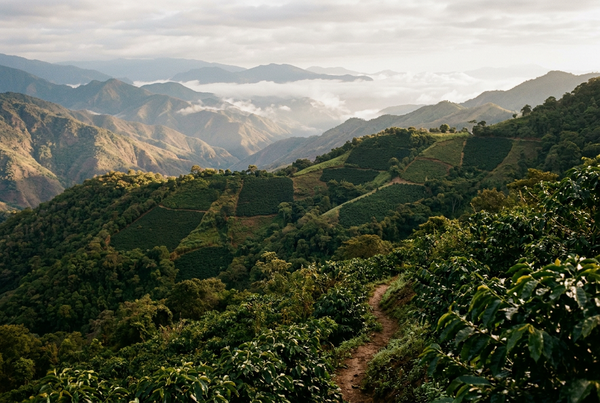
Mexico has a long tradition of shade growing. More than 97 percent of Mexican coffee grows under trees, one of the highest percentages of all major coffee-producing countries. That tradition is not coincidental: the mountain areas in the south of Mexico are naturally forested, and cultivation under tree cover fits the small-scale, family-based way in which most Mexican specialty coffee origin is managed.
Shade grown coffee is slower, more labour-intensive and more complex than sun growing. That is precisely why it tastes the way it does.
Want to taste what shade growing produces?
Santo Café sources its coffee from the mountain regions of Mexico, a region with a strong tradition of shade growing and sustainable coffee farming. Farmers receive a fair price for their harvest.

The result is a coffee that tastes like the environment in which it was grown.

Drink the coffee behind the writing
Freshly roasted, delivered to your door, with a fair deal behind every bag.