Coffee melanoidins nearly tripled and the dark roast scored lower
A Mexican arabica study measured the brown polymer a roast builds, found it nearly tripled by the dark roast, and then watched the panel score the medium roast higher.
Roasting builds colour out of almost nothing. A green bean carries no brown pigment worth the name, and by the time it leaves the drum it is loaded with large molecules that were assembled in the heat. A study on three arabica varieties grown in Guerrero put numbers on that, and the numbers do something awkward. The dark roast coffee held nearly three times the brown polymer of the unroasted bean. It also cupped lower than the medium roast sitting beside it.
What coffee melanoidins actually are
Melanoidins are the brown, high molecular weight compounds that the Maillard reaction leaves behind in any food cooked hot enough to change colour. They are not a single molecule, and chemists do not identify them by structure. They identify them by size. A 2021 review in Frontiers in Nutrition describes the coffee fraction being pulled out by ultrafiltration through a membrane with a 10 kDa cut off, so whatever is brown and bigger than that gets counted as one.
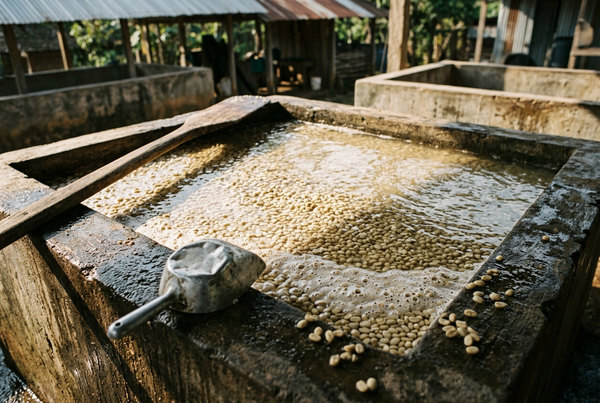
The looseness is deliberate, and it matters for reading any figure attached to them. Two labs can report different contents for the same cup because one clarified the sample and the other did not. Formation also starts well before the roaster. Drying does part of the work while the coffee is still sitting at the mill.
The measurement from three Mexican varieties
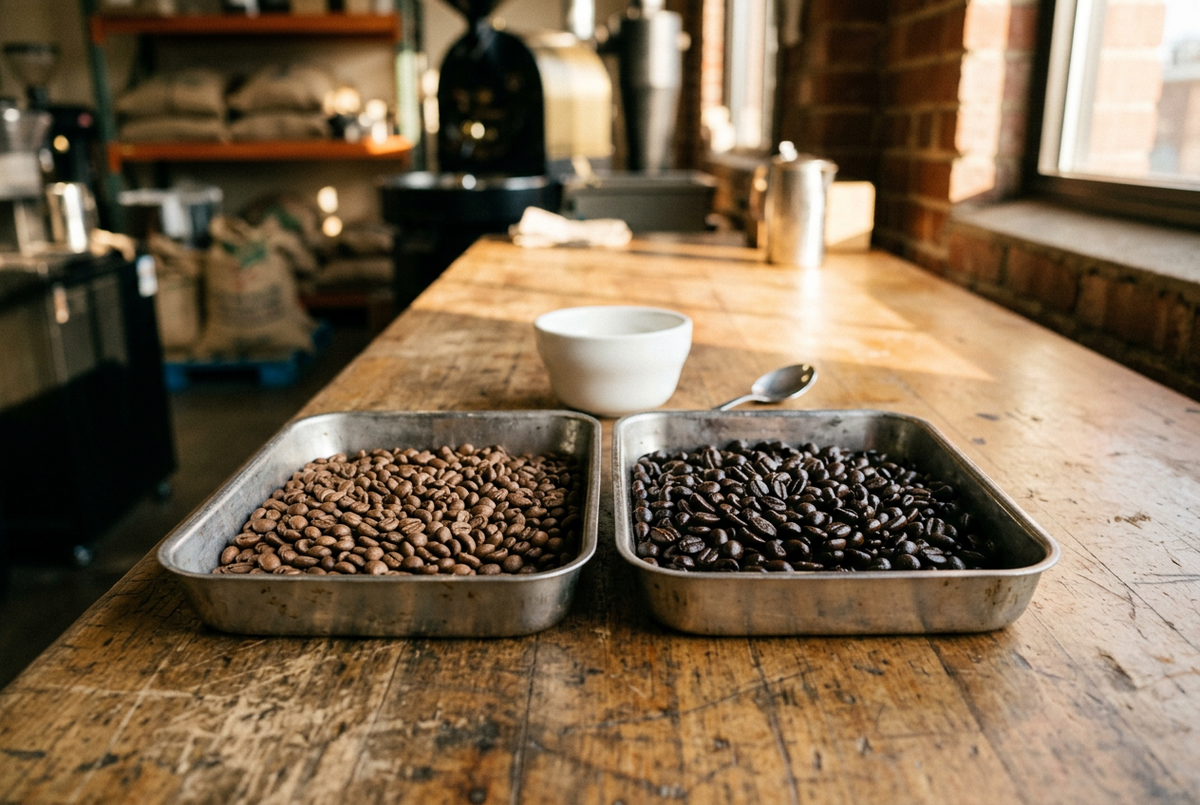
The figures come from a 2023 paper in Molecules, working on Typica, Bourbon and Oro Azteca grown under shade in the Región de la Montaña in Guerrero. A commercial mix of the three was roasted twice, medium at 180 °C and dark at 210 °C, then ground, brewed and measured against the green coffee beans it had started as.
In the unroasted material the melanoidin content sat at 15.41 mg/g. After the dark roast it had climbed about 2.87 fold. Absolute values depend on the method, and the published tables show why: the same dark roast reads 97 mg/g by one route and 29 mg/g once the sample has been clarified to strip out protein and turbidity. The direction never wavers. More heat, more brown polymer.

The acid that ran the other way
Not everything accumulates. The Maillard reaction runs on sugars and amino acids, so a roast takes apart as much as it assembles, and the clearest case is chlorogenic acid: 55.75 mg/g in the green Bourbon beans, down to 14.5 mg/g once roasted. Heat hydrolyses it into the simple phenols it is built from, caffeic acid and quinic acid, and those fragments carry their own taste into the cup.
Caffeine moved the opposite way, from 1.78 mg/g green to 3.88 mg/g roasted, which is mostly arithmetic rather than chemistry. The bean sheds water and mass while the alkaloid stays exactly where it was, so the concentration rises without a single new molecule being made. The same bookkeeping sits underneath the sugars that vanish while the sweetness does not.
The score did not follow the colour
Both roasts went in front of a panel of four tasters, scored against the Mexican norm for natural coffees. The medium roast totalled 86.25 points, inside the specialty band the norm draws at 85 to 87.75. The dark roast totalled 84.25 and landed in the premium band below it, 80 to 84.75.
That gap is not a blanket dislike of dark coffee. Uniformity, clean cup and sweetness came back at a flat 10 for both. It sits in particular columns: body 8.25 for the medium against 8.00 for the dark, balance 8.00 against 7.25, taster score 8.25 against 7.5. So the cupping score fell on the roast carrying far more brown polymer, and part of what it fell on was body, the attribute melanoidins usually get credited with. Four tasters and one commercial mix is not a law. It does sit awkwardly next to the assumption that darker reads fuller, and it belongs beside what actually makes a cup taste bitter.

Where else the brown polymers turn up
They are not confined to the bean. The same Frontiers review puts coffee silverskin at 17 to 21% melanoidins and spent coffee grounds at 13 to 25%, with cascara at 15%, which is part of why all three keep getting proposed as raw material rather than waste. The chaff swept out of a roaster is chemically closer to the roast than it looks.
So when a bag of dark roast coffee promises more body, read the colour as what it is: evidence that the roast ran long and hot, not a score. Buy a medium and a dark of the same coffee, brew them the same way and taste them next to each other. The panel in Guerrero did exactly that, and the lighter cup won on body.

Taste our coffee from Mexico
Freshly roasted, delivered to your door.