How coffee processing determines what you taste in the cup
Two beans from the same tree can taste completely different. The difference is in the processing.
On a bag of specialty coffee there is sometimes a word that many people skip: washed, natural or honey. It sounds technical. But what it means for what you taste is bigger than most people realize.
Two beans from the same tree, picked on the same day, can taste completely different in the cup. The only difference is the coffee processing that followed.
Washed coffee: clear and pronounced
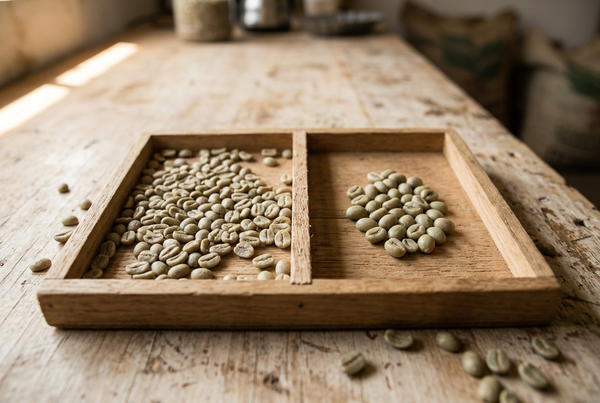
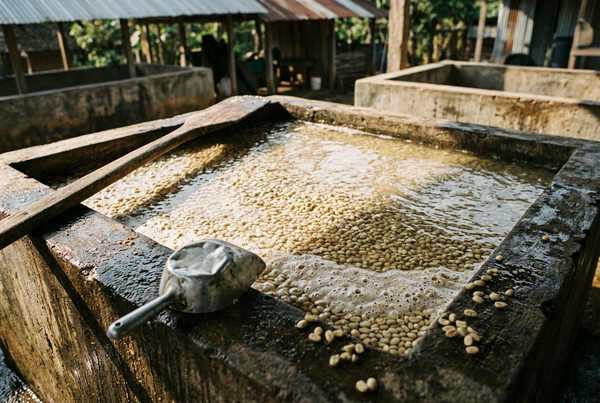
With the washed method the cherry is immediately washed and pulped after harvest. The outer skin and fruit flesh are removed, after which the beans ferment in water for 12 to 72 hours. Then they are washed and dried. The result is a coffee that relies entirely on the quality of the bean itself. There is no sugar from the fruit flesh compensating the flavour.

That makes washed coffee clear, fresh and pronounced in acidity. Citrus, flowers, tea. The flavour notes that the growing altitude and climate built up come through most clearly. It is also the reason that most specialty coffee is washed: the method hides nothing and shows the bean at its best. Coffee from Chiapas is largely processed washed, which contributes to the clear flavour profile of the region.
Natural coffee: sweet and fruity
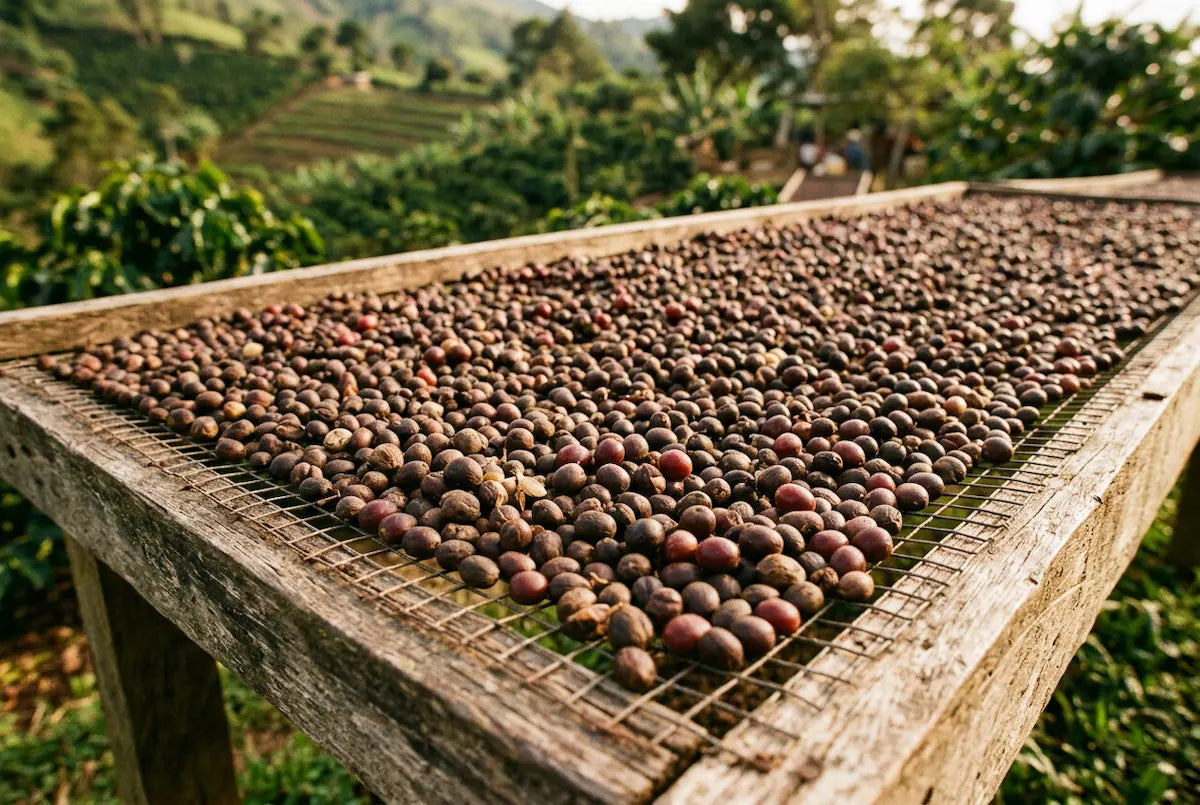
With the natural method the whole cherry dries intact on raised beds or concrete patios. For weeks. The fruit flesh stays around the bean and the sugars slowly draw into the bean. The end result is a coffee that tastes richer, heavier and sweeter than a washed version of the same bean.
Natural coffee processing typically delivers notes like strawberry, blueberry, dark fruit or sometimes even wine. It is a more dramatic style. Ethiopian natural coffee is known for exactly those fruit-explosive profiles. The method does require good drying weather and constant attention: beans that do not dry evenly or sit too long can develop mould.

Honey process coffee: the middle ground
The honey process coffee method removes the outer skin but leaves a layer of sticky mucilage on the bean during drying. That mucilage is the source of the name: during drying the beans become sticky like honey. The more mucilage stays on, the sweeter and fuller the end result.
Honey coffee sits between washed and natural. You get more body and sweetness than with washed, but not the intensity of a natural. Caramel, peach, light nuts. It is a versatile method that is popular in Costa Rica and increasingly applied in other regions too. Want to know more about all the steps a coffee bean goes through? The coffee production process explains everything from harvest to cup. And those who want to compare the theory with expert analysis can turn to this overview from Perfect Daily Grind on processing methods.

Taste our coffee from Mexico
Freshly roasted, delivered to your door.