
Coffee imports look most exposed in a new EU pesticide study
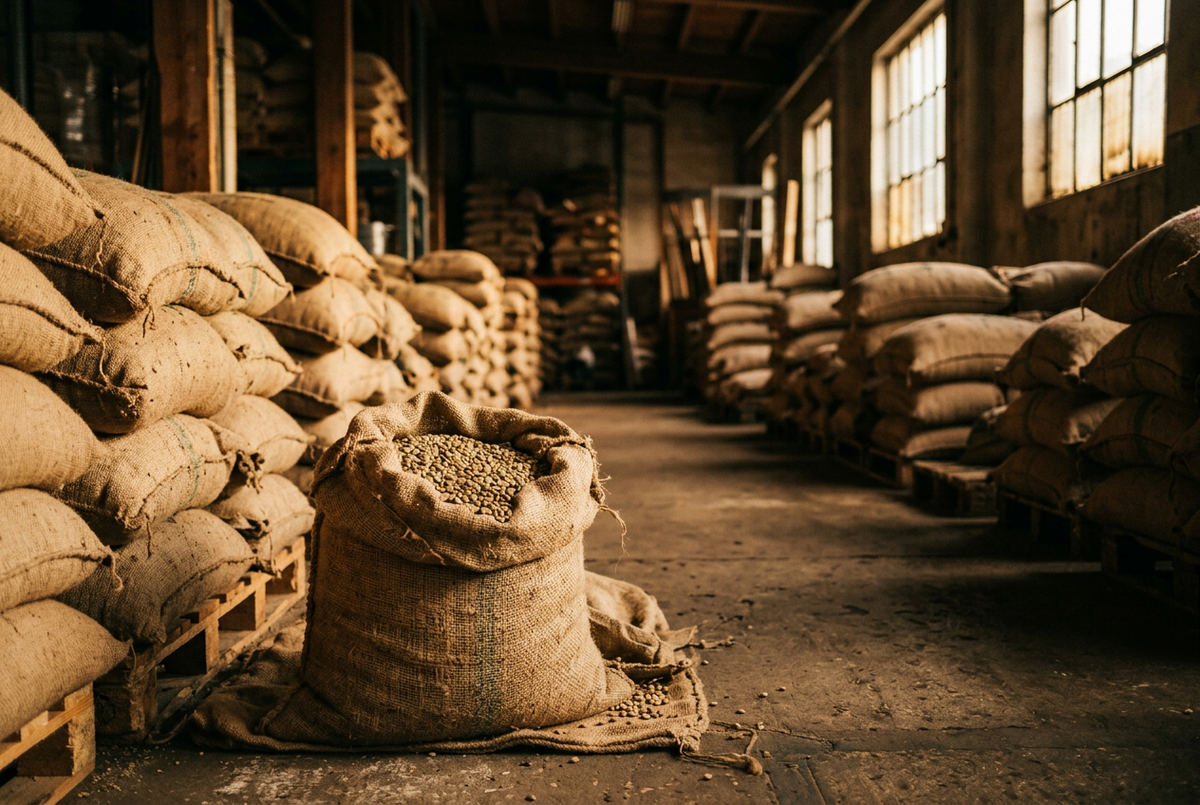
A European Commission study put coffee at the top of its list of products exposed to tighter pesticide rules, then explained why its headline number is a ceiling.
A paper published on 11 August carries a number that stops coffee buyers mid sentence: 332%. That is how far coffee prices in Europe climb in one scenario of a new European Commission study. The scenario is deliberately extreme, and the authors say so. Why coffee tops that list, ahead of 234 other products, is the part worth reading.
What the pesticide residues study actually modelled
The EU bans many pesticides on its own farms. It does not automatically ban traces of them on the food it imports. The Joint Research Centre study, catalogued as JRC147659, models what would change if it did, cutting maximum residue levels for the worst substances to the limit of quantification.
Of 976 active substances not approved in the EU, 80 meet the most hazardous criteria, and only 18 carry limits above that floor while turning up in shipments or authorised where the crop grows. Those 18 touch 235 commodities from 86 countries.
Why coffee imports sit at the top
One column explains most of it: the self-sufficiency ratio. For barley the EU produces 112.2% of what it consumes, for wheat 122.4%. For coffee, 0%. A gap in imported citrus can be filled by growers in Spain. Nobody in Europe grows coffee.
Two substances matter here, cyproconazole and glufosinate, with evidence of use in 29 countries that account for more than 80% of the green coffee the EU buys. For coffee exporters, tighter limits are not a question of switching origin, because the affected origins are the market. European rules have touched the category before, as the packaging rules on capsules showed.

The 332% is a ceiling, not a forecast
The top line comes from the scenario the authors call the no adaptation bound, where every exporter using one of the 18 substances carries on and loses the European market. Total EU agricultural imports then drop 41% by volume, coffee volumes 56%, and consumer prices for coffee rise 332%.
The authors are blunt about its worth. The paper is not an impact assessment, covers neither environmental nor social effects, and its outputs bracket a plausible range rather than predict one. The number marks the far edge, not a price tag.
What the middle scenarios say
Adaptation changes the shape. In the intermediate run, where some producers switch practices and the cost of exporting to the EU rises 20%, total imports fall 8% and coffee prices in Europe rise 6%. In the lowest scenario imports fall 0.4% and nothing moves more than 1%.
The far end of the chain gets less attention. Under the harshest scenario producer prices in exporting countries fall too, steepest of all for coffee, close to 15%. That is the squeeze instruments like the Fairtrade minimum price exist to cushion.

Coffee leaf rust is the real obstacle
Underneath the modelling sits a fungus. Cyproconazole is sprayed against coffee leaf rust, and the case study found residues of it in 13% of coffee bean shipments from Brazil, the dominant supplier. None of the fungicides that perform best against the disease there by yield are approved in the EU. Approved alternatives raise production costs by roughly 20% to 40%.
None of this is a decision. No regulation has been proposed and no date exists; this is research that may inform a future assessment. Next time a number like 332% appears in a headline, ask which scenario produced it, and what it assumed about the people growing the crop.

Taste our coffee from Mexico
Freshly roasted, delivered to your door.


