
The EU packaging regulation lands in August, and pods feel it first
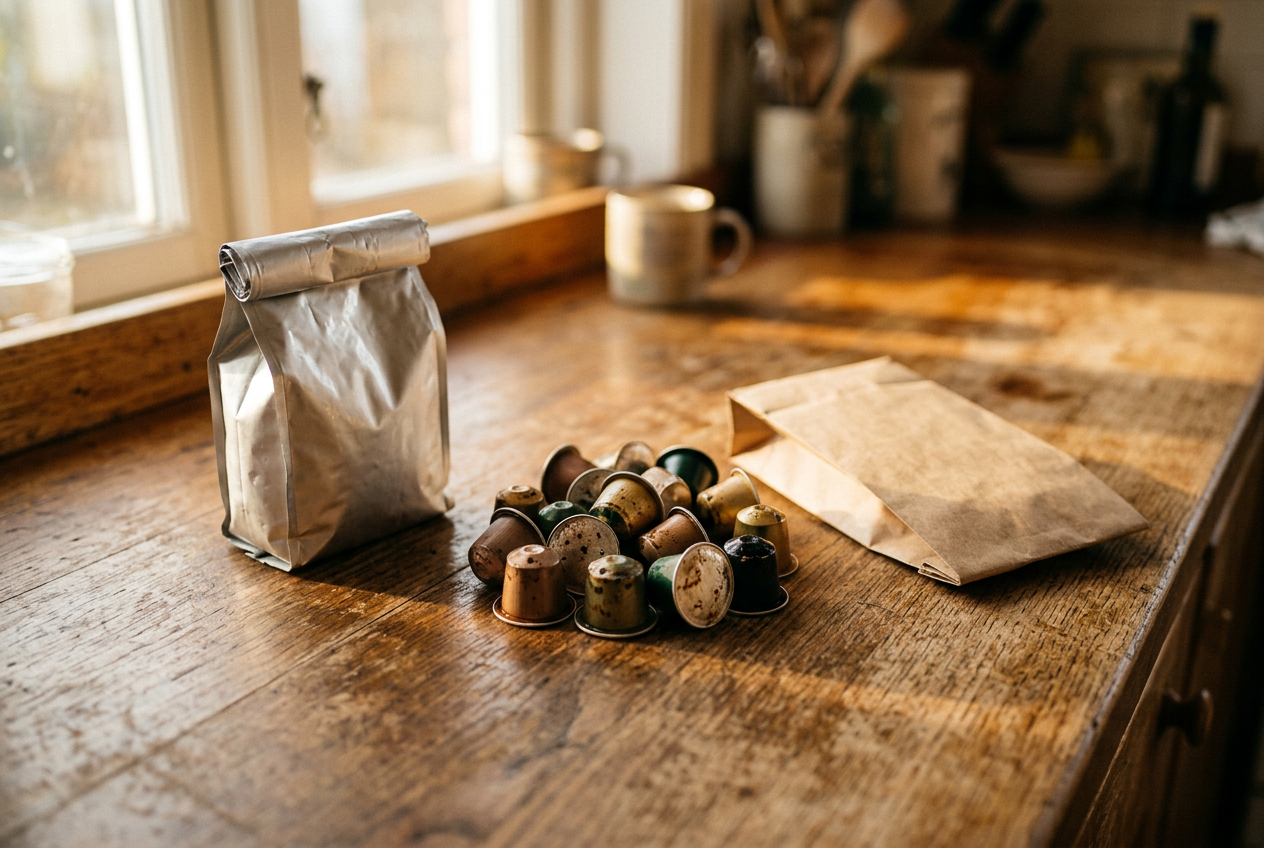
From 12 August a capsule is packaging in the eyes of the law, with a file to match.
On 12 August the EU packaging regulation stops being a document for compliance teams and starts being law. Regulation 2025/40 becomes binding across the Union, and among the things it reclassifies is the coffee capsule, which is now packaging rather than a coffee product.
What changes on 12 August
PPWR treats a capsule the way it treats a bottle or a carton. Capsules now fall under the same sustainability requirements as every other pack format on the European market, which is a shift for a product that spent twenty years being sold as single serve coffee rather than as a container.
The immediate obligation is administrative. From that date a declaration of conformity has to exist for every packaging unit, confirming it meets Articles 5 to 12. This is the second EU rule in two years to reshape how coffee reaches a shelf: the deforestation regulation did it for the beans, this one does it for what they arrive in.

The dates that come after
August is the start rather than the finish. By 2028 soft capsules meant to be thrown away together with the coffee grounds have to qualify as compostable packaging. By 2030 all packaging has to be recyclable, and plastic capsules have to hold at least 10 percent post-consumer recycled content.
By 2035 recyclability has to be demonstrated at scale, which is a harder test than it sounds. It asks whether the material actually gets collected and reprocessed in practice, not whether it could be under laboratory conditions. The regulation text sets those steps out in sequence.
Does this mean coffee capsules are finished?
No. PPWR sets requirements, it does not rank formats, and nothing in it says a capsule is worse than a bag. What it does is put the same file behind every format, which closes the space where a pack could be marketed as green without demonstrating anything.
Different formats simply have different work ahead. Aluminium capsules already have collection schemes running in several countries. A bag of whole beans has fewer parts to account for, though the one-way valve on it exists for a reason that has nothing to do with waste and everything to do with the gas fresh coffee gives off.

Where you will actually see it
Mostly on the label. From August packaging has to carry sorting information, so the change arrives as new symbols and instructions rather than as a different product on the shelf. Specialty coffee has mostly sold in bags, so the visible shift there will be smaller than in the capsule aisle. Some ranges will quietly disappear for a while as their documentation catches up, the same pattern the deforestation rules produced last year.
Look at the sorting mark on the next pack of coffee capsules you buy. That small block of symbols is the part of this regulation written for you rather than for the manufacturer.

Taste our coffee from Mexico
Freshly roasted, delivered to your door.


