Coffee exports rose 6.3% in July and robusta coffee did all of it
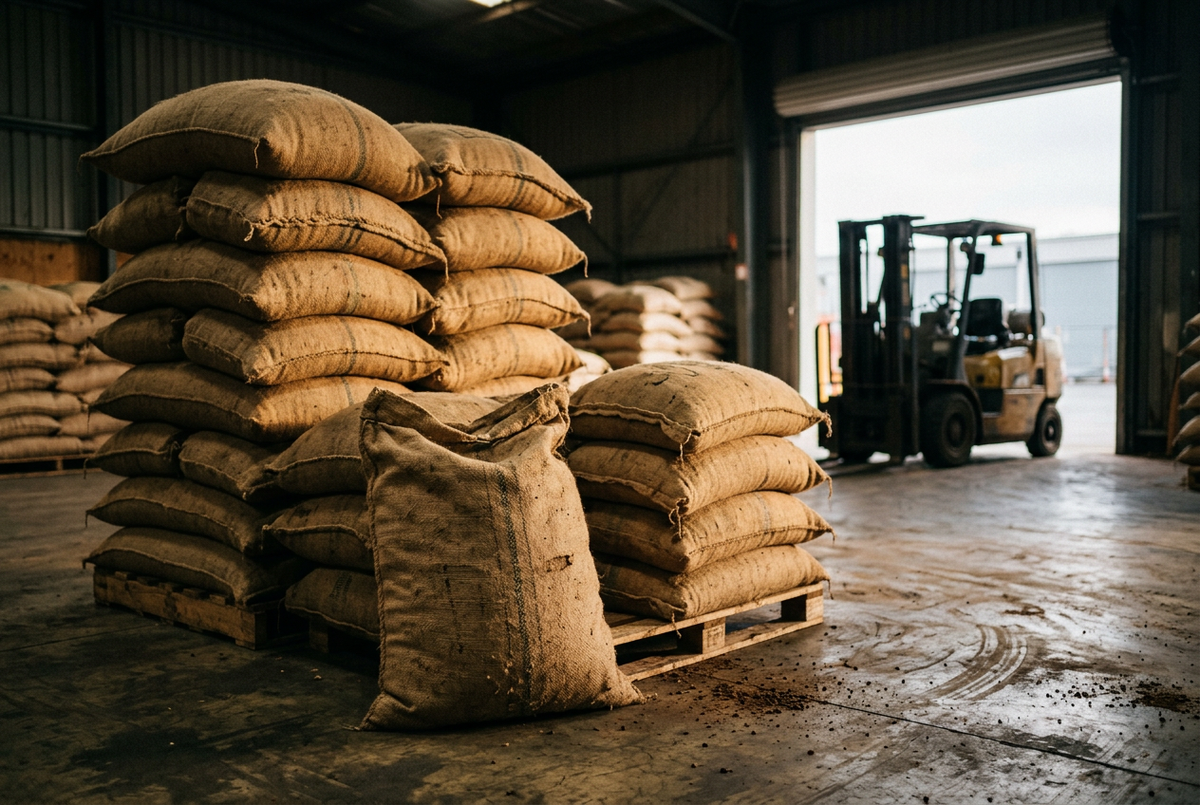
Global green coffee shipments rose 6.3% in July 2026 and the robustas supplied every bag of the increase.
Somewhere between a port crane and a supermarket shelf, the mix of coffee exports changed. The International Coffee Organization's report for August 2026 puts global green bean shipments in July at 10.76 million bags, up 6.3% on the 10.12 million bags shipped in July 2025. Every arabica group in that table fell. The robustas covered the whole increase on their own.
Robusta coffee carried the whole rise
Robusta green bean shipments rose 32.0% to 4.98 million bags in July, and nothing else in the table moved up with them. The Colombian Milds fell 11.1% to 1.04 million bags. The Brazilian Naturals dropped 10.0% to 2.46 million bags. The Other Milds came in 6.7% lower at 2.27 million bags.
Three groups down, one group up by almost a third, and a monthly total that still reads as growth.
Arabica coffee keeps losing share
Total arabica shipments came to 5.78 million bags in July, down 8.9% from 6.35 million a year earlier. Widen the frame to the coffee year and the drift is easier to see. Across the first 10 months of coffee year 2025/26, the arabicas accounted for 59.7% of world green bean shipments, against 63.6% over the same stretch a year before.
The total barely moved. Cumulative shipments from October 2025 to July 2026 came to 102.87 million bags, down 0.4%. Close to four percentage points of share changed hands inside a pile that stayed the same size. Robusta's reputation for shrugging off heat has taken a knock in the research, and none of that is what an export table measures.

Two regions went the other way
Count every form of coffee, soluble and roasted included, and July's total was 12.23 million bags, up 3.3% from 11.84 million. Underneath that the regions pulled apart. Asia and Oceania shipped 4.38 million bags, up 17.6%. South America added 3.1% to reach 4.57 million.
The other two shrank. Africa was down 6.7% at 1.90 million bags. The Caribbean, Mexico and Central America, the region behind most of the washed milds a European breakfast blend is built on, was down 15.9% at 1.39 million bags. The ICO's coffee market report sets the four regions side by side and offers no single cause for any of it.
Does a bigger crop explain it?
Part of it, on the ICO's own estimates. World coffee production for 2025/26 is estimated 4.4% higher at 183.6 million bags, global coffee consumption is estimated 0.8% lower, and the balance is put at a surplus of 3.0 million bags. Those are estimates that get revised, not counted totals.
Price supplies the rest. The robustas averaged 180.63 U.S. cents/lb in August, 2.2% below July, while the Colombian Milds averaged 387.46 and the Other Milds 361.31. A spread of more than 200 U.S. cents/lb between the cheapest group and the dearest one is a standing invitation to a blender, which is a different mechanism from the one that turned a record harvest forecast into a higher futures price in July.

What the headline price hid
A shift this size in the mix did not register as a shift in the headline number. The ICO composite indicator averaged 287.29 U.S. cents/lb in August, against 287.26 in July, moving between 279.38 and 301.97 inside the month.
Species is printed on most bags. The word blend is rarely broken down, and a 100% arabica claim says something about species and nothing about origin or grade. Anyone wanting to know which half of the coffee trade is in the cup starts there, and asks when a blend names neither.

Drink the coffee behind the writing
Freshly roasted, delivered to your door, with a fair deal behind every bag.