Direct import coffee: why a shorter chain tastes better
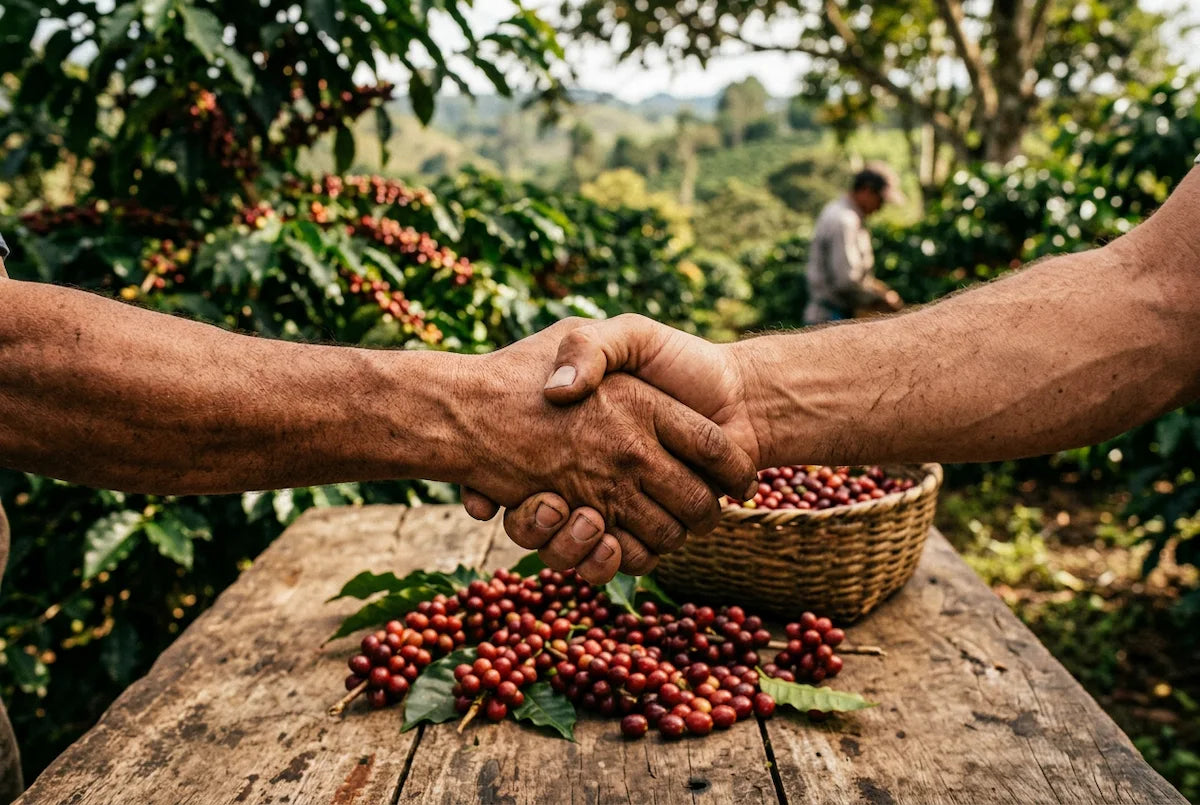
Every link in the chain takes a cut. Direct import coffee is about what happens when you remove most of them.
Most coffee you drink has made a long journey. Not just geographically, but through hands. Trader, exporter, importer, roaster, wholesaler, shop. Every link takes a margin. Every link knows less about the previous one than the consumer would like.
Direct import coffee works differently. Here is why it matters, for the farmer and for your cup.
What direct import coffee means
With direct import coffee a brand buys directly from the farmer or cooperative, without middlemen. There is no export agent setting the price, no anonymous lot on a commodity market. The buyer knows the farmer, knows the plot, knows the processing method. Price and quality are negotiated directly based on what the coffee is actually worth.

That sounds logical but it is the exception in an industry built historically on volume and standardisation. The traditional coffee chain has at least five parties and each of them has an interest in as little transparency as possible about the previous link. Direct trade coffee breaks that logic.
What a shorter chain does for the farmer's price
In the traditional chain the farmer receives a commodity price set by the New York Coffee Exchange. That price fluctuates strongly and rarely reflects the actual quality or the work behind it. A fair coffee import through direct trade pays above that market price, based on the quality of the specific harvest.
The effect on the farmer is concrete. A higher and more predictable price makes it possible to invest in better processing, in maintaining the plantation, in quality improvement. Those investments come back in the cup. The farmer who knows his best beans are valued and fairly paid sorts differently, dries more carefully and delivers more consistently.
Why direct import also tastes better
With bulk purchasing through the traditional chain quality is lost in two ways. First, lots are blended: beans from different farms and quality grades end up in the same bag. Second, feedback is absent. The roaster does not know where the bean came from, the farmer does not know what the roaster tastes.

With Mexican coffee import through direct trade that is different. The buyer knows exactly which plot the beans come from, at what altitude they grew and how they were processed. That information enables targeted purchasing: only the best lots, from farmers who know what they are delivering. Coffee from Chiapas at 1200 to 1800 metres altitude has a flavour profile that would never come into its own in an anonymous bulk chain. Direct trade coffee is precisely the reason why single origin beans from small farms have so much more to offer than their price suggests.
Curious what direct import tastes like?
Santo Café sources its Arabica through an importer who buys directly from small family farms in the highlands of Chiapas, Mexico — with a lot number per harvest and transparent sourcing conditions. Each lot is traceable back to the cooperative of origin.

In flavour, in complexity and in what the bean has to offer when it is treated with care from the start. If you want to taste what a short chain actually delivers, this is where to begin.

Drink the coffee behind the writing
Freshly roasted, delivered to your door, with a fair deal behind every bag.