Women in coffee: the invisible backbone of the supply chain
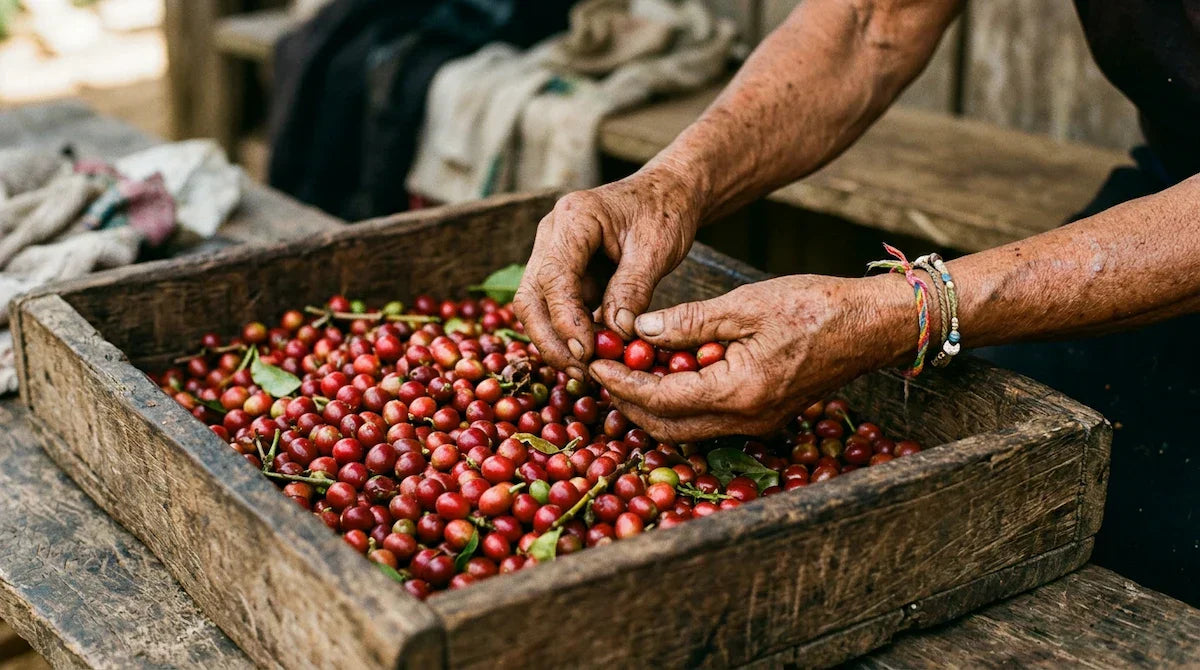
They do 70 percent of the work and own 15 percent of the land. Women in coffee are the invisible backbone of the chain.
Women in coffee pick, sort, process and carry the harvest. Depending on the region they do up to 70 percent of the manual work on coffee farms. And yet they own less than 15 percent of the land and receive a disproportionately small share of the income that coffee generates.
That is not a detail. It is a structural characteristic of how the coffee supply chain is organised worldwide.
The scale of the contribution of women in coffee
Around 125 million people worldwide depend on coffee as a source of income. Female coffee farmers lead 20 to 30 percent of all coffee farms, but their share of the work is far greater than their economic position suggests. In Latin America women provide 20 percent of the agricultural labour in coffee, in Sub-Saharan Africa that rises to 50 to 75 percent.
That effort rarely translates into equal access to land, credit, training or decision-making power. Coffee supply chain women are central to production but are almost invisible in the ownership structures and profit distribution that sit above them.

What the inequality means in practice
Female coffee farmers have on average less access to fertilisers, better seedlings and technical knowledge. That has a direct effect on yields: farms under female leadership produce on average up to 25 percent less than comparable farms under male leadership. Not because women are less capable, but because the resources are unequally distributed.
Coffee sector gender equality is therefore not a social theme alongside the chain. It is a productivity question. The FAO calculated that closing the gender gap in agriculture would increase global agricultural output by 2.5 to 4 percent. For the coffee sector that amounts to billions of extra cups per year.

Which initiatives make the difference
The specialty coffee world leads in recognising women in coffee as a specific area of focus. Organisations like the International Women's Coffee Alliance (IWCA) and programmes like Cafe Femenino work on direct market access and training for female coffee farmers. Women who are supported through these kinds of programmes increase their productivity, improve their income and generally reinvest that income into the household and the community.
Specialty coffee equity is also a purchasing choice. Brands that consciously source from cooperatives where women have economic rights contribute to structural change. Perfect Daily Grind documents extensively how women in coffee are playing an increasingly prominent role in emerging specialty coffee markets worldwide.
Why this is relevant for the consumer
A fair coffee supply chain does not begin at the roaster or the importer. It begins at the farmer picking the cherry. And in most coffee-producing countries, that farmer is a woman. Choosing transparent sourcing with traceable origin makes it possible to know who the women in coffee are in that chain and how they are treated.
Curious about coffee from a transparent chain?
Santo Café sources its coffee from Mexico, where farmers receive a fair price for their harvest. Single origin Arabica with a known origin, at a time when fairness in the supply chain matters more than ever.

If you want to know more about where your coffee comes from, this is a good place to start.

Drink the coffee behind the writing
Freshly roasted, delivered to your door, with a fair deal behind every bag.