Coffee Bean Degassing: Why Day One After Roast Is the Worst to Brew
Fresh roasted coffee needs time to release CO2 before it brews well. A practical guide to degassing windows for espresso, filter, and storage.
Someone picks up a bag of single-origin from a local roaster on Saturday morning. The roast date stamped on the back is yesterday. They get home, weigh out 15 grams, set up the V60, and pull a brew that comes out thin, fizzy, and weirdly sour. The grinder is the same. The water is the same. The technique is the same. The cup is wrong.
That is coffee bean degassing in action. Fresh roasted coffee is not ready to brew on day one. Day one is, by some distance, the worst possible day to open the bag.
What is actually happening inside a roasted bean
Roasting drives chemical reactions that produce a lot of carbon dioxide inside the bean. A roasted coffee bean holds roughly 2 to 10 mg of CO2 per gram, depending on roast level and how dark the development was. That gas is trapped in the cellular structure of the bean and slowly diffuses out over time.
This is coffee CO2 release, and it happens in two phases. The first 48 hours are violent. The bean off-gasses fast, which is why a freshly roasted bag puffs up overnight. After that, the rate slows but does not stop. Degassing continues for 2 to 4 weeks at a gentler pace.

Darker roasts hold more CO2 to start with and release it faster. Lighter roasts hold less but release it more slowly because the bean structure is denser. Either way, brewing into the peak of the off-gas curve disrupts extraction. The CO2 pushes water away from the grounds, blocks contact, and produces channeling. The cup tastes thin and acidic in a hollow way.
Different rest periods for espresso and filter
The coffee rest period that works depends on the brew method. Espresso is the most sensitive. The 9-bar pressure of an espresso machine amplifies every gram of trapped CO2 into puck disruption and gushers. Espresso degassing time runs 10 to 21 days post-roast for most beans, sometimes longer for very light development.
Filter coffee rest is shorter. Pour-over, batch brew, and immersion methods all give the gas a chance to dissipate as the water flows through. Barista Hustle has documented the optimal window for filter at roughly 5 to 14 days post-roast, with most cups hitting their sweet spot somewhere in the middle of that range.
French press and moka pot sit closer to filter than espresso on this curve. The coarser grind and lower pressure forgive more gas. They still benefit from a few days of rest, though.
How packaging slows or speeds the process
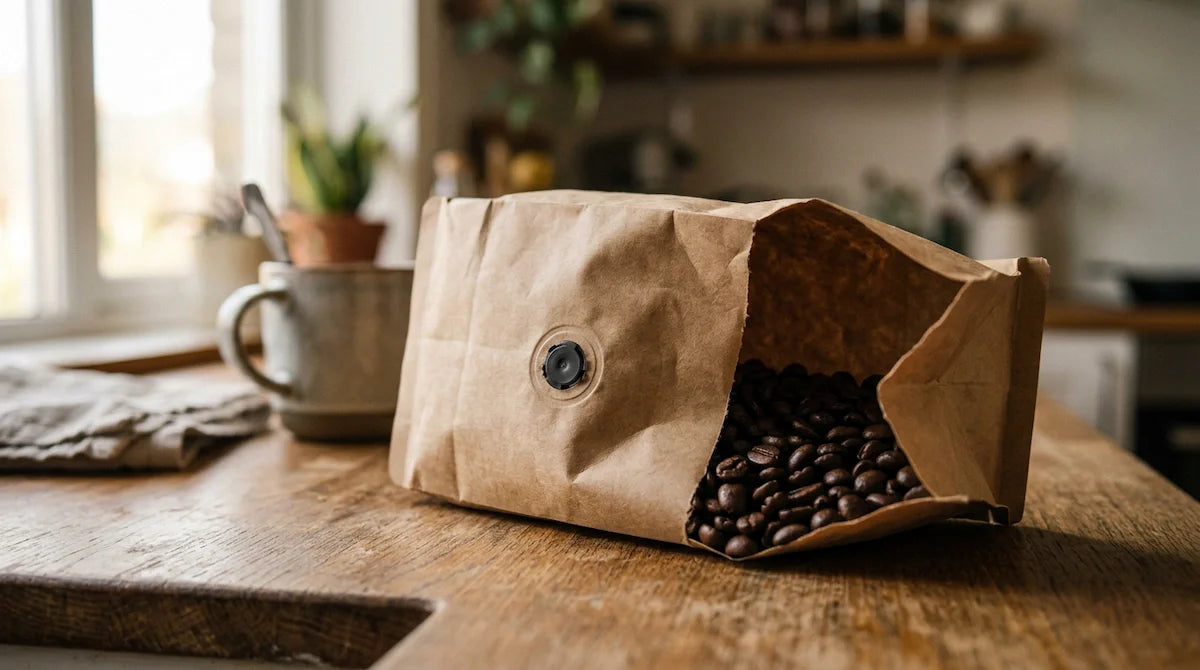
The bag matters more than most people realize. A one-way valve bag is the specialty industry standard for a reason. The valve lets CO2 escape outward but keeps oxygen and moisture from getting in. Bag pressure stays low. Oxidation stays slow.
A coffee storage bag without a valve is a worse option. Either it inflates dangerously and sometimes splits, or the roaster has degassed the beans openly before packing, which means oxidation has already started. A sealed plastic tub with whole beans inside, kept cool and dark, holds quality better than people expect.

Grinding accelerates degassing massively. A whole bean releases CO2 slowly through a small surface area. Ground coffee releases most of its remaining gas in minutes. This is why pre-ground coffee from the supermarket is essentially flat by the time you open it. The CO2 left when it was sealed is long gone.
When to drink the bag and when to let it wait
The practical move with fresh roasted coffee is to write the roast date on the bag if it is not already there, and not open it before day 5 for filter or day 10 for espresso. Most specialty roasters now ship with a stamped roast date precisely so home brewers can plan around the degassing window.
Past day 30, light roasts can still cup well, especially if the coffee storage bag has been valve-sealed and kept out of light. Past day 45 most beans start to fade. The peak window is narrower than the sales window, and that is fine. The bag does not become bad. It becomes less interesting.
Want beans roasted on a schedule you can plan around?
The rest window only works if you know when the beans came out of the roaster. Santo Café roasts single-origin coffee from Mexico in small batches.

Taste our coffee from Mexico
Freshly roasted, delivered to your door.