Light, medium or dark roast: what coffee roast levels really mean
Light, medium and dark roast change how coffee tastes, not how strong it is. Here is what each roast level does to flavour, acidity and body.
Pull two bags off the same shelf and one looks pale, almost like raw peanuts. The other is glossy and near-black, with a faint sheen of oil on the surface. Same plant, same farm in many cases, sometimes even the same harvest. The difference is heat and time, and it changes the cup more than almost any other single factor. Understanding coffee roast levels is the fastest way to stop buying beans that disappoint you.
What actually happens inside the roaster
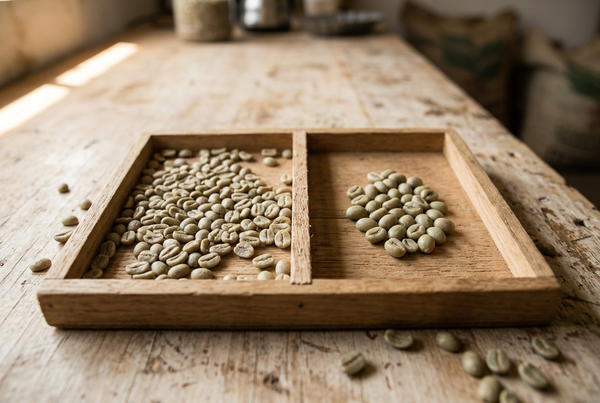
Green coffee beans are dense, grassy, and not pleasant to drink. Roasting fixes that through controlled heat, usually between 196°C and 230°C, over eight to fourteen minutes. Around the nine or ten minute mark the beans hit what roasters call first crack, an audible pop as trapped steam and gas force their way out. That moment marks the start of drinkable coffee.
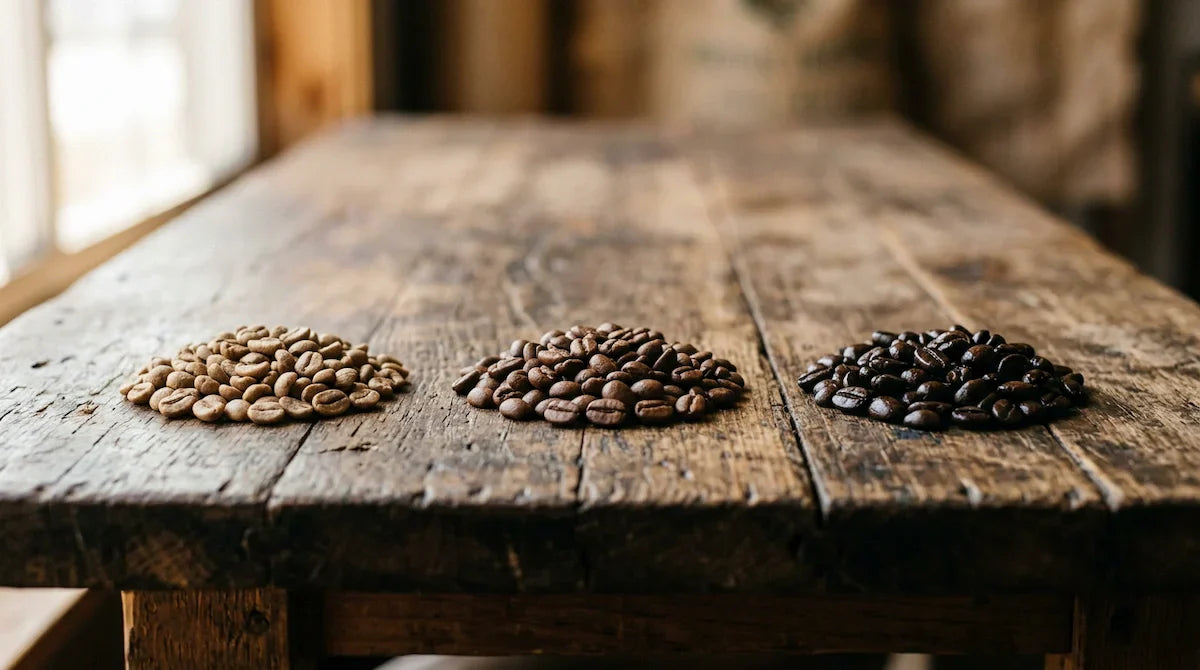
From first crack onward, sugars caramelise and the bean's natural acids start breaking down. Pull the beans soon after first crack and you get light roast coffee, which keeps most of its brightness and origin character. Run them longer, into second crack, and oils migrate to the surface while roast flavour takes over. The bean darkens because its sugars are moving toward carbon. Those surface oils are also why a very dark bag goes stale faster, since fresh roasts need a few days to settle before they brew at their best.
Light, medium and dark, in the cup
Light roast coffee tastes bright and often fruity, with a thinner body and noticeable coffee acidity. It is where you find notes like citrus, berry, or florals, because the roast has not buried them yet. Medium roast coffee sits in the middle: more body, softer acidity, flavours that lean toward caramel, nuts, and baked sugar. It is the most forgiving range and the reason it dominates supermarket shelves.
Dark roast coffee trades origin character for roast character. The bright notes flatten out, the body turns heavy, and you taste cocoa, toast, and a smoky or even slightly bitter edge. None of these is better than the others. A washed Ethiopian roasted dark is a waste of a delicate coffee, and a cheap commodity bean roasted light can taste sharp and hollow. Roast and coffee flavour have to suit each other.

Does dark roast have more caffeine?
This is the most common myth in coffee, and it runs backwards. Caffeine is remarkably stable under heat, so by weight a light and a dark roast are nearly identical. What changes is the bean itself: dark roasts lose more moisture and mass, so the beans are lighter and larger. Scoop your coffee by volume and a dark roast actually gives you slightly less caffeine per scoop, not more. Weigh it on a scale and the gap mostly vanishes. The "strength" people taste in a dark roast is roast bitterness, not a caffeine hit. Roast level changes how roast affects taste, not how much the coffee will wake you up.
How roast and brew method fit together
Roast level and brewing are a pair. Lighter roasts are denser and harder to extract, so they reward hotter water, a finer grind, and methods with contact time like pour-over or a long immersion. Dark roasts are brittle and porous, give up their solubles fast, and can turn harsh if you push them. They suit espresso and shorter brews. The Specialty Coffee Association's published research on extraction goes deep on why density and solubility shift across the roast spectrum. The short version for home: if a light roast tastes sour, grind finer or brew hotter before you blame the beans.

Reading a roast level on the bag
Good roasters tell you where their coffee sits, though the words vary. "Light," "city," or "filter roast" point to the bright end. "Medium" or "omni" sit in the middle. "Dark," "French," or "espresso roast" mean the beans ran long. A visible oil sheen is a reliable dark-roast tell. A bag that names a single origin coffee and a specific region is usually signalling it wants you to taste that place, which means a lighter or medium roast. The same traceability that new EU rules now demand tends to come with roasters who treat origin as the point. Many specialty Mexican coffees are roasted light to medium for exactly this reason: push the roast too far and the gentle chocolate-and-nut profile a Mexican bean is known for simply burns off.
Curious how a roast meant to show origin tastes?
That gentle profile only survives if the roast is built to protect it rather than cover it. Santo Café roasts its Mexican coffee to a level that keeps the origin character in the cup, so you taste the region instead of the roaster. It is single origin coffee from Mexico, handled with that balance in mind.

Taste our coffee from Mexico
Freshly roasted, delivered to your door.