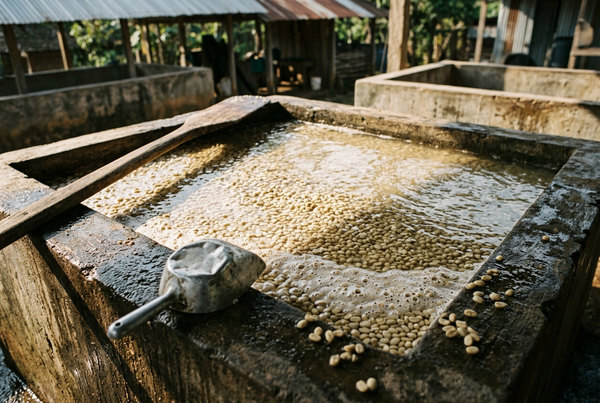
It takes 6.23 kilos of coffee cherry to make 1 kilo of green coffee

Cenicafé weighed coffee at every stage of wet processing and found that one kilo in the bag now starts out as 6.23 kilos of fresh fruit.
A ripe coffee cherry weighs about 1.85 g. The seed inside it, once the skin and the flesh and the papery husk are gone, weighs 0.18 g. Almost everything a picker carries down the hill is thrown away before a bag is ever filled, and the ratio between those two ends of the process is one of the few numbers in coffee that gets quoted for decades without anyone going back to weigh it again. Cenicafé, the research arm of Colombia's coffee growers, went back and weighed it again. The answer had moved.
What 1977 said and what 2006 measured
The reference figures the trade still leans on were compiled by Uribe in 1977. They put the ratio at 5.56: that much fresh fruit for one kilo of dried, hulled seed. In 2006 a team at Cenicafé ran the whole sequence again on fresh lots, weighing the mass at every stage from the bucket to the huller, and published the result as Avance Técnico 370. Their figure was 6.23.
What the authors do with that gap is the interesting part. Uribe never documented his methodology or the kind of sample he used, so the two studies may not be weighing quite the same thing. Leaf rust and the coffee borer arrived between them. The varieties in the ground changed. The paper says the difference is hard to explain and then stops, which is more discipline than the number usually gets.
Pulp is the biggest thing the coffee cherry loses
The largest single loss happens first, at the depulper. Coffee pulp, meaning the red skin and the soft flesh under it, came to 44.02% of the fruit by fresh weight in the 2006 sample. Uribe had put it at 40%. Close to half the harvest is gone before the seed has been washed.
What survives is still wet and still wrapped. Measured to that point alone it takes 4.94 kilos of fruit to reach one kilo of dry parchment coffee, beige husk still on, and that is the state most farms actually sell in. The 4.94 matters more to a grower than the headline number does. Which route the fruit takes, washed, natural or honey, decides how much of the flesh stays on the seed through the drying yard.

The husk the mill takes off last
Dry parchment goes to a huller and the machine strips the papery layer away. Cenicafé measured the loss at that step at 17.75%, against 18.00% in the old tables, one of the few figures that barely moved in thirty years. Parchment to green coffee came out at 1.25, identical to 1977.
So the last stage is the boring one, and boring is useful. A grower who knows the weight of dry parchment sitting in the warehouse knows the weight of what will leave it, within a percent or so. Everything genuinely uncertain happened earlier, back in the fruit.
Sorting before the mill changes the coffee yield
Cenicafé ran two samples side by side, one processed exactly as harvested and one hand sorted before anything else happened. The difference shows up at every stage downstream. Milling yield was 90.75% for the unsorted lot against 95.99% for the sorted one. Defects in the finished green coffee came to 9.12% against 5.41%. Screen 17, the large bean grade that earns the premium, held 67.32% of the unsorted sample and 73.32% of the sorted one.
None of it moves the 6.23. Sorting pulls out fruit that was never going to make good coffee, so the mass ratio sits where it is while the quality of what survives climbs. The coffee yield a farm gets paid for and the weight it actually ships are two different quantities, and the distance between them is the part a picker controls. That starts at the tree, in the few weeks when the fruit is ripe.

What the number is actually good for
Take the net weight printed on the back of a bag and multiply it by 6.23. A 250 g bag started life as roughly 1.6 kilos of fresh fruit, picked by hand, a cherry at a time, and that is before the roaster drives off its own share of the weight.
The figure is Colombian, measured on Colombian lots, and every origin and every washed process will land somewhere slightly different. It is still the closest thing to an honest conversion that anyone has published with the working shown.

Taste our coffee from Mexico
Freshly roasted, delivered to your door.