Coffee processing methods: what washed, natural and honey change
Washed, natural or honey is settled in the days right after picking, and one trial dried the same harvest for 9, 10 and 19 days with three different cups to show for it.
Two bags on the same shelf, same origin, same roast level, and one tastes like a plum while the other tastes like lemon and caramel. The word that explains most of that gap is not the varietal and it is not the altitude. It is a single line near the bottom of the label: washed, natural or honey. A washed process coffee and a natural off the same trees in the same week still arrive as two different drinks, because the gap opens in the days between picking and shipping.
What coffee processing methods actually decide
All three routes answer one question: when does the fruit come off the seed. A ripe cherry is skin, then a layer of sweet slime, then the seed inside a papery shell. Strip the lot off and rinse the seed clean and the route is washed. Leave the whole cherry on and dry it like a raisin and the route is natural. Take the skin off, leave the sticky layer, and the route is honey. Everything after that falls out of the one call.
Nobody at the mill gets to schedule it. The window is set by the harvest itself, and a cherry left in the sack overnight starts fermenting whether anyone intended it or not.
Washed process coffee and the tank it sits in
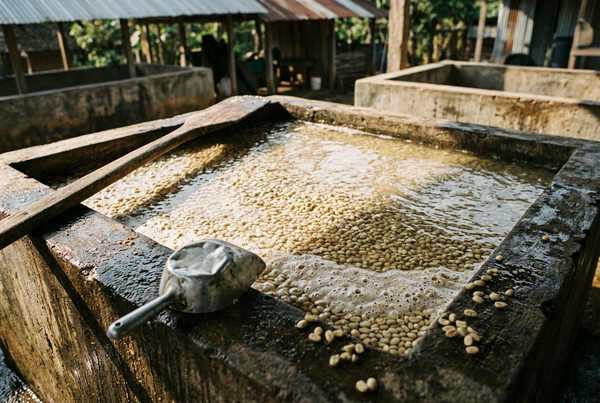
Depulping tears the skin and most of the flesh away within hours of picking, but a slick of coffee mucilage stays welded to the parchment and will not rinse off while it is intact. Breaking that layer down is the whole job of coffee fermentation, which is nearer a controlled rot than anything a winemaker would own up to. In the trial published in Current Research in Food Science, the washed lot was fermented for 36 h, then washed and dried for 9 days.
Mills vary wildly in how they run that step. A study in the journal Foods compared two wet mills working the same crop: the batch mill fermented for 26 h and used about 0.63 L of water for every kilogram of processed coffee, while the continuous mill took 48 hours to finish fermenting and at least 3 L of water per kilogram. The same team measured where the caffeine goes, and found that up to 40 % of it leaves with the pulp during wet processing.

Natural process coffee dries with the fruit still on
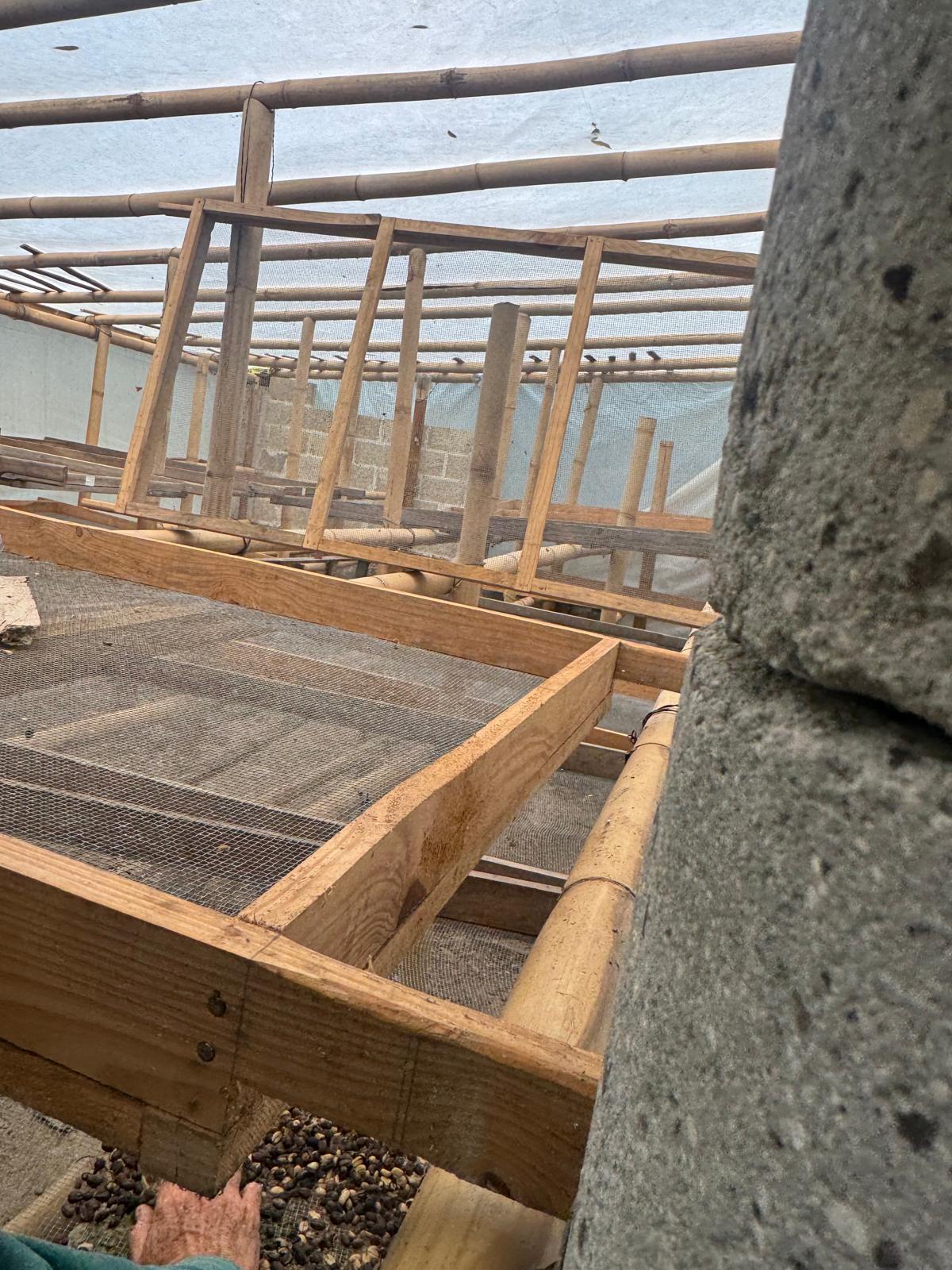
The natural route skips the tank and nearly all of the water. Whole cherries go straight onto the beds and stay there while the fruit shrivels down onto the seed, which takes far longer. Drying time for the natural lot ran to 19 days before the dried husk was peeled away, against 9 days for the washed lot beside it. The sensory panel on that trial logged almond, honey, maple syrup, dried fruit and a plain fermented note.
Those extra weeks are also where the risk lives. A bed raked badly, or a run of humid nights, and the fruit moulds onto the seed instead of drying onto it.
Honey process coffee sits between the two
Honey process coffee is the middle path, and the name promises something it does not deliver: no honey is involved. The skin comes off as it would in a washed lot, the sticky layer stays put as in a natural, and the beans reach the beds tacky. In the same trial that lot dried for 10 days with no fermentation step at all. All three came off at the same finish line, moisture in the shelled beans held between 10 % and 12 %.
What reaches the roastery is a sack of green coffee beans that behave differently in the drum, which is one reason a roast level that flatters a washed lot can bury a natural.

What the laboratory could and could not separate
That same paper ran the three lots through lipid profiling. It identified 510 lipid molecules across 27 subclasses, and pulled out 37 of them that worked as markers for telling the three routes apart. The tasting panel separated them too, scoring the washed and honey brews significantly higher than the natural. All three still cleared 80 points, the line the specialty trade draws.
That last number is the one to hold onto. A panel preference on one harvest from one farm is not a ranking, and a natural process coffee marked down for its ferment is what somebody else is buying on purpose.
So buy two bags of one origin at one roast level with different words on that bottom line, grind them the same and brew them at the same ratio. Taste for where the fruit sits: inside the coffee, or laid across the top of it.

Taste our coffee from Mexico
Freshly roasted, delivered to your door.