
The coffee harvest season: why your beans come from one picking window
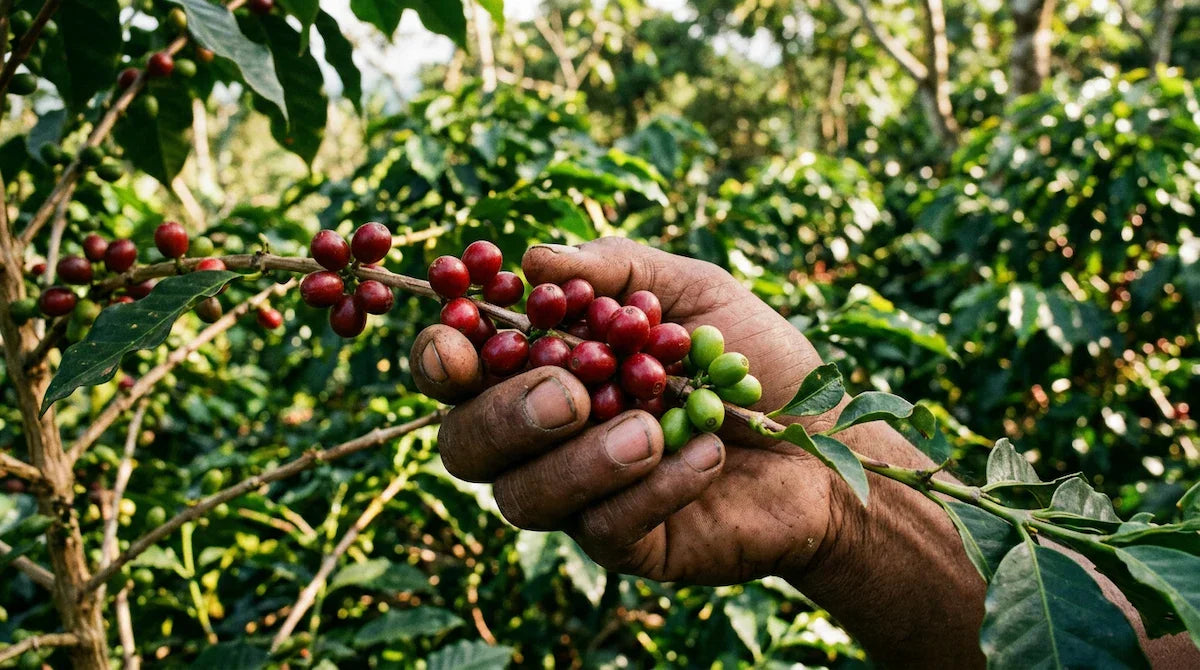
Coffee is picked once a year, cherry by cherry. Here is how the coffee harvest season and selective picking shape what ends up in your cup.
A bag of coffee looks like a factory product. Sealed, dated, available whenever the shelf needs restocking. The plant behind it works on a different clock. Coffee fruits once a year in most growing regions, and the coffee harvest season is a fixed window of a few months, not a tap that runs all year. What lands in your grinder traces back to one stretch of weeks on one set of hillsides.
Why coffee comes in a season
A coffee tree flowers after the rains, sets fruit, and then spends months pushing those fruits toward ripeness. The fruit, called a cherry, turns from green to yellow to a deep red when it is ready. That cycle runs once per year for most arabica, so picking coffee cherries happens in a concentrated burst rather than continuously. A few regions near the equator get two flowerings and two harvests, but the single annual crop is the norm.
This is why a coffee harvest cannot be rushed or stretched. The tree decides the timing. Harvest timing follows the fruit, and the fruit follows the weather of the months before it.
The work of selective picking
Here is the part most people never picture. Cherries on the same branch do not ripen together. One branch can hold a deep-red cherry, a half-yellow one, and a hard green one at the same moment. To get only ripe coffee cherries into the lot, pickers walk the same tree several times across the season, taking just the red ones each pass and leaving the rest to mature.
That is selective picking, and it is slow, careful, hand work. The alternative, stripping a whole branch in one pull, is faster and cheaper but drags unripe and overripe fruit into the bag. The International Coffee Organization tracks how producing countries balance that labour cost against quality every season. Harvest is the most labour-intensive moment of the entire coffee year, and most of it still depends on human hands and human judgement.

What happens when the wrong cherries get in
Ripeness is not a detail. An underripe green cherry brings a sharp, grassy, astringent edge. An overripe or fallen cherry can carry a boozy, fermented, sometimes rotten note from sugars that broke down too far. A lot picked carelessly tastes muddled because it is a blend of three different fruit stages pretending to be one.
A lot picked only at peak red tastes clean and consistent, because every cherry was at the same stage when it was processed. That same demand for knowing exactly what is in a lot now sits behind the EU's new traceability rules, which push the whole chain to prove where and when its coffee was grown.

Does the harvest date really matter to a drinker?
It matters more than the bag usually admits. A single origin coffee is the output of one harvest window, so it has a vintage in the same loose sense wine does. A bag that names a crop year or a harvest period is telling you it came from one defined picking. Mexican coffee mostly follows a main harvest that runs from roughly November to March, which means a true single-origin Mexican coffee reflects that specific stretch and not a rolling average of many. Even shifting drinking habits, like the move toward longer iced drinks, trace back to the same raw crop picked once a season.
How to read this on a bag
Look for a harvest year or crop period on the label. If it is there, the roaster is being specific about which picking you are drinking. If a coffee is sold looking and tasting identical every month of the year, it is almost certainly blended across multiple harvests and origins to hold that consistency. Neither is wrong, but they are different products. Next time you buy, check whether the bag tells you when its coffee was picked, or quietly avoids the question.
Want a coffee that tastes of one harvest, not an average?
That clean, single-window character is exactly what selective picking is built to protect. Santo Café sources its coffee from a single origin in Mexico, picked within one main harvest season so the cup carries the character of that crop. It is one place, one picking, in the bag you brew at home.

Taste our coffee from Mexico
Freshly roasted, delivered to your door.


