Paper coffee filters, metal or cloth: what each one changes
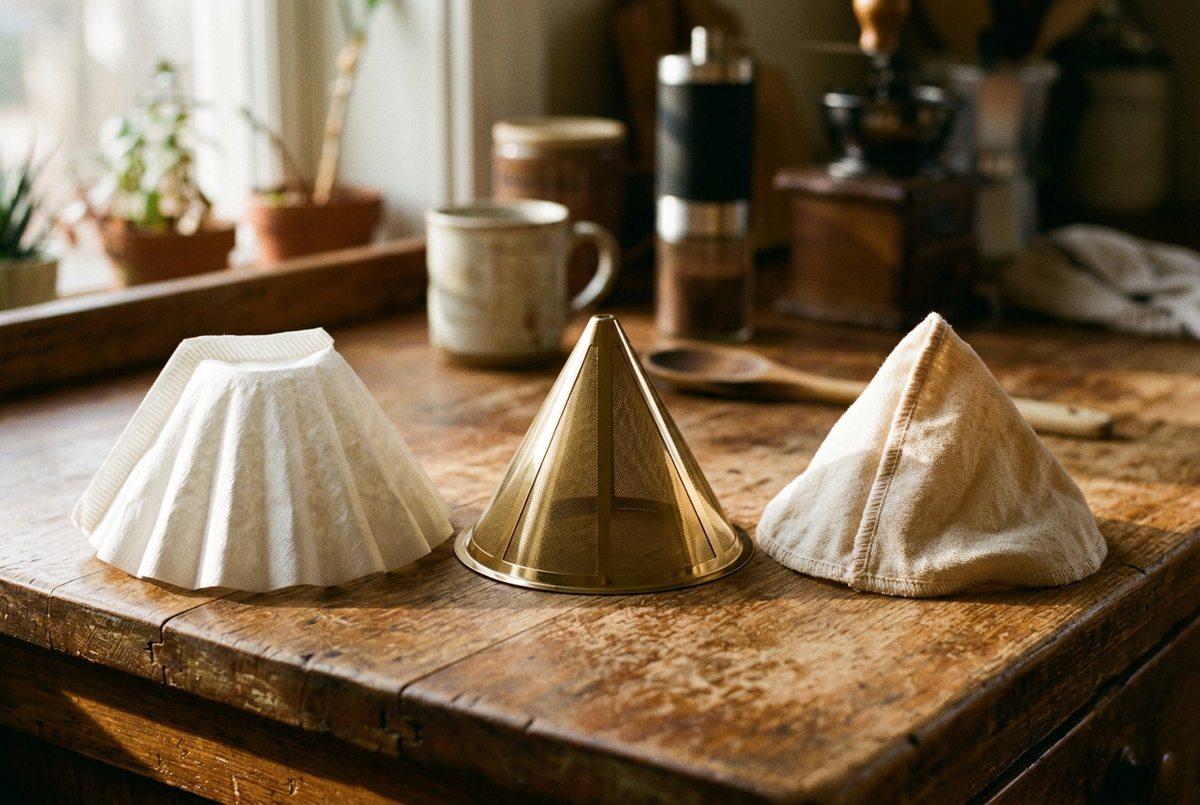
The cheapest part of the setup is the one that decides what reaches the cup.
A box of paper coffee filters costs less than a bag of beans and gets replaced without a thought. It is also the part of the setup that decides which molecules reach the cup and which stay behind in the grounds. The grinder, the water and the roast all pass through that last decision on the way out.
What a filter actually does
Brewed coffee leaves the bed carrying dissolved solids, suspended fines and coffee oils. A filter is a sieve with a pore size, and the pore size decides what gets through. Paper holds back the oils and most of the fine particles. Metal holds back the coarse grounds and lets nearly everything else pass.
That one difference explains most of what people argue about. A clean, light cup with legible acidity is a cup that lost its oils. A heavy, rounded cup with a little silt at the bottom is one that kept them. Neither is a mistake. They are two readings of the same coffee, and on a high-grown lot like a Chiapas coffee the two readings can taste like different beans.
How much cafestol in coffee reaches the cup
Cafestol and kahweol are diterpenes that ride in those oils, and they raise LDL cholesterol. How much of them ends up in the liquid differs by more than an order of magnitude depending on what the coffee passed through.
A 2025 study in Nutrition, Metabolism and Cardiovascular Diseases measured the two compounds across brewing methods. Paper-filtered drip came in at a median of 11.5 mg/L cafestol and 8.2 mg/L kahweol. Brewing machines fitted with metal filters reached a median of 176 mg/L. Boiled, unfiltered coffee sat near 940 mg/L cafestol and 680 mg/L kahweol. The authors calculated that replacing three cups of machine coffee with paper-filtered coffee five days a week would lower LDL by 0.58 mmol/L.
Moving from metal mesh to paper removes more than 90 percent of the cafestol in coffee. That is a measurement, not a prescription. What anyone should do about it belongs in a conversation with a doctor.

What a metal coffee filter gives you instead
A metal coffee filter buys texture. The oils that paper stops are what give a cup weight on the tongue, and the fines that slip through add a faint grit that many drinkers read as richness. A French press and the mesh basket in most drip machines both work this way. Poured side by side, the same brew through the two materials can differ enough in mouthfeel that people reach for the word roast to explain it.
It is also a reusable coffee filter, so nothing goes in the bin and nothing runs out on a Sunday morning. The catch is upkeep. Oil collects in the mesh and turns rancid, and a basket that has not been washed properly in a month will flavour everything brewed through it afterwards. A rinse under the tap does not shift oil. It takes detergent, regularly.
Is a cloth coffee filter the middle ground?
Close to it. A cloth coffee filter passes the oils the way metal does and holds back the fines the way paper does, which gives body without sediment. Plenty of people who have worked through all three end up here.
The price is attention. Cloth has to be rinsed straight after brewing, kept wet in the fridge or frozen between uses, and thrown out once it starts to smell. Neglected, it sours faster than a metal coffee filter does.

The habits that matter more than the material
Rinse paper before brewing. Hot water through the empty cone washes out the papery note and warms the brewer at the same time, and skipping it is the most common reason a pour over coffee tastes faintly of cardboard. Thicker papers also slow the flow, so changing brand can stretch the brew by half a minute with nothing else altered. If a recipe that worked last month suddenly runs long, the paper is the first thing worth suspecting.
Wash metal with detergent and retire cloth on schedule. Most specialty coffee is brewed through paper, because clarity is what a distinctive lot is sold on, though that is a preference rather than a rule. And the filter is the last link in a chain: the mineral content of your water shapes extraction long before anything reaches the cone.
Brew the same coffee twice on one morning, once through paper and once through metal, and taste which trade you would rather make.
Worth the care you put into filtering?

A filter can only reveal what was already in the coffee, and no amount of clarity rescues a bean with nothing to say. Santo Café roasts a single-origin Mexican arabica in small batches, the kind of coffee where the difference between paper and metal is worth tasting twice. One origin, one profile, nothing blended in to fill a gap.

Taste our coffee from Mexico
Freshly roasted, delivered to your door.