
The coffee supply chain has a new map and it names the companies
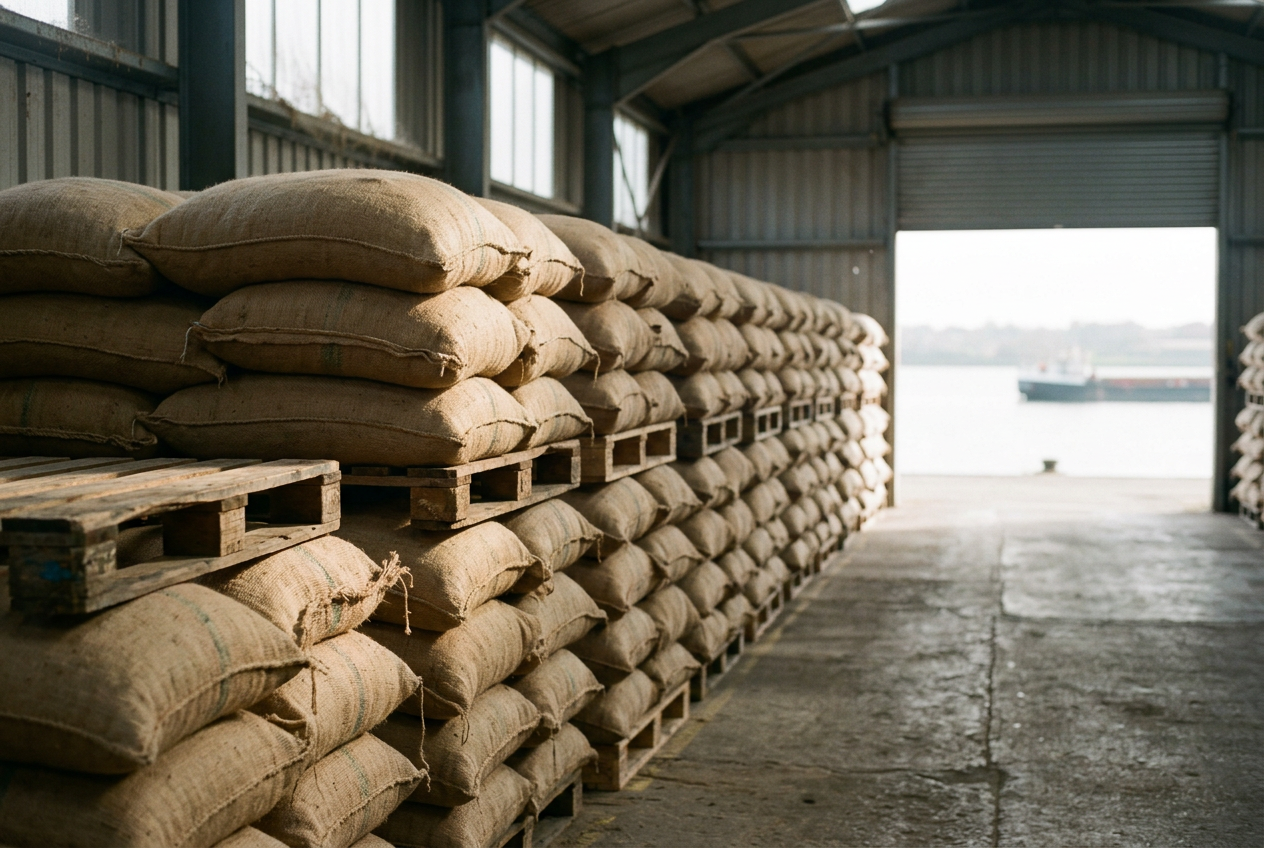
A new open dataset names the companies behind a third of the world's coffee exports, and shows how much of the trade is still recorded only at the border.
A public map of the global coffee trade landed on 20 August 2026, and it carries company names. Trase, the transparency initiative founded by the Stockholm Environment Institute and Global Canopy, released a dataset that follows coffee from where it grew to the country that bought it, and for ten producing countries it names the firms that shipped it, with the findings published on 1 September. What they describe is a trade wide at both ends and narrow in the middle.
What the new coffee supply chain map covers
The map is a snapshot of 2020, stitching UN Comtrade statistics together with per-shipment records from ten producing countries: Brazil, Colombia, Côte d'Ivoire, Ethiopia, India, Indonesia, Peru, Tanzania, Uganda and Vietnam. Those ten cover 78% of world coffee production and 81% of exports.
Six are resolved down to the province or district where the beans grew, a layer covering 54% of production and 55% of exports. The totals underneath are large: 11.1 million tonnes produced and 8.04 million tonnes of coffee equivalents exported, across 78 producing countries and 212 importing ones.
A short list of firms moves the global coffee trade
Concentration is the finding. The ten largest exporting companies handled 35% of exports from the countries assessed, and the top 30 handled 55%. Olam is the largest at 7.6% of assessed supply, ahead of Louis Dreyfus at 4.1%, Neumann Gruppe at 3.4% and Sucafina at 3.0%.
Cooxupé in Brazil and the Federación Nacional de Cafeteros in Colombia rank among the largest green coffee exporters, as does Intimex in Vietnam. Trase published the findings and the data openly.

The same names come back on the importing side
Follow the beans past the port and the list barely changes. Neumann Gruppe is the largest importer at 6.8%, then Nestlé at 5.5% and Olam again at 4.6%, with Starbucks and Lavazza close behind. Destination is more concentrated still: the European Union takes 40% of what producing countries export and the United States 18%.
Inside the EU three countries do most of the buying, Germany at 35% of EU imports, Italy at 19% and Belgium at 17%. The exchange side of the same plumbing, where a record harvest can arrive alongside rising prices, runs on different numbers again.
Where coffee traceability still runs out
A map is only as sharp as the paperwork behind it. Trase separates 2,939 exporting company groups and 3,070 importing ones, but company detail exists only where per-shipment records could be obtained. Everywhere else the trade appears as a national total and stops.
Mexico is one of those countries, and a place where what stays home is mostly instant coffee. Its exports sit in the dataset as a line for the country with no company attached, the ordinary condition for most coffee exporting countries. Coffee sourcing in Brazil can be traced to a municipality. Elsewhere the record ends at the border.

What a named trade register changes for a drinker
None of this changes what is in a bag. It changes what can be checked. Coffee industry transparency has mostly meant a sentence on packaging a buyer had to take on faith, and coffee traceability now has a public register behind part of it: Brazil at 32% of world supply, Vietnam 18%, Colombia 9%, Indonesia 7%, and a few firms moving a third of exports.
The coffee market has always known these names. The people drinking the coffee mostly have not. Next time a bag names a country, the question worth asking is what it says about everything between farm and roaster.

Taste our coffee from Mexico
Freshly roasted, delivered to your door.


