
The Mexican coffee that stays home is mostly instant coffee
Mexico grows overwhelmingly arabica and exports most of it, while roughly 60 percent of the coffee the country drinks at home is soluble.
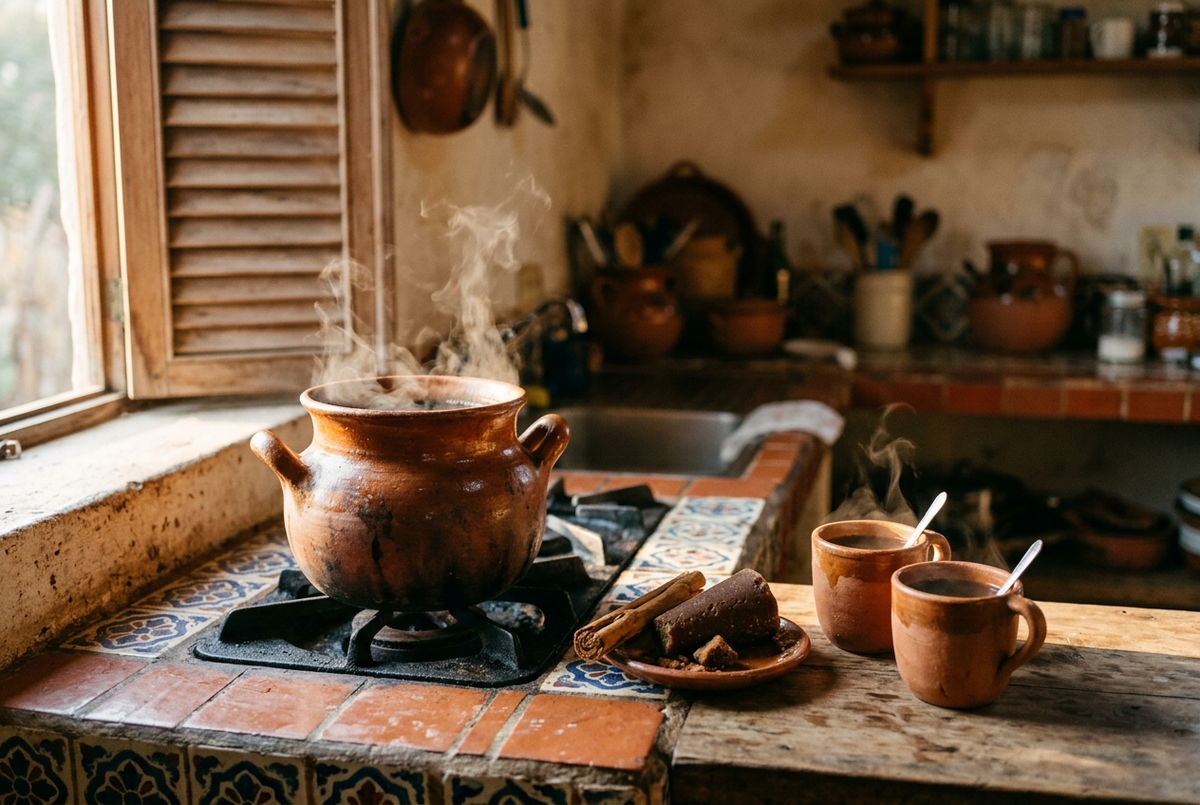
A clay pot sits on a low flame in a kitchen somewhere in Puebla, cinnamon in the water, a broken cone of raw sugar dissolving at the bottom. Two streets away, someone tips a spoonful of instant coffee into a mug and gets on with the morning. Both belong to the same country. Only one of them ever passed through a grader's hands. The gap between what Mexico grows and what Mexico drinks is wide, and the numbers behind it are public.
A crop that is still overwhelmingly arabica
The United States Department of Agriculture forecasts the 2026/27 Mexican harvest at 4.135 million bags of 60 kilograms, up about 1 percent on the season before. Of that, 3.575 million bags are arabica and 560,000 are robusta. The national split runs 85 percent arabica to 15 percent robusta, and robusta is the part that is moving: lower altitudes, tougher plants, and soluble processors offering growers a contract price they can plan around.
That is a forecast, not a result. The marketing year runs from October to September and nothing is in the warehouse yet. What it does settle is the shape of the crop. Arabica beans hold the hillsides, and they have held them since long before anyone was counting bags.
Three states, and a border most of it crosses
Chiapas, Veracruz and Puebla together account for more than 80 percent of national production. Chiapas stays the largest by volume. Puebla is forecast to post the highest yields at 13 bags per hectare, more than double the national average, which owes less to romance than to soil, replanting and roads that actually reach a city. Those three coffee producing states are where the argument about Mexican output happens.
Then most of it leaves. Exports for 2026/27 are forecast at 3.41 million bags, down roughly 1 percent, and the United States takes the bulk of them: 2.6 million bags in 2025 alone. Green coffee exports and soluble both head north. At the same time the country buys in about 2.43 million bags, a figure the annual coffee report on Mexico expects to fall by 4 percent as home-grown robusta takes over the work.

Why soluble coffee wins the kitchen table
Domestic consumption is forecast at 3.17 million bags for 2026/27. Of that, 1.82 million bags are soluble and 1.35 million bags are roasted and ground. Put another way, roughly 60 percent of what the country drinks is instant coffee, dissolved in hot water in about four seconds.
The reasons are not mysterious. Soluble coffee costs less per cup, keeps for months in a humid climate, and needs no grinder, no filter and no second appliance on a counter that has room for one. Roasted and ground is growing, and supermarkets carry a far wider range of it than they did, but it is growing from behind.
The tricycle at the corner
Walk through an office district in Mexico City before nine and the coffee arrives on three wheels. Vending tricycles park where the foot traffic is, selling café de olla, roasted coffee simmered with cinnamon and sweetened, alongside soluble, hot chocolate and bread. They open early, they are gone by mid-morning, and they cost a fraction of a coffee bar.
That trade sits on top of a producing sector that was rebuilt from the ground up after the state buyer vanished. The cooperatives that filled the gap in 1989 still shape who sells what, and to whom.

The part that is changing
Chains are expanding quickly. Mexico is Starbucks' largest market in Latin America and the Caribbean and its seventh largest anywhere, adding roughly 70 stores a year, with 1,000 planned in the country during 2026. Caffenio supplies the coffee for nearly all OXXO convenience stores in Mexico and Colombia, which puts a hot cup within a few minutes of most city addresses.
Underneath the chains, something smaller is moving. Microlots, single origin bags and subscriptions are finding buyers in Mexican cities, often sold by young roasters who are the third or fourth generation of a coffee-growing family. The price helps: arabica averaged $3.31 a pound in March 2026, about 40 percent above the ten-year average, which leaves something to reinvest. Specialty coffee in Mexico is still small next to that 60 percent share, though it is no longer an export-only idea, and production has been climbing with it, as the ten-year high showed.
Turn over whatever is in the cupboard at home. Two things are worth finding on the back: whether it says soluble, roasted and ground, or whole bean, and where the beans were grown. Most packs answer only one of those two.
What is actually in the bag on your shelf?

That second question, where the beans were grown, is the one most packs dodge. Santo Café prints its answer on the front instead: Mexican coffee, 100% arabica, freshly roasted. It is the same crop these numbers describe, a little further along the road and still recognisable as a bean.

Taste our coffee from Mexico
Freshly roasted, delivered to your door.


