
Why arabica coffee prices hit an all-time record in 2025
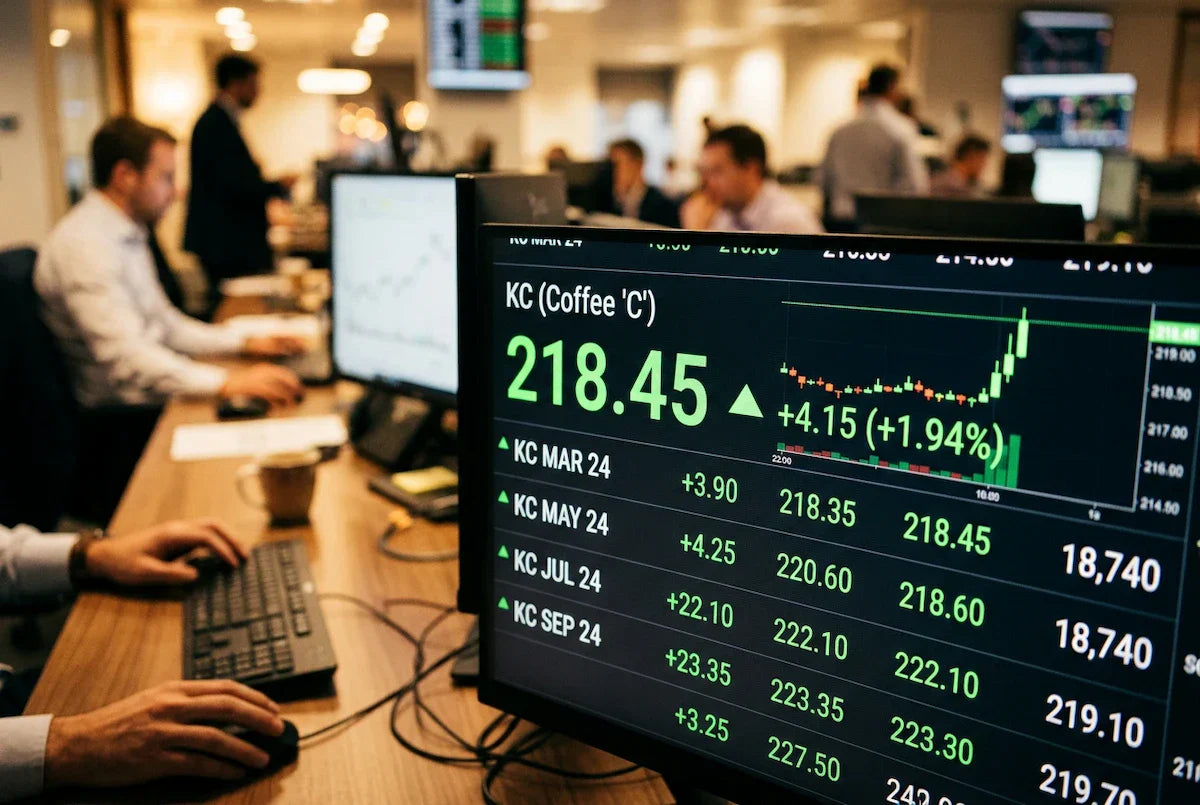
In February 2025 arabica hit $4.41 per pound — the highest price ever recorded. Here is what happened.
In February 2025 arabica futures reached the highest level ever recorded: $4.41 per pound. That is more than double what arabica cost a year earlier. For anyone buying, selling or roasting coffee, it was a shocking moment.
But the coffee price 2025 record was not a surprise. The factors that led to it had been building for years.
Drought in Brazil and harvest problems in Vietnam
Brazil is responsible for around a third of global coffee production. In the lead-up to 2025 the country had experienced a series of droughts that disrupted the flowering of arabica plants. Poor flowering means fewer cherries the following season. The arabica harvest for 2025-2026 was therefore estimated lower, putting pressure on expected availability.
In Vietnam, the world's largest robusta producer, different problems played out. El Niño-related weather conditions caused heat and drought, reducing the robusta harvest by around ten percent for several consecutive years. That may seem like a separate issue, but it had direct consequences for arabica: large buyers who normally used robusta for cheaper blends switched to arabica as an alternative. That additional demand contributed to the coffee price rise.
Speculation and tariffs on the futures market
Fundamental supply problems explain the rise but not the extreme peak. Part of the explanation lies in the futures market itself. Traders and speculators anticipated shortages and bought up futures, driving the price higher. At the same time, US import tariffs on coffee from Brazil and Colombia disrupted trade flows. Importers were forced to seek alternative suppliers, creating extra competition for available lots.

Brazilian farmers also deliberately held back stocks, partly to shift sales to a more favourable tax year. That strengthened the short-term tightness in the spot market. The coffee market 2025 was therefore driven by both real supply problems and market behaviour that amplified those problems.
What this means for the specialty coffee market
For the specialty coffee price this works differently than for the bulk market. Specialty coffee is rarely traded based on the C price, the futures price for commodity arabica. Quality lots are negotiated separately, based on flavour profile and origin. Yet the specialty market also feels the pressure: higher base costs for transport, energy and labour affect everyone in the chain.
What the record prices of 2025 also show is how vulnerable a coffee chain is that depends on a handful of large producing countries. Mexican coffee falls outside the concentration of Brazil and Vietnam and has its own climate dynamics. That makes it interesting for buyers as geographic diversification too. How the market continues to develop is well covered by Perfect Daily Grind in their analysis of the coffee price in 2025.

Taste our coffee from Mexico
Freshly roasted, delivered to your door.


