
Robusta is no longer the cheap bean and blends are changing
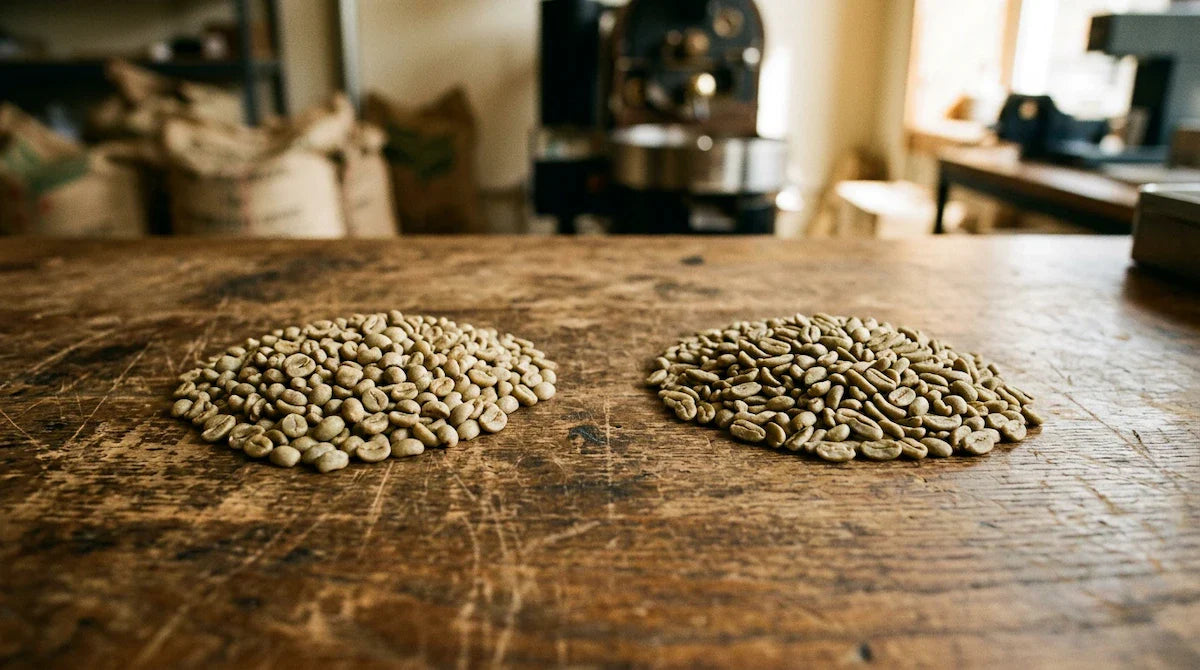
Robusta coffee prices hit record highs in 2026, and roasters are quietly rewriting their blends in response.
For decades the trade math was simple. Arabica was the bean you paid for, robusta was the bean you stretched it with. A roaster could lean on robusta to hold a price point and most drinkers never noticed. That arithmetic broke in 2026.
Robusta coffee prices have climbed to levels the bean has never seen. ICE robusta futures sat near $3,480 per tonne in May 2026, and the gap that once made robusta the obvious filler has narrowed to the point where the old logic no longer pays off. When the cheap bean stops being cheap, everything built on top of it shifts.
Why robusta coffee prices ran so hot
Weather did most of the damage. Indonesia, the third-largest robusta producer, took heavy flooding across key growing zones, and the country's exporters association warned that 2025-26 exports could fall by as much as 15%. Vietnam, which is 96% robusta and supplies more of the species than anywhere else, has spent two seasons under drought pressure. Local Vietnamese robusta averaged roughly 118,000 dong per kilogram in 2024/25, about $4.45, which was around 125% higher than the year before.
That kind of move does not stay in Southeast Asia. Robusta is a global commodity, and a supply shock in two origins resets the price for every buyer.
Robusta vs arabica: a gap that keeps closing

The robusta vs arabica spread is what roasters actually watch. Arabica carries the higher arabica price by reputation and by cup quality, but the two markets have not moved in step. USDA Foreign Agricultural Service figures for 2025/26 show robusta output rising 10.9% to 83.333 million bags while arabica fell 4.7% to 95.515 million bags. More robusta, less arabica, and yet robusta still hit records. Demand is the reason. Instant coffee keeps growing, and instant runs on robusta.
For a roaster, a narrow robusta vs arabica gap removes the incentive that made blending with robusta worthwhile in the first place. Trade reporting out of Vietnam tracks how high prices have rippled through the supply chain.
How coffee blends are quietly being reworked
This is where it reaches your cup. Coffee blends are recipes, and recipes get rewritten when ingredient costs change. Some roasters are cutting robusta back toward arabica because the saving no longer justifies the flavour trade. Others are doing the opposite, holding or raising robusta to defend a shelf price they cannot move. A few are reformulating quietly and saying nothing, because the paperwork and traceability demands already landing on importers leave little room to absorb another shock.
The result is a market where two bags at the same price can hold very different things inside. Coffee blends used to be a stable category. In the coffee market 2026 they are a moving target.
What this means for what you buy
None of this touches single origin coffee in the same way. A single-origin bag is one species from one place, so there is no blend ratio to quietly adjust. Santo Café works with Mexican arabica, which sits outside the robusta story entirely. The timing of each harvest still shapes what is available, but the species on the label does not change between batches.
So check the bag. A specialty coffee bag will usually name the species and the origin. A generic blend often names neither. If a label tells you nothing about what is inside, that silence is now worth more attention than it used to be.

Taste our coffee from Mexico
Freshly roasted, delivered to your door.


