
Café Veracruz: altura coffee starts at 750 metres above sea level
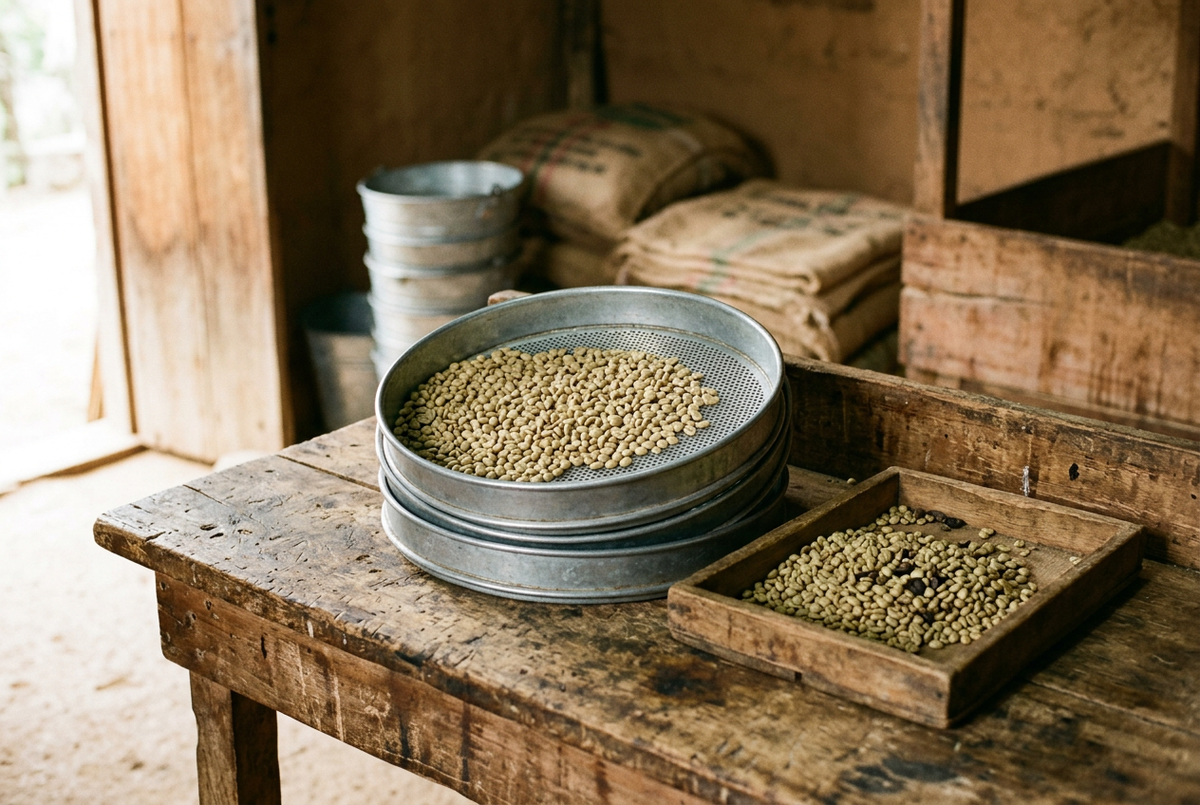
In the Café Veracruz denomination the word altura is not a mood but a graded category, with a 750 metre floor and a sieve behind it.
The word altura turns up on Mexican coffee bags the way the word artisan turns up on bread. It reads like a mood. In one corner of Mexico it is a legal category with a measuring tape attached, because altura coffee has to come off ground more than 750 metres above sea level and the beans have to stay on a named sieve before anyone may print it. That rule is not a trade body's house style. It is a Mexican official standard, and it runs to tables.
A coffee name the Mexican state owns
The protected name is Café Veracruz, a denomination of origin whose title sits with the Mexican state rather than with any company. The general declaration of protection was published in the Diario Oficial de la Federación on 15 November 2000. What it covers is narrow: green and pure roasted coffee, from Coffea arabica, grown above 750 metres, inside the zone the declaration draws.
Altitude is doing real work in that sentence. The state climbs from the Gulf shore to the flank of a volcano, so a border on a map says almost nothing about what a tree lived through. A 750 metre floor cuts the warm low ground out of the name, and it does that in the state that ranks second in Mexico for output.
Mexican coffee grades sit on one ladder
The standard gives the generic product four names and arranges them as a climb: prima lavado at the bottom, then extra prima lavado, then altura, then estrictamente altura. Each rung is a sieve. Estrictamente altura wants 98% or more of the lot held on screen 16 and 80% or more on screen 17. Prima lavado wants 90% on screen 15 and 75% on screen 16. The same harvest, sorted harder.
Coffee moisture content is the one line that never shifts. All four grades are held to 11.5 to 12.5%, no looser at the foot of the ladder than at the top. The standard itself, NOM-149-SCFI-2001, was signed in September 2001, published in the Diario Oficial in January 2002, and is still carried as in force in the Mexican catalogue of standards. It did not bite until 23 January 2004. Its own closing article held commencement back until a body had been accredited to test the product, so the name was protected for years before anything measured it.

What estrictamente altura has to taste like
Above the sieve work sits a cup test, scored from 0 to 5. Estrictamente altura is the only rung with no slack in it: aroma 5, acidity 5, body 3 or more, no off flavours, overall acceptability 5. Three of those five lines demand a perfect mark, which means a lot can be sized correctly, dried correctly and still fail on the table.
Prima lavado is allowed to be plain. Aroma 3 or more, acidity 2 or more, body 1 or more, and the same instruction about off flavours, which is the one thing no grade forgives. The tasting is not left to atmosphere either: a minimum of six cups per sample, 7.0 g of coffee in each. Mexico had gone this way once before, with another coffee name whose rules were written into law.
Green coffee defects tell a different story
This is where the ladder stops climbing. Defects are capped identically across all four generic grades: a maximum of 22 in American preparation, 8 in European preparation. Estrictamente altura, with its perfect cup, is allowed exactly as many black, sour and broken beans as prima lavado is.
The specialty categories in the same document are tighter. Specialty grade coffee is held to 8 or fewer total defects and no primary defects at all. Premium grade gets 13 total and 5 primary. Exchange grade gets 20. Maragogype, the outsized bean, is excused the screen rules and asked instead for 90% retention on screen 19. Two words printed side by side on one bag can therefore be measuring quite different things.

So on a bag that names the denomination, the grade word beside it is the one worth reading. Altura on its own is a claim about altitude and bean size. What lifts it to the rung above is what the cup scored, and what separates the specialty grades from either is how many bad beans got through.
What is actually being promised on the bag?
Grades exist because a place name on its own is a thin promise, and a reader who likes small print tends to notice that. Santo Café pours a single-origin Mexican arabica, roasted in small batches and sold as whole bean. Worth a look if the question of what a label is really measuring has started to interest you.


Taste our coffee from Mexico
Freshly roasted, delivered to your door.


