
Pluma coffee: the Oaxaca origin with rules written into law
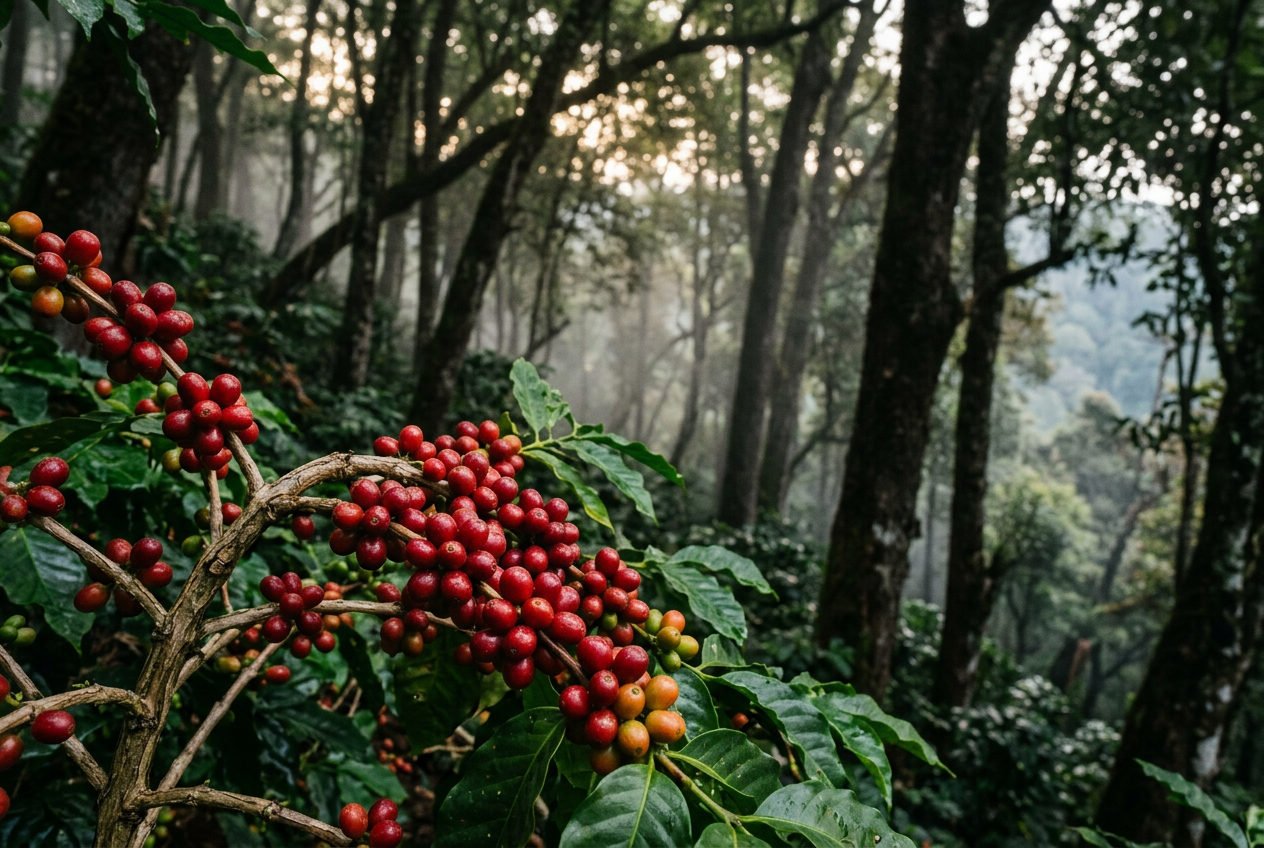
Mexico protects one Oaxaca coffee region by law, and the declaration fixes the shade, the picking, the fermentation and the moisture.
On 4 February 2020 the Mexican government published a document that tells growers in one corner of Oaxaca exactly how long they may ferment their beans. It runs to thousands of words of legal Spanish, and buried in it are the rules that decide whether a harvest may be sold as Pluma coffee at all: the species, the shade, the picking, the drying, the moisture. Most origin writing describes a landscape. This one is a specification, and anyone can go and read it.
What the declaration actually says
The Instituto Mexicano de la Propiedad Industrial issued the Declaration of Protection of the Denomination of Origin PLUMA and published it in the Diario Oficial de la Federacion, the country's official gazette. The text draws a production zone it calls the Region Pluma: 30 municipalities in the state of Oaxaca, running from San Pedro Pochutla near the coast up to Santa Catarina Juquila in the mountains. Coffee grown one valley outside that boundary is the same crop grown the same way. It is simply not the same name.
The product is defined just as narrowly. The declaration admits the fruits of Coffea arabica, naming var. Typica as the original variety of the region and var. Pluma Hidalgo alongside it, with Bourbon, Mundo Novo, Marsellesa, Oro Azteca, Sarchimor, Geisha and Java also permitted. That list is a quiet record of a region that has replanted more than once.
Oaxaca coffee grown only under a canopy
The growing system is not left to preference. Production happens only under shade, dominated by what the document calls rustic or mountain shade and by traditional polyculture, the mixed plots it names coffee gardens. Shade grown coffee is the rule here rather than a marketing angle, and a grower who opens the canopy to chase yield has stepped outside the definition of the name.
Picking is pinned down too. The coffee harvest window runs six months, November to April, and the fruit leaves the branch by hand in three passes over the same trees: the pepena at the start, the intermediate pass, and the arrase, the final strip. Three passes cost three times the labour. They are also why the cherries in a lot arrive at roughly one stage of ripeness, which is what a single picking window does to a coffee.

Thirty six hours, and not one more
Cherries reach the wet mill on the day they are cut, at a pace set by the temperature of the altitude band they came from. They are floated, pulped, and moved into tanks. Coffee fermentation may run no longer than 36 hours, and in practice sits between 12 and 32 hours depending on how high the plot lies. Cool air high on the slope stretches it out. Warm air lower down cuts it short. The ceiling does not move.
Drying is written down as well: patios, wooden rakes, the beds turned constantly, down to 12% moisture in three to four days. None of that is exotic. What is unusual is that it sits in a legal instrument rather than a roaster's blog, which is what the published declaration is for.
An old map behind a young protection
The declaration argues its case with history rather than flavour notes. The village of Pluma Hidalgo was founded in 1880, by which point coffee was already established in the districts around it. By 1891 the estates of the Juquila district were producing 48,000 kg of coffee a year from 365,000 plants, and in 1892 the Secretaria de Fomento listed the plantations of Pochutla, Miahuatlan, Juquila, Jamiltepec and Juxtlahuaca in its annual report.
By 1910 the coffee estates of that district covered around 5,700 hectares across four municipalities, sitting beside maize, beans, chilli, cacao, cotton and sugar cane on the lower ground. Coffee held on through the revolution and expanded again afterwards. What is standing in those plots has changed since, as it has across the country since rust rewrote Mexican planting.

What a protected denomination of origin is worth on a shelf
Very little, if nobody reads it. The USDA Foreign Agricultural Service forecasts Mexican production at 4.14 million 60-kilogram bags in 2026/27, and only a thin slice of that will leave the country carrying a protected name. Oaxaca coffee sold with the Pluma declaration behind it is a small share of a small share. The rest travels as Mexican arabica and gets blended by the container.
Which makes a label worth two seconds of attention. A region named instead of a country. A harvest window instead of a vague season. A roast date instead of a best-before. Those three lines say more about what is in a bag than anything printed in a larger font.
Wondering what Mexican arabica tastes like at home?

A name is only as good as the thing standing behind it, and the plainest claims are the easiest ones to check. Santo Cafe roasts Mexican arabica, and the pack says what it is on the front: Mexican, 100% arabica, freshly roasted. Nothing on it needs a legal gazette to decode.

Taste our coffee from Mexico
Freshly roasted, delivered to your door.


