
The year Mexican coffee lost its state buyer and found cooperatives
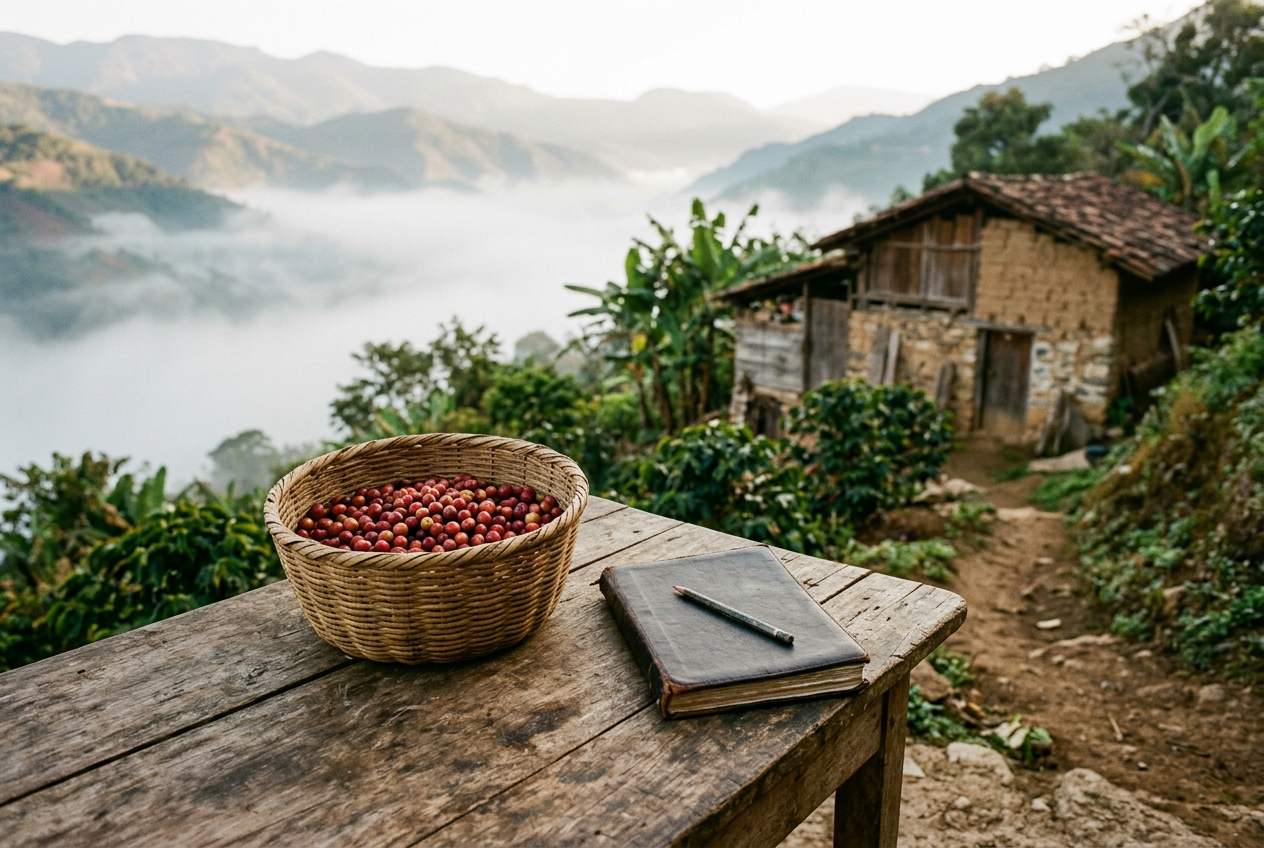
The state stopped buying the crop in 1989, and what growers built to replace it is still on the bag.
Until 1989 a grower in the Mexican highlands did not have to find a buyer. INMECAFE, the state coffee institute, took the crop, and for a large part of the sector that was the entire commercial question, answered. Then it stopped, in the same year the international price system standing behind it came apart.
What the institute actually did
It was expanded in 1973 into something closer to a full apparatus than a buying desk. It bought the harvest, but it also advanced credit against it, moved it down off the hillsides and sent technical staff out to the plots. For a grower with two hectares and no truck, those four things together are the difference between a farm and a hobby.
None of it was generous exactly. Prices were set rather than negotiated, and the bureaucracy was its own weather system. What it gave was predictability, which is the thing smallholder farmers can least afford to buy on the open market.

Two things ended in the same year
In 1989 the government of Carlos Salinas de Gortari wound INMECAFE down. That same year the 1983 International Coffee Agreement broke down, after exporting and importing members failed to agree new export quotas, and the system that had held a floor under the world price stopped operating. The organisation behind that agreement still exists, but the mechanism did not survive.
Coffee prices fell to around half of the previous year. In Mexico, producer income dropped by roughly 70 percent. The two events were not one event, and only one of them was a Mexican decision, but they arrived together and a grower on a hillside experienced them as a single thing.
Who bought the coffee then?
Intermediaries did. Known locally as coyotes, they arrived at the farm gate with cash and a price, and the price was theirs to name. A grower with no storage, no credit line and a crop already picked has very little to argue with. That mechanism sits at the centre of the coffee crisis of the early nineties, and it was structural rather than personal.
The answer that worked was not a romantic one. Pooling harvest volume gets a group past the minimum quantity an exporter will look at. Shared processing gets it past the quality threshold. An export licence gets it past the intermediary altogether. It is a supply chain problem solved with paperwork and a shared wet mill.

The coffee cooperative as an answer
UCIRI, in the Isthmus region of Oaxaca, had gained legal status in 1983, before the collapse rather than after it, which is worth noticing. When the state buyer disappeared, the structure still able to sell coffee was the one already built. Groups like it multiplied through the nineties across the growing states.
A coffee cooperative is not automatically a better deal. It carries overheads, it can be badly run, and it commits a grower to selling through a group. What it does reliably is aggregate, and aggregation is what separates a lot that can be exported from one that cannot. The replanting that followed the rust epidemic two decades later ran through the same structures.
How the Netherlands ended up in this story
On 15 November 1988 the Max Havelaar label launched in the Netherlands, the first fair trade label in the world, and the coffee behind it came from UCIRI. The Dutch organisation Solidaridad had been approached two years earlier by growers who wanted European buyers on terms they could plan around, and the Dutch priest Frans van der Hoff worked on the Oaxacan side of it. The crop itself has since recovered, and Mexico now sits at a ten-year production high.
Look at what a bag of Mexican coffee names. A country is close to a marketing word by now. A cooperative or a region is a level of detail that exists only because somebody had to build the structure capable of reporting it, and 1989 is when that became necessary.
So what should a bag tell you?

How much a pack says is a choice the roaster makes rather than a rule anyone enforces. Santo Café roasts a single-origin arabica from Mexico in small batches, with the origin printed on the bag instead of a marketing word. One origin, one profile, and nothing blended in to fill a gap.

Taste our coffee from Mexico
Freshly roasted, delivered to your door.


