
Latin America coffee — why the region dominates the world market
One region, more than half the world's coffee. Latin America did not become dominant by accident.
More than 55 percent of all coffee on the coffee world market comes from Latin America. Brazil, Colombia, Honduras, Mexico, Peru and Guatemala together fill the containers heading to Europe, North America and Asia. That dominance has existed for more than a century and a half and is holding for now. But the pressure is increasing.
Why Latin America is so dominant
The explanation lies in geography and history. The region stretches across the core of the so-called Bean Belt, the tropical band between 25 degrees north and 30 degrees south latitude where coffee thrives best. High mountain areas, volcanic soils, tropical temperatures with cool nights and well-distributed rainfall: Latin America coffee has the combination of factors that makes high-quality Arabica cultivation possible.
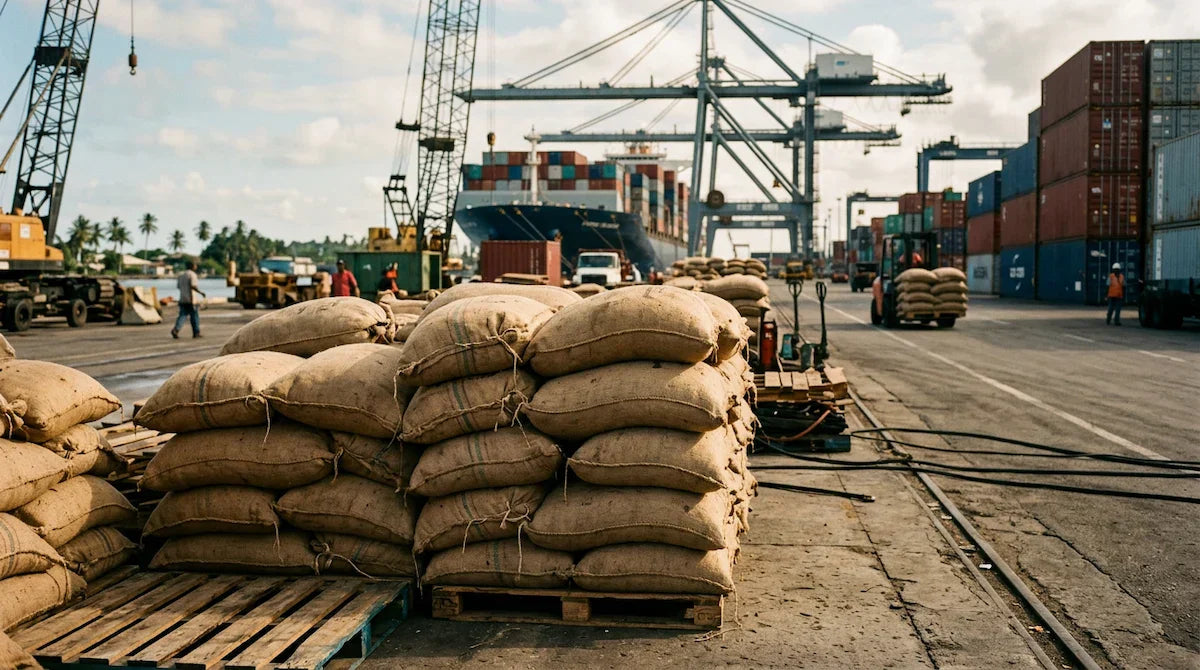
On top of that comes an export infrastructure built up over decades. Ports like Santos in Brazil and Buenaventura in Colombia process millions of bags per year. The logistics chain from farmer to shipment is in no other region as mature as in Latin America coffee.
The three major producers
Brazil coffee is the absolute engine of the region. In the 2024/25 crop year the country produced nearly 70 million 60-kilogram bags, accounting for more than a third of world production. Brazil grows both Arabica and Robusta, has both small family operations and large-scale plantations and exports to all major coffee regions in the world.
Colombia is known for a mild, balanced flavour profile that makes it one of the most sought-after specialty coffee origins in the world. In the 2024/25 crop year Colombia produced over 13 million bags. Colombian coffee export revenues have risen sharply in recent years, partly driven by growing demand for Colombian Arabica in the specialty segment.

Mexico has a different role: less volume, but a strong profile in the organic and specialty segment. The International Coffee Organization consistently places Mexico in the top ten of producers, with a growing share in the coffee trend 2025 toward traceable and sustainable origins.
The challengers
The dominance of Latin America coffee is not beyond question. Vietnam is now the second largest coffee producer in the world, almost entirely in Robusta, supplying the bulk and instant market. Ethiopia is growing as a specialty origin and has a unique position as the birthplace of coffee with heirloom varieties that no other region can match. Indonesia is profiling itself more strongly on the world market with distinctive Arabica profiles from Sumatra and Sulawesi.
Climate change is the biggest structural threat. Droughts and unexpected frost periods in Brazil and Colombia have disrupted several harvests in recent years and contributed to the record prices on the coffee world market in 2025.
How the region defends its position
Latin America coffee responds to the pressure with quality improvement. More countries in the region are participating in international Cup of Excellence auctions. Specialty coffee origin from countries like Peru, Bolivia and Guatemala is gaining more visibility among European and Asian buyers. And the growing demand for traceable, sustainable coffee works in favour of a region that has built a complex export infrastructure over decades.
The dominance of Latin America is not self-evident. But the foundation is solid enough to withstand the pressure for now.

Taste our coffee from Mexico
Freshly roasted, delivered to your door.


