
Mexican coffee farmers average 54 years old, and 11% are under 35
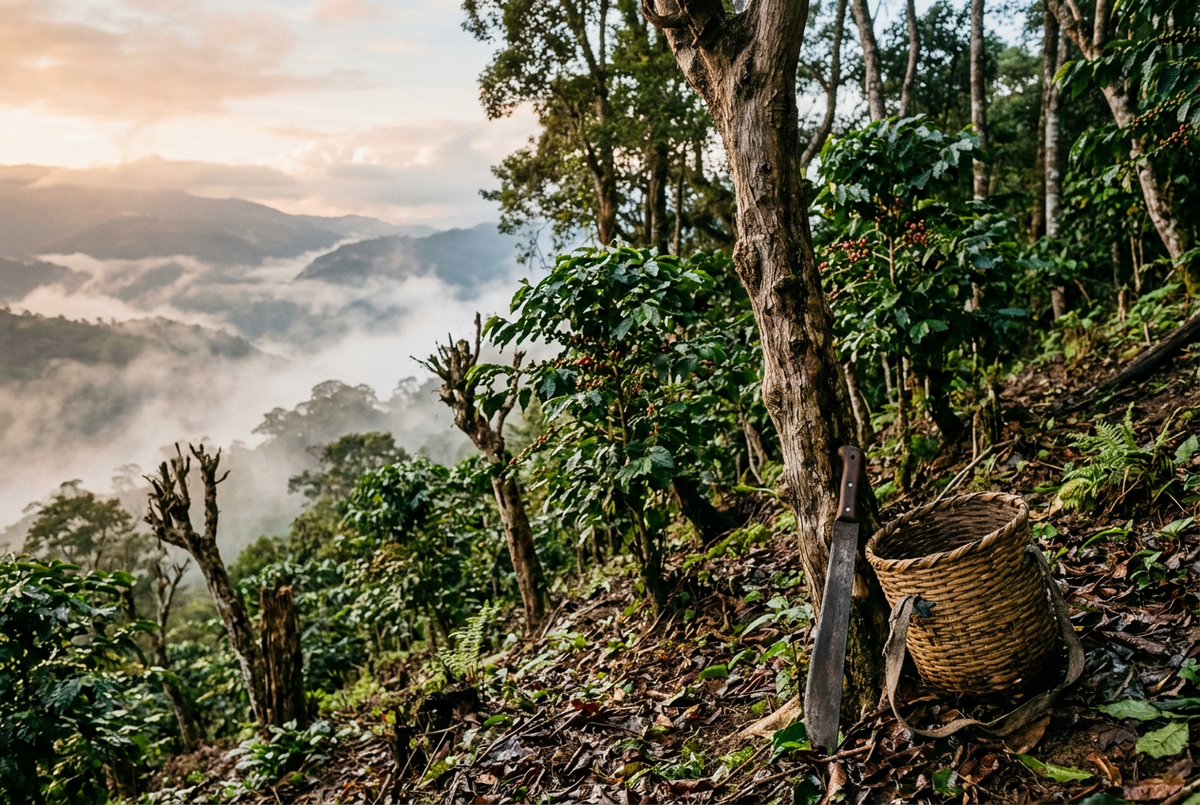
An ICO study of 883 growers puts the average Mexican coffee farmer at 54, with only 11% under 35 and a hectare costing about $922 a year to run.
The most quoted number about coffee farming in Mexico is a tonnage. The one that matters more is an age. A value chain study published by the International Coffee Organization, built on interviews with 883 growers, puts the average age of the person picking the crop at 54.
A second figure is harder to shrug off. Just 11% of the farmers surveyed were under 35, while more than 20% had passed 65. An origin rarely runs out of land first. It runs out of people willing to work it.
Who Mexican coffee farmers actually are
About 545,000 people grow coffee in Mexico across roughly 712,000 hectares, on the SIAP figures the study cites for 2021. Four states hold 85% of that area and 90% of the crop: Chiapas, Veracruz, Oaxaca and Puebla. The rest is scattered thin.
The work was carried out by the Committee on Sustainability Assessment with Mexico's agriculture ministry and its national research institute, INIFAP, and paid for by GIZ. The 883 interviews began in February 2023. That is a sample, not a census, and the report keeps saying so.
The age curve under coffee farming in Mexico
The mean is 54, and the shape around it is the problem. Just 11% of growers are under 35. More than 20% are 65 or older and still walking slopes they first walked at 30. The average grower carries 23 years of experience alongside little formal schooling, a pairing that produces sharp field judgement and very few options anywhere else.
Land does not soften it. The average coffee farm size in the sample is 2.9 hectares, and the land market barely moves, so a grower who wants more usually cannot get it. The study itself runs the arithmetic farm by farm.

What a hectare costs before a bean is sold
Running one hectare costs about $922 a year in the study's accounting, or about $97 per quintal of dry parchment. A quintal here is 57.5 kg of green bean equivalent, the conversion that makes a Mexican farm number comparable with anything quoted on an exchange.
Labour takes 68% of that, split between family labour at 37% and hired labour at 31%. Harvest alone accounts for 48% of total coffee production costs, because cherries ripen unevenly and somebody has to walk the rows again and again. Fertiliser and pesticide take 28%. Equipment depreciation takes 4%. Add transport, the opportunity cost of the land and the amortisation of young trees, and the real figure climbs to about $1,358 per hectare, 47% above the headline. Density changes that maths, which is why the small plots and high yields of Puebla read so differently on paper.
The household the crop has to carry
Coffee farmer income in this report is a household figure, not a wage. It averages about $4,054 a year, and coffee supplies roughly 65% of it. The remainder comes from wage labour and other crops. Coffee growing households run to 3.3 members on average, 76% of them of working age, usually with two earners.
Organisation is thin. Only 17% of the growers surveyed belong to a group offering technical support or a route to market, a low share in a country where cooperatives filled the gap the state buyer left after 1989. For everyone else, the price is whatever the buyer at the road says it is that week.

Why the arithmetic points the young somewhere else
At median efficiency a farm gets 8 quintals per hectare, about 460 kg of dry parchment, at a cost near $717 per hectare. The study models what better practice would do: productivity up 107%, cost per kilo down 19%, net income up 51%. Then it says the quiet part, which is that even those gains leave many growers below the poverty line. That is a model, not a promise.
Prices move as well. The reference season, 2021/22, paid $4.04 per kg of green bean equivalent, and wet milling took about $0.97 per kg before the coffee left the region. Smallholder coffee farms carry that spread with no buffer. The Mexican coffee industry can absorb a bad year. A 54 year old with 2.9 hectares and one adult child already living in the city cannot.
Two numbers in that report sit a few pages apart and say more together than either says alone: what a hectare costs to run, and what coffee farmer income has to cover in a year. Read them side by side and the age curve stops being a surprise.
What should a bag of Mexican arabica tell you?

Numbers like these are easier to hold onto when the coffee in the cupboard has an origin attached to it instead of a blend code. Santo Café roasts Mexican arabica and puts that on the front of the pack, which is the least a bag can do. What happens between the mountain and the grinder is the rest of the story.

Taste our coffee from Mexico
Freshly roasted, delivered to your door.


