
Coffee Asia — how growing consumption is reshaping the world market
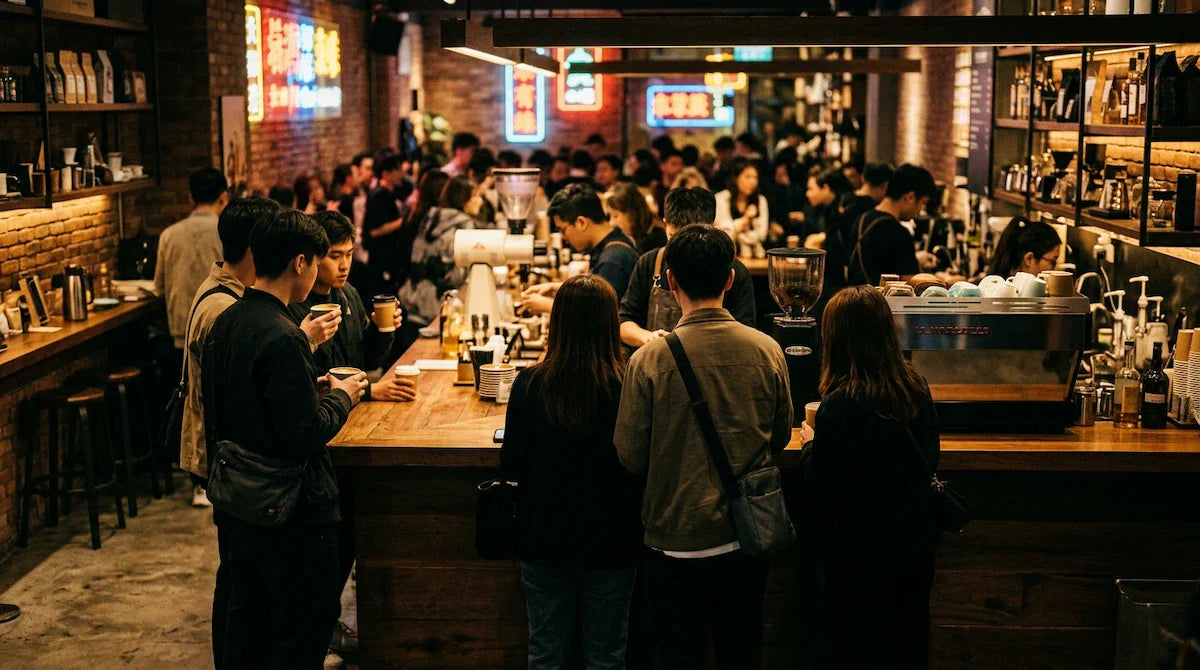
China now has more branded coffee shop outlets than the United States. The shift has already happened.
China has more branded coffee chain outlets than the United States. That is not a forecast. That is the current situation. The coffee market Asia is no longer an emerging market. It is one of the fastest-growing coffee markets in the world, and the consequences are felt as far as the coffee prices consumers pay in the Netherlands.
How fast Asia is growing
The Asia-Pacific region is growing faster than any other coffee region. Market research points to an expected annual growth of 6.2 percent for the period 2025 to 2034, well above the global average. Coffee Asia accounts for a market of more than 44 billion dollars in 2024 and is expected to grow in value to nearly 57 billion dollars by 2035.
Coffee China is the engine of that growth. The country accounts for approximately half of total coffee volume in the Asian region. China's coffee imports rose by 32.5 percent year-on-year in 2024. India is expected to double the value of its coffee market by 2030. Indonesia is on track to surpass Japan as the world's fifth largest coffee consumer. Perfect Daily Grind describes how the dynamism of emerging markets in Asia forms a direct contrast with stagnation in more mature European markets, where coffee consumption in Northern Europe fell slightly between 2022 and 2024.

What is driving the growth
Three factors explain the speed of the coffee trend 2025 in Asia. The first is urbanisation: hundreds of millions of people are moving from rural areas to cities, with access to cafes, supermarkets and online shops where coffee is prominently present. The second is a young middle class that sees coffee as a status symbol and lifestyle product. Drinking coffee in a specialty coffee bar in Shanghai or Seoul is a social activity and an expression of identity.
The third factor is social media. Platforms like WeChat, Xiaohongshu and Instagram spread coffee culture rapidly among younger generations who have never known a strong tea tradition but are familiar with Western consumption patterns.
The rise of local specialty scenes
Alongside the growth of large chains like Luckin Coffee and Starbucks, a vibrant local specialty coffee growth is visible in cities like Shanghai, Seoul and Tokyo. Independent coffee bars, local roasters and barista competitions attract an audience just as discerning as its European counterpart. Specialty coffee growth in Asia is no longer exclusively Western. It has taken on local roots.
What this means for the rest of the world
The growth of coffee Asia has direct consequences for the global coffee market. Demand is rising faster than supply can keep up, contributing to the coffee trend 2025 of historically high prices. Producers in Latin America and Africa are exporting a larger share to Asia, which puts pressure on supply for European buyers.
Coffee Asia is no longer a peripheral phenomenon. It is a structural force reshaping the global coffee market.

Probier unseren Kaffee aus Mexiko
Frisch geröstet und direkt zu dir nach Hause geliefert.


